Cuándo lavar las verduras para evitar bacterias en la cocina
Lavarlas o cortarlas con antelación favorece el crecimiento de bacterias, así que lo mejor es hacerlo justo antes de usarlas.
Washing and cutting vegetables is a nearly universal practice. Some even recommend washing them with baking soda for a deeper clean, although it's often unnecessary. However, the timing of washing and cutting greatly influences their shelf life and the amount of bacteria they harbor.
With leafy greens, one of the worst mistakes is washing or cutting them before storing them. Cutting and washing them in advance makes them more prone to bacterial growth, which can enter through the cuts. Furthermore, water accelerates their deterioration: they wilt and rot before you're ready to make a salad. Ideally, they should be kept completely dry until you're ready to use them.
That doesn't mean you should stop washing them. Washing removes many bacteria and residues, and although it takes a little more time, avoiding the ingestion of potentially harmful microorganisms is well worth the effort.
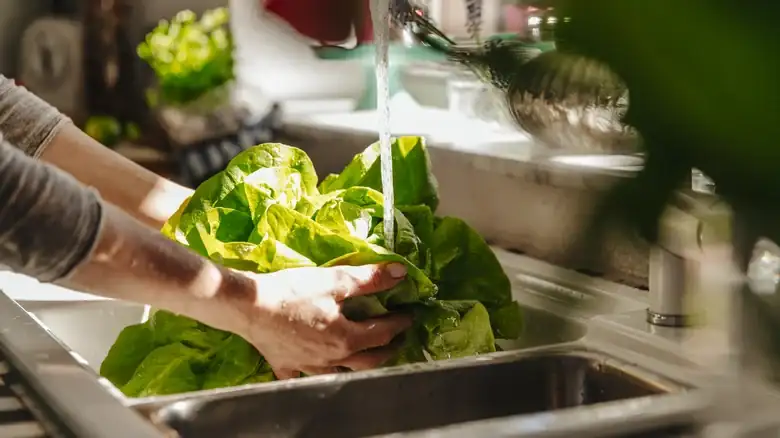
Unwashed leafy greens can harbor dirt, insects, and bacteria, so it's best to rinse the leaves one by one under cold running water, discarding any torn, bruised, or damaged outer leaves. Alternatively, you can soak them in cold water to loosen any dirt before rinsing. For drying, a salad spinner is the quickest method; without one, a clean pillowcase or a plastic bag lined with paper towels, spun quickly in a circular motion, will do. If you have time, a towel or simply letting them air dry will also suffice.
It's not advisable to use commercial cleaners on fruits and vegetables because they aren't FDA-approved, and the FDA recommends using only cold water. Keep soap and detergents away from produce. For a deeper clean, simply soak them in diluted vinegar before rinsing; nothing else is needed.







