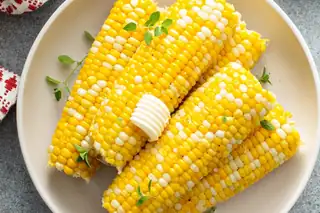
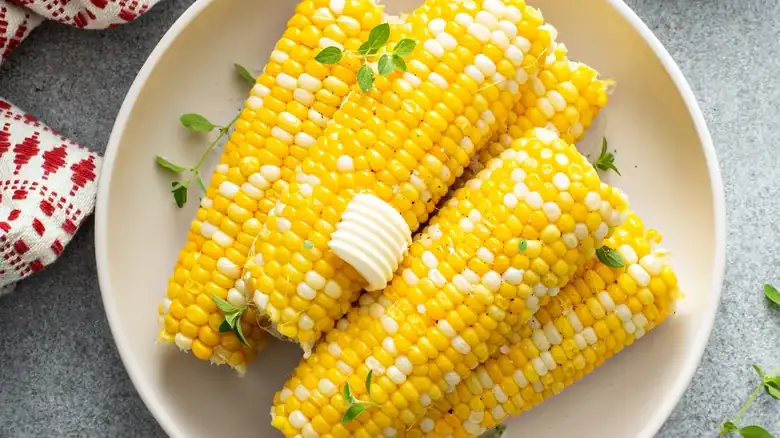
Why brine doesn't work with sweet corn
The brine gives the meat juiciness because its muscle fibers absorb the liquid, something that corn, without that structure, cannot do.
There's nothing like a good barbecue, whether grilled or smoked. Brine is a well-known trick for meat, because it adds flavor and juiciness that you can't get with a couple of hours of marinating. Applied to sweetcorn, however, the result is the opposite.
The science of brine is based on osmosis, the process by which a liquid passes through cell walls. Salt draws moisture out of the cells, and brine replenishes it. The key lies in the myofibril, the main structure of the muscle cell.
According to Meat Science, myofibrils make up approximately 70% of the structure of lean meat. As meat loses water in the brine, the myosin in the cells relaxes and denatures, allowing them to absorb the liquid. The cells swell to more than twice their original volume, mitigating water loss during cooking.
Corn has no muscle structure or myosin, so nothing retains moisture. Salting a vegetable like eggplant or tomato draws out water and sometimes concentrates the flavor, but in corn, the result is a dry, chewy kernel instead of a tender, juicy one. J. Kenji Lopez Alt confirmed this effect in his experiments for Serious Eats: corn in brine hardens quickly.
To achieve flavorful, juicy, and tender corn, it's best to soak it in unsalted water. Then, steam it on the grill, inside its own husk; the soaking creates a more humid environment for cooking.
If you prefer lightly toasted corn, remove the kernels after steaming and return them to the hottest part of the grill, turning them frequently. For a more intense flavor, you can make a compound butter, which melts among the kernels and absorbs their flavor.