
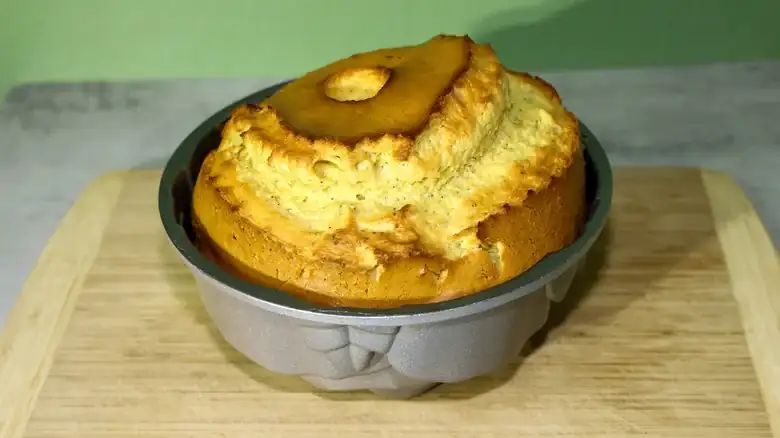
Why cakes puff up and how to prevent it in the oven
A cake that bulges in the center is usually due to an oven that is too hot, and an oven thermometer allows you to check this.
“When the batter gets to around 155 to 180 degrees Fahrenheit, it will start to firm up as the gluten proteins in the flour cook.”
When baking a layer cake, ideally the layers should be perfectly flat and round, ready to be stacked and frosted. But cakes are delicate: if something goes wrong, they can become dense, sink, or crack. One of the most common problems is doming.
A cake that comes out of the oven domed, with the center slightly higher than the edges instead of a flat, even surface, makes it difficult to stack with other layers. The cause is usually the oven, not the amount of batter.
As the dough goes into the oven, it rises and loses moisture simultaneously. The pie sets when it reaches a sufficient temperature and much of that moisture evaporates. According to Dr. Stuart Farrimond, author of "The Science of Cooking," "When the dough reaches between 68 and 82 degrees Celsius, it begins to harden as the gluten proteins in the flour cook" (via Epicurious). If the center is domed, the edges reach that temperature before the center: the outside sets while the inside continues to rise. This is why the oven is often too hot.
The thermostat doesn't always reflect the actual temperature, and a poorly calibrated oven can ruin a cake. An oven thermometer indicates the true temperature: place it inside the oven, preheat it to the desired temperature, and compare the thermometer reading to the oven's temperature. It's best to read the thermometer through the door, without opening it, to avoid losing heat.
If there's a significant difference, the oven can be recalibrated by following the instructions in the manual or by calling a technician. At the very least, this identifies the problem and the temperature discrepancy, allowing you to correct it the next time you bake.







