Por qué conviene asar las verduras en seco antes de añadir el aceite
Asar las verduras sin aceite al principio y añadirlo después da mejores resultados, según el chef Nick Balla, del COAST Big Sur Cafe.
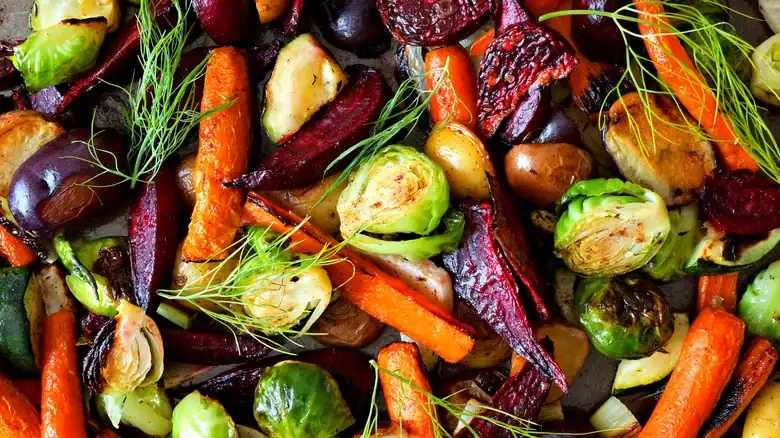
Roasted vegetables go with almost anything, are usually healthy depending on the accompaniments, and are easy to prepare: simply cut them to the desired thickness and toss them with olive oil and seasonings. The common mistake is to grease them before putting them in the oven. There is an alternative, dry roasting, which can change the flavor of the final result.
Chef Nick Balla advocates roasting vegetables dry first and adding the oil or sauce once they're cooked. As he explained to Food & Wine, "dry roasting creates a more natural combination because they retain a lot of freshness and shine, and they also absorb the fat." In his opinion, the result is more flavorful vegetables with more complex aromas and tastes.
The reason lies in the water. Most vegetables naturally contain a lot of water, and when roasted, that water evaporates. They become more absorbent, so they better capture the flavors and fats of whatever is added afterward. Furthermore, roasting caramelizes the sugars, which intensifies their flavor, texture, and aroma.
Almost any vegetable roasts well in the oven, except for tender leafy greens. For most, a good starting temperature is 220 degrees Celsius (425 degrees Fahrenheit). Root vegetables and winter squash take longer to cook and become crisp. For potatoes, beets, carrots, or butternut squash, a good guideline is about 45 minutes. Cruciferous vegetables, such as cauliflower and broccoli, need between 20 and 25 minutes. Asparagus and zucchini, being thinner or having a higher water content, only require 10 to 20 minutes.
The smaller the cuts, the less time they'll need in the oven. Don't overcrowd the tray, as the vegetables need space to avoid clumping together when steamed. Turn them occasionally so they brown evenly and become crispy.







