The Dhunger method for deliciously smoking chicken on the stove
With the dhungar method, a technique from South Asia, you can infuse smoky flavor into the stove without needing a patio or smoker.
Smoke is often associated with carelessness in cooking, but in a controlled environment, it becomes a resource that enhances flavor. Smoking meat is a pleasure if you have the skill and the space, and many kitchens have neither. The Dhumgar method solves this problem.
According to Leela Punyaratabandhu of Epicurious, this method can be done directly on the stovetop. It differs from hot smoking, which is mainly used for barbecuing, because it doesn't cook the food: it doesn't reach the necessary temperature, but it does impart a smoky flavor. Chicken is a good example, though it's not the only option.
For the Dhumgar method, you only need four things: a pot with a lid (a Dutch oven is ideal), a piece of natural hardwood charcoal, a little ghee, and a small metal or glass container. Since it doesn't require high heat, the chicken should be fully cooked and allowed to rest beforehand. Once cooked, transfer it to the pot and place the container on top.
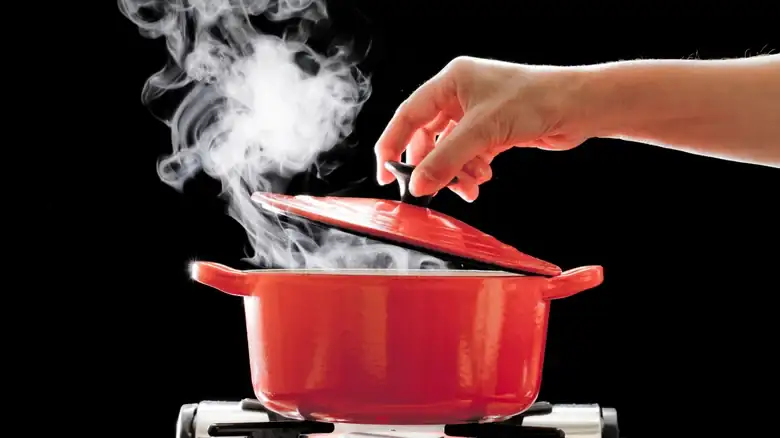
The charcoal is lit with a blowtorch, a paraffin lighter, or, most commonly, the stove flame. It's held with tongs to prevent accidents, allowed to burn until white ash appears on the surface, and then placed in a small bowl with a little ghee. This produces a dense, white smoke that is immediately trapped by covering the pot. Some recipes only require five minutes, while others need between 10 and 15. Afterward, the lid is removed, and the chicken is ready to serve.
The method works with almost any food you want to give a smoky flavor to, and it's traditional in South Asian cuisines, such as Indian and Thai. It's frequently used for dal, sauces, and curries. It's especially recommended with vegetables: potatoes, paneer, Brussels sprouts, or broccoli acquire a flavor that's uncommon in other cuisines.
A metal or glass container isn't essential either. A large, peeled onion with the center hollowed out works as an alternative, and the resulting aroma is that of charcoal-roasted garlic.







