El grosor ideal del pan para unas tostadas francesas perfectas
Según Delish, una rebanada de 2,5 cm (1 pulgada) absorbe bien la crema pastelera y se cocina con rapidez, sin resecarse.
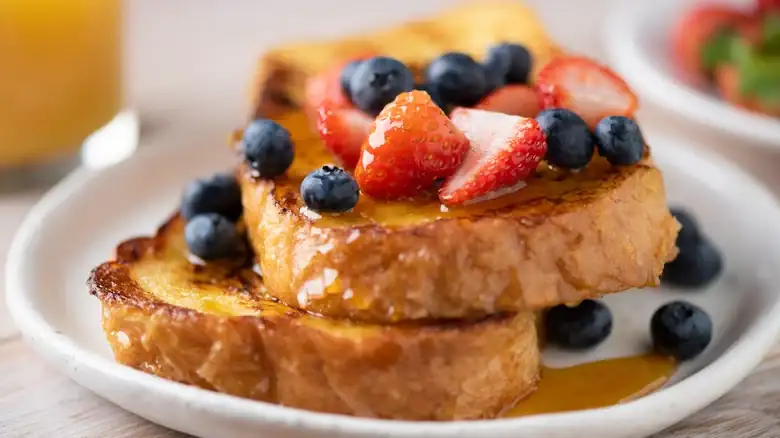
French toast is a very popular breakfast, even though the recipe seems simple: a slice of bread dipped in egg or custard and fried in a pan. It only takes one mistake in the procedure for the result to be bad. If the bread is too thin, the custard seeps through and the bread falls apart. If it's too thick, the custard isn't fully absorbed, resulting in soggy, tasteless bread.
According to Taylor Ann Spencer of Delish, the key is the thickness of the bread and the cooking time. A 1-inch (2.5 cm) slice absorbs the cream and cooks quickly without drying out or burning. Spencer recommends cooking it for 3 minutes per side over medium heat for even cooking, a creamy center, and a golden brown texture.
For stuffed French toast, a thinner bread, about 1.25 cm (half an inch), is best due to the ingredients and fillings. In short, 2.5 cm (1 inch) is an ideal thickness for traditional French toast, although it's fine if it's not exactly that size.
Sliced bread comes pre-cut and doesn't allow for this type of slicing. A bread that can be sliced thickly and can withstand the cream is preferable, such as brioche, a sweet and spongy bread originating in France with plenty of butter, eggs, and milk, or challah, with its soft, buttery, and slightly sweet texture. If both are cut into 2.5 cm slices, they make thick, soft, and substantial toast. If these aren't available, French bread works well as a substitute: it's thicker than sliced bread, and its firm crust contrasts with the creamy interior.