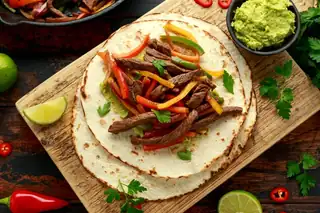
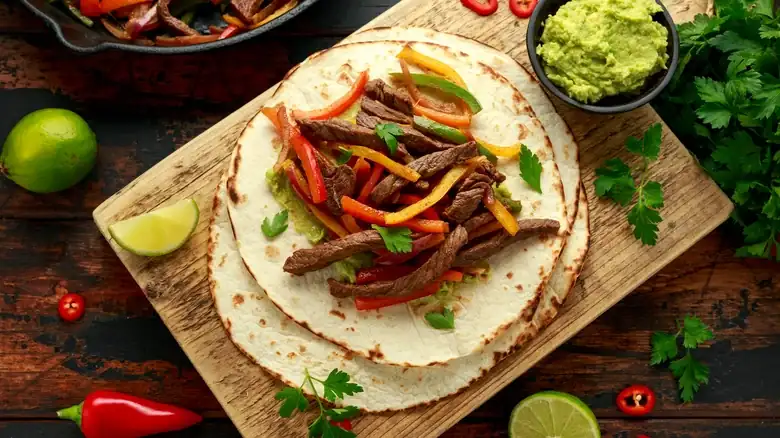
La tortilla adecuada marca la diferencia al preparar fajitas
Para preparar buenas fajitas, el primer paso no es la carne ni las verduras, sino las tortillas, que conviene elegir y calentar bien.
Fajitas are defined by the combination of meat and vegetables, but tortillas are a crucial, though often underestimated, step. Choosing the right type of tortilla helps the fajitas stay firm and not fall apart at the first bite, and the temperature also plays a role.
For fajitas, it's best to use flour tortillas instead of corn tortillas. Flour tortillas have a softer texture and are less likely to tear. Their elasticity makes them ideal for burritos and fajitas, especially given the weight of the generous portion of meat and vegetables. The hot mixture stays inside a flour tortilla, whereas it's likely to spill out of a corn tortilla.
Flour tortillas should be warmed before adding the toppings. To do this, preheat the oven to 175°C (350°F), wrap the tortillas in a damp paper towel and then in aluminum foil to maintain their texture, and heat them for about 15 minutes. If there are more than 15 minutes until serving, lower the temperature to 93°C (200°F) to keep them warm.
Hot meat needs hot tortillas, because without heat they don't taste like fajitas. Size matters, too. Corn tortillas are usually small, and flour tortillas come in various sizes; the packaging usually indicates "fajita size." Fajita tortillas are about 15 cm long: larger than taco tortillas and smaller than burrito tortillas, which are about 25 cm.
The ideal size also depends on the protein. Chicken or beef fajitas may need a larger tortilla than shrimp or vegetable fajitas to accommodate the larger pieces. Since the filling isn't rolled up, the extra space of a burrito tortilla isn't necessary. With the right tortilla, the fajitas stay firm until the very last bite.







