Los arándanos congelados conservan mejor su intenso color violeta
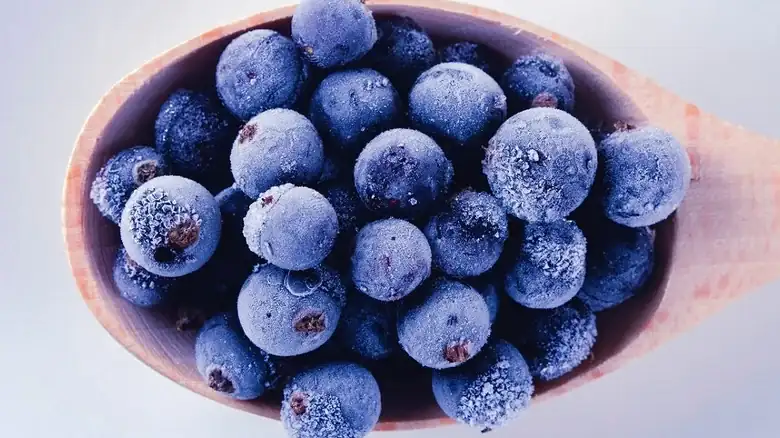
Congelar los arándanos no apaga su color, porque la congelación ayuda a mantener el intenso tono morado de la piel.
Blueberries are a simple fruit that appears in breakfasts, desserts, and oatmeal. Fresh blueberries soften in no time, so freezing them allows you to enjoy their sweetness for longer and have them even out of season. They are low in sugar, rich in antioxidants, and high in fiber.
Freezing also has a visual advantage. When you bite into a blueberry, the inside is more translucent yellow than purple, because the color is in the skin, and freezing it helps to maintain that intense violet color that gives the fruit its name.
The color comes from anthocyanins, pigments found in blue, red, or purple fruits and vegetables, such as strawberries, blueberries, and grapes. Their content increases as the blueberry ripens. According to Science Daily, researchers at South Dakota State University discovered that freezing blueberries can further increase anthocyanin levels in the skin, preventing them from losing their color.
Executive chef Matt Wynn supports this. Speaking to Food & Wine, he stated that freezing blueberries "makes their blue color shine."
In the kitchen, frozen blueberries are great for smoothies, which turn out a deep purple and are colder than with fresh fruit. They're also used in baking, although you should watch out for excess water, which can affect the muffin batter. If you prefer to eat them straight from the bag, wash them before freezing.
The FDA is developing a prevention strategy to ensure the safety and hygiene of fresh and frozen blueberries nationwide.