What is deglazing and how to use up the leftovers from the pan
Deglazing involves adding liquid to the caramelized remains in the pan to turn them into the base of a sauce.
“to add liquid to the cooking juices and small pieces of food in a pan in which something has been cooked, in order to make a sauce.”
If you watch cooking shows, you've probably heard the term "deglazing," though you might not know exactly what it means. It sounds like a technique reserved for professionals, but it's actually quite simple: just cook the protein, vegetables, and spices in a pan, and then add liquid to what's left at the bottom.
Deglazing means adding liquid to the cooking juices and the small pieces of food left in the pan to make a sauce. In French, these stuck-on bits are called "fond," which translates as "base." These bits concentrate many flavors, so it's best not to leave them out.
As Adrienne Cheatham, chef at the Culinary Education Institute, explained to Yahoo: "Many people think it's only worth deglazing if you're making a sauce, but even if you're just searing chicken, it's worth deglazing, because otherwise you lose a lot of flavor."
After cooking the protein or vegetables, remove them and set them aside, preferably in a cast iron or stainless steel pot. Then, look for the caramelized pieces and check that the mixture hasn't burned, as burnt pieces will ruin the sauce. Remove most of the fat, but leave a little for flavor.
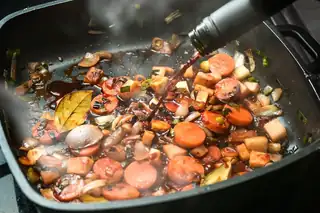
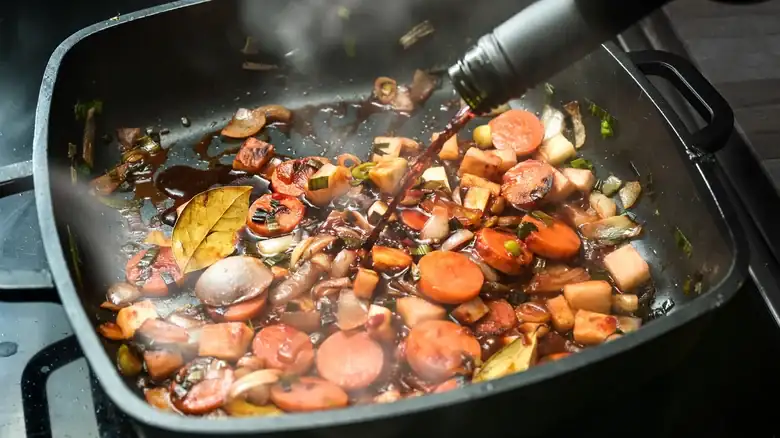
Then the liquid is poured in little by little, scraping the bottom with a flat-edged utensil to ensure all the residue stuck to the metal is collected. The liquid should be cold or at room temperature, as this facilitates the process and allows you to reduce the amount remaining in the pan by half.
Water doesn't add flavor because it dilutes what's already in the pan. Classic options include stock, consommé, juice, and vinegar, as well as aromatic liquids like Worcestershire sauce. With alcohol (spirits, wine, beer, or cider), the possibilities are almost limitless, as long as the ingredient complements the others. Dairy products should be added later because they tend to curdle if used for deglazing.
This is how sauces, meat juices and au jus are obtained to accompany steak, chicken, sauteed vegetables or fish.







