Qué es el tomatillo y cómo usarlo en la cocina
Ingrediente básico de la salsa verde en numerosos platos latinoamericanos, el tomatillo es un fruto ácido que sirve para salsas, guisos, ensaladas y bebidas.
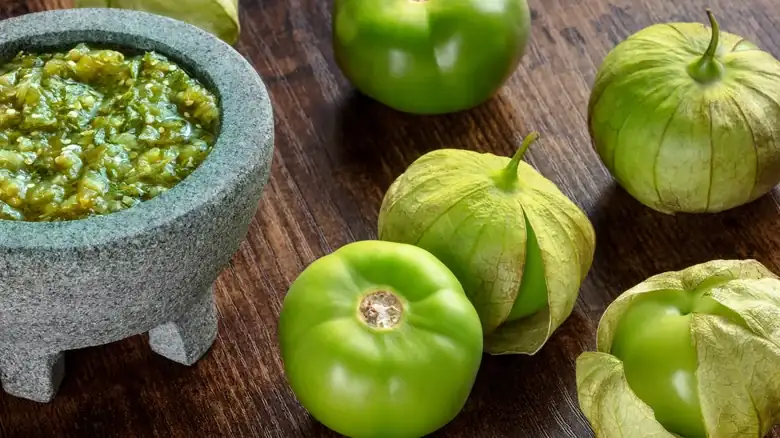
The tomatillo is a round, berry-like fruit encased in a papery husk. Although its name, which means "little tomato," suggests a variety of tomato, it is actually a distinct species, belonging to the nightshade family, like potatoes and peppers. Most are green, though yellow and purple varieties exist, and they measure between two and five centimeters in diameter.
Its flavor is acidic and slightly bitter, with a juicy touch similar to lemon or lime. Its flesh is firm and contains small seeds. For this reason, when raw, it is usually roasted, grilled, or at least blanched, while the tomato, being milder and sweeter, is often eaten raw.
Tomatillos are cultivated in India, Mexico, Guatemala, the United States, South Africa, and Australia, in warm-climate regions. The Aztecs were the first known culture to cultivate them, and they have been a staple ingredient in Central American cuisine since ancient times. In India, they appear in chutneys and curries, although they haven't achieved the global popularity of tomatoes.
When buying them, choose firm fruits without cracks and with a tight, green skin. Before cooking, peel them with your fingers and remove the sticky substance underneath: this can be removed by rinsing under cold running water while rubbing, or by soaking them for a few minutes. To store them, a paper bag is best, at room temperature if using within a day or two, or in the refrigerator for a few weeks. They can also be frozen, washed and dried, and should be used within the following year.
In salsas, raw tomatillos are crushed or chopped with jalapeños, cilantro, garlic, and onion, and can be softened with avocado or tanged with lime juice. Roasted salsa verde, on the other hand, loses some of its acidity and gains sweetness. For stews and soups, it's used in pozole verde and in a green gazpacho with cucumber, celery, and lime. It's also used for pickles and jams, which can be as salty, spicy, or sweet as desired.
In salads and sandwiches, it retains its firmness well, and in a BLT, slices warmed for a minute in a pan soften its acidity. In drinks, blended or juiced, it adds color and flavor to smoothies, juices, and cocktails like mojitos, margaritas, or a green Bloody Mary with tequila. Battered and fried, they can replace tomatillos, and roasted in the oven with cumin, oregano, or chili powder, they accompany roasted chicken, carnitas, or carne asada.







