Cómo afilar un cuchillo dentado y con qué frecuencia hacerlo
Un cuchillo dentado necesita afilarse con menos frecuencia que uno liso, pero cuando llega el momento hay que cuidar sus dientes y sus filos largos.
The chef's knife is the most versatile for carving, but it's not the only one: a small paring knife is useful for fruits and vegetables, and a large blade for meat. A serrated knife is very useful, although it's incredibly difficult to keep sharp.
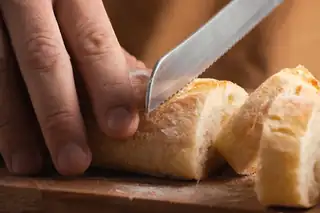
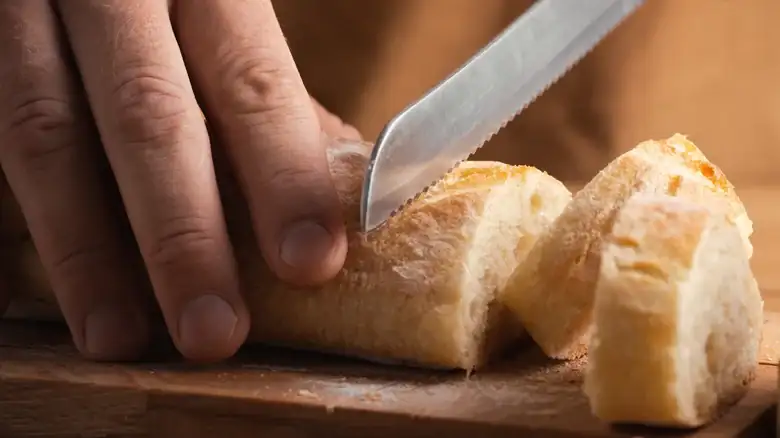
Serrated blades have a different structure. Like a saw, their teeth bite into the food as they cut, hooking into it and allowing for clean cuts without much force. It's precisely this serrated edge that makes it difficult to keep sharp: the cut is made with the flat, long side of each tooth, so that's where maintenance should focus.
Fortunately, because serrated knives rely more on friction and grip than sharpness, they stay sharp for years. Your main kitchen knife might need sharpening a couple of times a year, while a serrated blade can continue to cut cleanly for years.
Sharpening can be done with a manual or electric sharpener, or a ceramic rod. It's best to find a sharpener flexible enough to allow the entire serrated edge to make contact with it; with a ceramic rod, you have to scrape the blade tooth by tooth. Some manufacturers, like Misen, offer knife maintenance services, but most serrated blades are sharpened at home.
A well-maintained serrated knife can be one of the most effective tools in the kitchen. Although it's often associated with bread, it can also be used to cut fruit.







