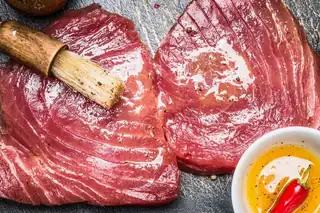
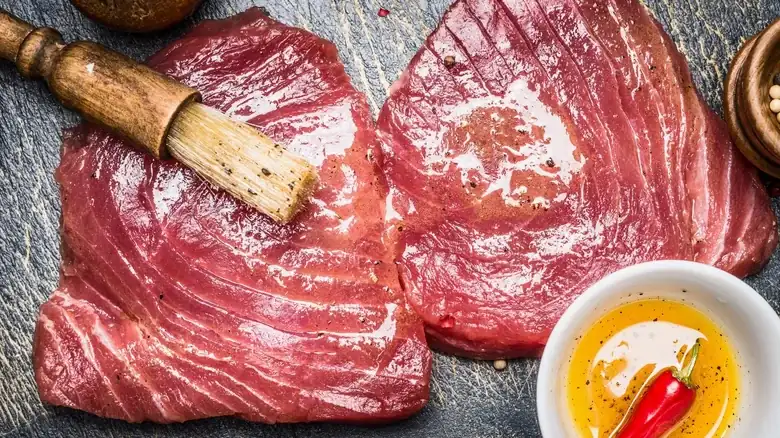
El azúcar en la marinada de un filete de atún de calidad de restaurante
El atún exige una marinada equilibrada, en la que el componente dulce modera la sal y ayuda a caramelizar la carne al cocinarla.
Fish is a delicate protein that must be handled with care, especially tuna. That's why a good marinade is a safe bet, although it requires thought and, sometimes, moderation, particularly with the sweeter ingredients. Brad Leone, head test chef, explains this in Bon Appétit regarding marinades: "People tend to overdo it." The goal is to complement the meat, not mask its flavor, and that's where those who try to recreate a restaurant-quality tuna steak at home often go wrong.
A balance must be struck between the salty and sweet ingredients of the marinade, with a clear objective for the flavor infusion. There are several ways to enhance the flavor of fish, but a good soak is an excellent starting point. The components should complement each other and enhance the final product, including the type of sugar or sweetener used.
In a grilled tuna steak with soy sauce, the main ingredient in the marinade is usually soy. But without brown sugar to soften its salty flavor, the steak is likely to be ruined. Furthermore, this sweet ingredient helps caramelize the tuna when grilled or pan-fried.
Honey, maple syrup, sugar, agave nectar, beet syrup, or similar ingredients serve a similar purpose. Like salt, sugar draws excess moisture from proteins, helping to crisp the skin and preventing the flesh from becoming soggy during cooking. Furthermore, a sweet ingredient counteracts the salt, which is necessary for fish, as proteins readily absorb it.
Marinades are an emulsion of oil, herbs, spices, sweeteners, and often acid, such as citrus or vinegar. Therefore, it's important to control the time the tuna spends in the liquid, which acts as a tenderizer. Too much acid or prolonged marinating can denature the protein, just as happens when cooking; in ceviche, that's precisely the goal. Anyone wanting to achieve restaurant-quality grilled yellowfin tuna at home should be careful.
Depending on the size of the fillet and the marinating time, just 30 minutes to an hour is enough to ruin a good piece of fish. That's why it's ideal to control the amount of acid. If the acidic, salty, and sweet ingredients are balanced, the marinade can preserve the protein for about two hours, allowing more time to retain the desired flavors and bringing the result closer to that of a restaurant dish.







