El paso crucial al freír salmón congelado en sartén
Freír salmón congelado en sartén da buenos resultados si se retira el hielo de la superficie antes de cocinarlo.
Frozen salmon is convenient: it's easy to store in the freezer until you urgently need it, and in some areas, it's the only salmon option. Defrosting it properly, however, can be tricky, especially if it wasn't refrigerated overnight and you're in a hurry.
Contrary to popular belief, salmon doesn't need to be thawed before cooking and can be cooked from frozen, even in a pan. A crucial step for frying it is to rinse the fillets with cold water and pat them dry with paper towels. This removes the ice from the surface, ensures the salmon browns properly, and prevents the fillets from acquiring the characteristic frozen fish flavor.
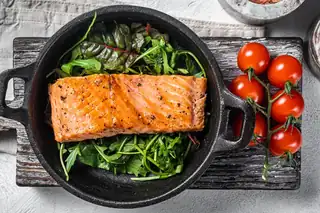
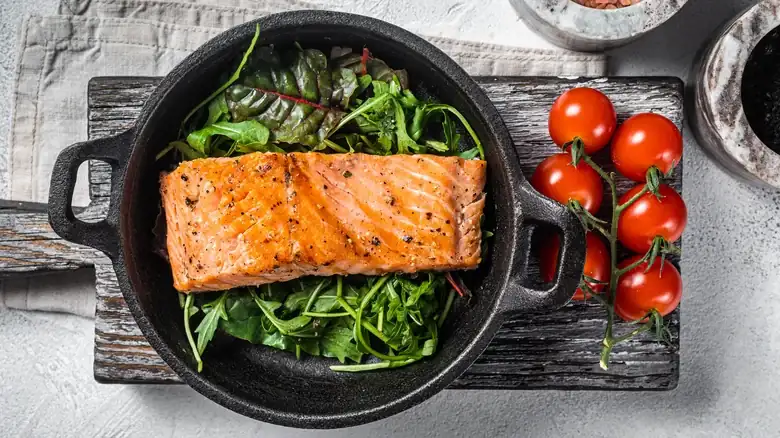
The golden-brown color depends on the Maillard reaction, which is responsible for the crispy texture of fried salmon. This reaction occurs when the carbonyl groups of fats and proteins in meat combine with amino acids at high temperatures. This is why roasted, grilled, or fried meats taste different from boiled or poached meats.
The Maillard reaction occurs at temperatures of 150°C or higher. Since this temperature exceeds the boiling point of water, the reaction will not take place while there is significant moisture on the surface. Modernist Cuisine recommends absorbing as much water as possible to remove moisture and heat the surface sufficiently. If cooked without this step, the salmon will reach the correct temperature, but it will not brown properly and will taste similar to boiled salmon.
There are a few things to keep in mind. This method works best with thin steaks, which cook faster and more evenly. With thick, frozen steaks, there's a risk of the outside overcooking while the inside reaches 63°C (145°F). The pan can be covered for faster cooking, but the steaks should be browned first, because covering them from the start traps moisture and has the opposite effect of removing the ice.
To pan-fry frozen salmon fillets, it's best to rinse, dry, and brown them. This saves time and effort, and the fish can look fresh once cooked.







