
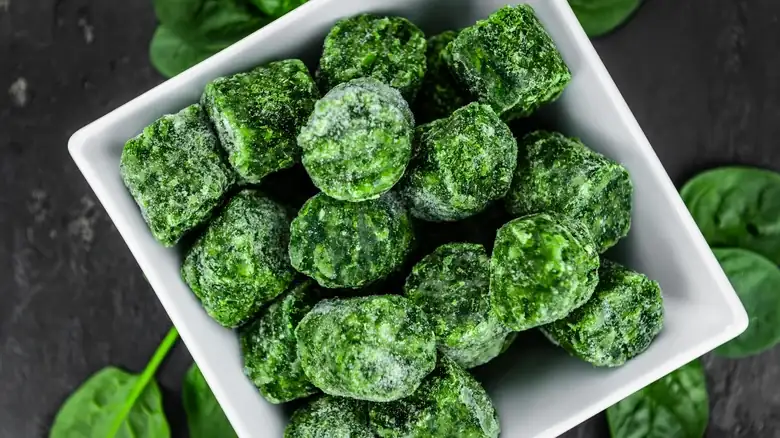
Defrosting frozen spinach is less necessary than it seems
Many dishes allow frozen spinach as is, without defrosting, which saves time and the hassle of squeezing it.
Defrosting spinach can be a hassle. The easiest method is to leave it in a colander in the refrigerator overnight, although sometimes it's hard to remember. If you're in a hurry, you can rinse it or defrost it in the microwave. The most tedious part is squeezing out the excess liquid so the texture isn't ruined, and that task can make buying fresh spinach more tempting, even though it spoils much faster.
Actually, defrosting them isn't always necessary. For dishes that can tolerate moisture, simply adding them straight from the bag is sufficient. When defrosted, spinach releases liquid, which will remain in the pot if added to a dish that way. This liquid isn't a problem in soup, where the spinach is already covered by another liquid, although it's a good idea to taste it after heating to adjust the salt and seasonings, which may have diluted.
There's no need to defrost them if you cook them over high heat, such as when sautéing or stir-frying, because the liquid evaporates. Just avoid adding sauce until the liquid has evaporated to maintain the consistency. And frozen spinach can be added directly to something cold and blended like a smoothie, since it doesn't heat up and doesn't release liquid.
Cooking frozen spinach directly is not recommended in dishes where adding liquid could ruin the recipe. This is the case with pizzas, where excess liquid would make the dough soggy, and with any pie or baked good containing spinach. It's also advisable to defrost them when the dish's texture would be affected by liquid. This includes eggs, as in quiches or frittatas, which wouldn't reach the right consistency, and many thick sauces, which rely on a delicate ratio of cornstarch or other solids. In these cases, although tedious, it's best to defrost them and squeeze out as much water as possible.







