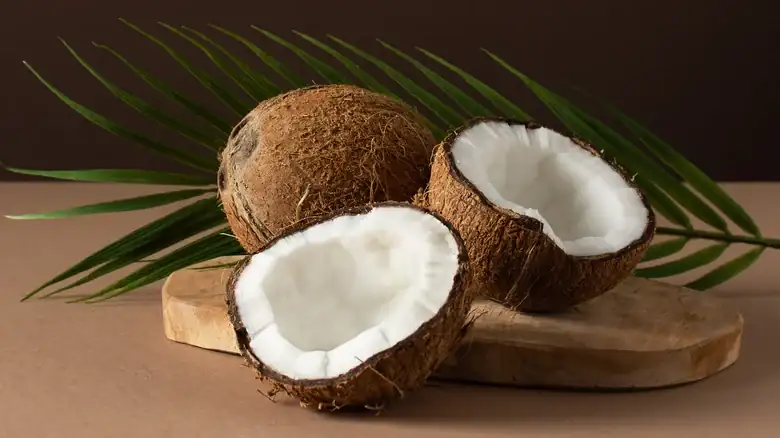
The coconut is a drupe, but the FDA classifies it as a nut.
A coalition in the Americas wants coconuts removed from the list of nuts, arguing that they are neither nuts nor a major allergen.
“With peaches, the bit we consume is the mesocarp since the endocarp is the inedible pit. Coconuts might not qualify as nuts, but the term”
In the supermarket, coconuts are usually found next to mangoes in the fresh produce aisle, not with packaged nuts like peanuts, almonds, cashews, and walnuts. However, the U.S. Food and Drug Administration (FDA) classifies it as a nut, and this decision has consequences for farmers and food producers.
Botanically, a nut is a fruit with a hard shell that encloses a single seed. Chestnuts, hazelnuts, pecans, and walnuts fit that definition, but peanuts and almonds do not. Even so, all these nuts are grouped together because that's how we, as consumers, know them.
Botanically, a coconut is a drupe, not a nut. A drupe has three layers: the exocarp (the skin), the mesocarp (the middle, fleshy or fibrous layer), and the endocarp (the pit surrounding the seed). According to this definition, peaches, plums, walnuts, and almonds are also drupes, even though we call them fruits or nuts.
In coconuts, the exocarp and mesocarp are discarded, and only the endocarp, which we commonly call the coconut, is used. In peaches, however, it is the mesocarp that is eaten, because the endocarp is the inedible seed.
In the kitchen, the coconut does resemble a nut, and milk, oil, and flour can be extracted from it. The term "nut" is commonly used to describe various edible seeds, regardless of their botanical classification.
The classification matters because the FDA considers nuts one of the major food allergens, along with milk and eggs, and products containing them must declare this on the label. Since the agency classifies coconut as a nut, any food containing it must list it, which could discourage some people from consuming it in the United States. In contrast, countries like Australia classify it as a drupe.
The Coconut Coalition of the Americas is campaigning to remove coconuts from the list of nuts. Their arguments are sound: coconuts don't grow on trees, but on palm trees, specifically the coconut palm, and less than 1% of the population is allergic to coconuts. It will be interesting to see how the debate unfolds.