La proporción para sustituir el tomillo seco por tomillo fresco
El tomillo seco funciona en casi todas las recetas que piden tomillo fresco, siempre que se ajuste la cantidad: el triple de fresco por cada parte de seco.
Cooking with fresh thyme is the best way to capture its delicate flavors, with its hints of pine, pepper, and earth. But sometimes fresh sprigs aren't available and the recipe calls for them, as in a cider-braised chicken with cabbage and thyme.
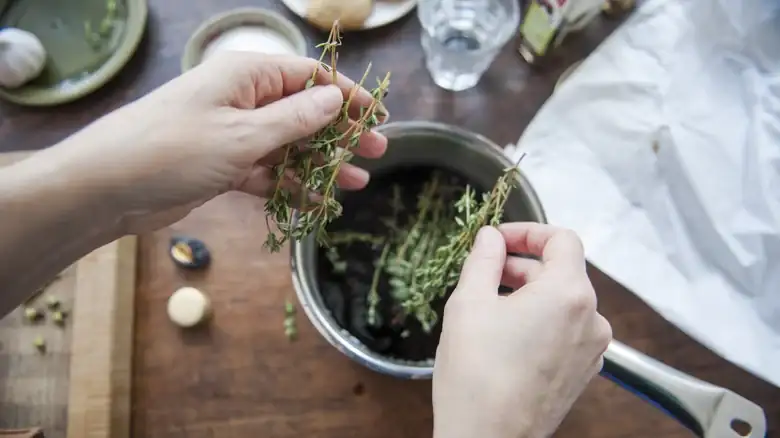
The ideal ratio is 3:1. If a recipe calls for dried thyme, use three times as much fresh thyme; if you're substituting dried for fresh, just use one-third of the amount. Fresh thyme may seem more aromatic, but dried thyme is more concentrated and potent, with a more intense flavor per spoonful.
It's a useful addition to dishes like zucchini stuffed with mushrooms and cheese, or macaroni with Manchego cheese and thyme.
If fresh or dried thyme isn't available, other herbs with woody and spicy notes can be substituted. Thyme is related to mint and oregano: warmer Italian dishes tend to pair better with oregano, while spicier or Middle Eastern dishes go well with mint. Rosemary shares many nuances with thyme and is the closest to its pine notes. In a pinch, marjoram, parsley, basil, or tarragon will also do.
Many spice blends include dried thyme. Poultry seasonings and Italian seasoning often contain it, along with oregano, rosemary, and sometimes a touch of garlic. Herbes de Provence has similar herbs and works in almost any recipe that calls for thyme. A more complex option that also often includes it is za'atar, an earthy-flavored blend that enhances the flavors of dishes.







