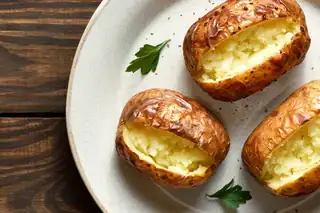
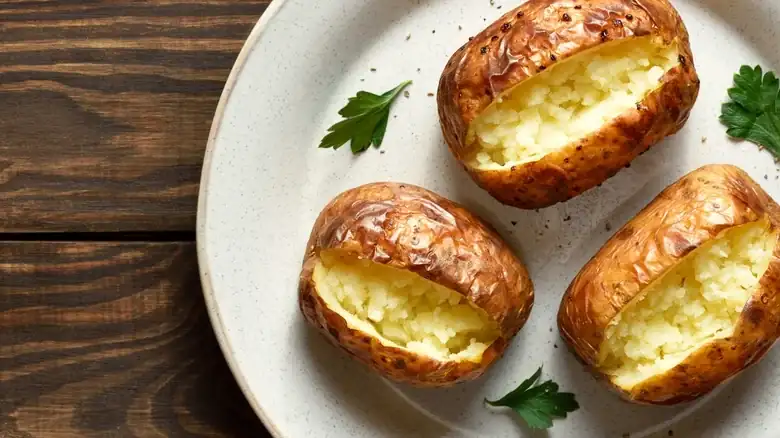
¿Se pueden congelar las patatas asadas? ¿Y se deben congelar?
La humilde patata es la reina de las verduras, pero tiene un inconveniente: puede ser bastante laboriosa. Prepararla suele implicar fregarla, hervirla y rallarla, además de la cocción propiamente dicha.
The humble potato is the queen of vegetables, but it has one drawback: it can be quite laborious. Preparing it usually involves washing, boiling, and grating it, in addition to the actual cooking. Roasted potatoes can take more than an hour in the oven, but there's a trick to revolutionize your meal preparation: freeze them! While this will slightly alter their flavor, you can (and even should) freeze them to reheat and enjoy later.
The main change will be in the potato's texture. Potatoes contain a lot of moisture which, when baked, gets trapped in the skin (that's why holes are often made in them before baking). When you take them out, they're soft and fluffy, but when frozen, all that liquid stays inside, continuously soaking into the flesh. Therefore, when you reheat them, you'll notice a decrease in quality. However, the difference is often exaggerated. The flavor remains intact, and the texture doesn't become mushy or unpleasant; it simply becomes a little more floury than before.
If you don't mind slightly moist baked potatoes, freezing them will make meal prep much easier, saving you time and effort. Plus, you don't have to eat them as is. You can use parboiled potatoes to make golden shredded potatoes, soup, fries, fluffy mashed potatoes, and much more.
Tips for freezing and reheating roasted potatoes
You can freeze any type of potato, but there are a few differences to keep in mind. Russet potatoes are considered ideal for baking because of their low moisture and high starch content. This allows them to bake soft and fluffy, and they freeze well thanks to their light, floury texture. Yukon Gold potatoes are the next best option, with a slightly higher moisture content (and less starch). In short, the higher the starch content, the fluffier the baked potato will be. However, some people prefer a firmer texture, so there's no right or wrong answer.
Before freezing, wait for the potatoes to cool down. The warmer they are, the more water they'll absorb in the freezer, and while the potato's natural moisture won't significantly affect the texture when reheated, excessive condensation can. Also, be sure to seal them properly, either in a bag or plastic container. You can leave them wrapped in aluminum foil, but this alone won't provide enough insulation for freezing, so an extra layer of plastic wrap is recommended.
To reheat, skip the defrosting step and heat them directly. Whether in the oven, air fryer, microwave, or even on the stovetop, they'll be perfect. The microwave is the only option where there's a risk of the potatoes drying out a bit, but that might not be so bad if you want to remove excess moisture from the freezer.







