Cómo evitar que tus hamburguesas se deshagan en la parrilla
Imagínate esto: estás afuera, el sol se pone tras los árboles y el aroma de jugosas hamburguesas de carne de res inunda el aire de la parrilla. La mesa está puesta, tienes tu cerveza favorita para la parrilla en la mano, vas a voltear las hamburguesas y... ¡zas!
Imagine this: You're outside, the sun sets behind the trees, and the aroma of juicy beef burgers fills the air from the grill. The table is set, you have your favorite barbecue beer in hand, you're about to flip the burgers, and... bam! One burger becomes six, leaving you with a crumbly mess. Luckily, there's a solution.
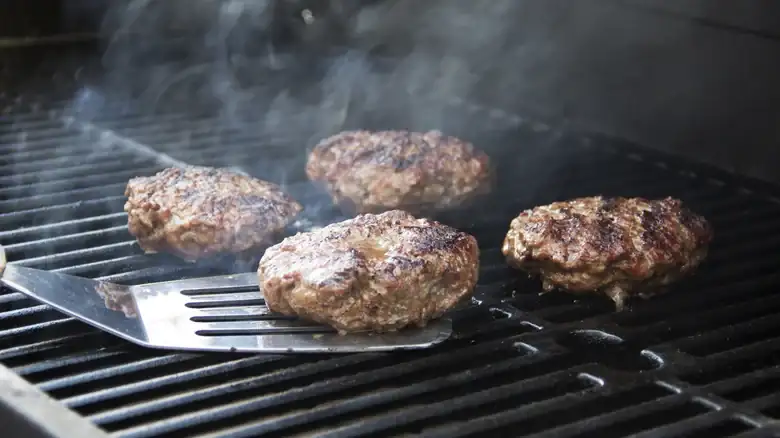
To keep your burgers from falling apart on the grill, prepare them the night before and store them in the refrigerator. This technique, used by chefs worldwide (including Gordon Ramsay), keeps the meat firm and therefore makes it easier to flip and move them on the grill (according to YouTube).
After removing them from the refrigerator, let the burgers sit for a bit before placing them on the grill. They should be cold enough so the inside doesn't cook too quickly and the meat doesn't dry out, but not ice cold, to avoid them becoming tough on the outside and raw on the inside. Once the grill is preheated, carefully place the burgers on it and don't move them until they are nicely browned on one side. The more you touch, move, or handle them, the greater the chance they will fall apart.
How to avoid other common mistakes when grilling hamburgers
A soggy burger might not be the only problem when preparing this seemingly simple dinner. If you've ever noticed your burgers turning out tough and you're not sure why, the issue could lie in how you handle the meat. Instead of kneading or overworking it, try touching it as little as possible and shaping it gently. This allows the meat and fat to breathe during cooking, preventing them from compacting and resulting in an unpleasant, dense bite.
Similarly, remember that when cooking meat, steam builds up and juices expand, which could cause your burgers, no matter how well-formed, to dome-shaped. To prevent this, remember that pressing down with your thumb easily keeps the burgers from deforming, and make sure each one is a uniform thickness.
Finally, the reason your burgers are drier and more crumbly than you'd like could be due to the type of meat you choose. Very lean meat (like a 90/10 cut) won't provide the same juiciness, flavor, and texture as an 80/20 cut. Fat can also act as a binder and even prevent the burgers from sticking to the grill.







