Mint in pasta, a fresh herb that deserves more prominence
Far from being limited to mojitos or lamb, mint is a staple ingredient in Italy, where it also has a place in pasta.
In Italian cuisine, basil is a staple ingredient for a reason: its distinctive, herbaceous flavor works equally well in a Genovese pesto or a cocktail like a gin basil smash. But there's room for another herb in pasta. In most American kitchens, mint is far from the most commonly used herb, while around the world, and especially in Italy, it's a staple.
The mint we're talking about isn't the overly concentrated, syrupy kind found in coffee, chocolate bars, and chewing gum. It has a fresh, refreshing, and above all, subtle profile, adding a touch of revitalizing sweetness. Throughout Italy, where mint is abundant, it's used in a wide variety of dishes, from panzanella to Roman-style artichokes, and even pasta.
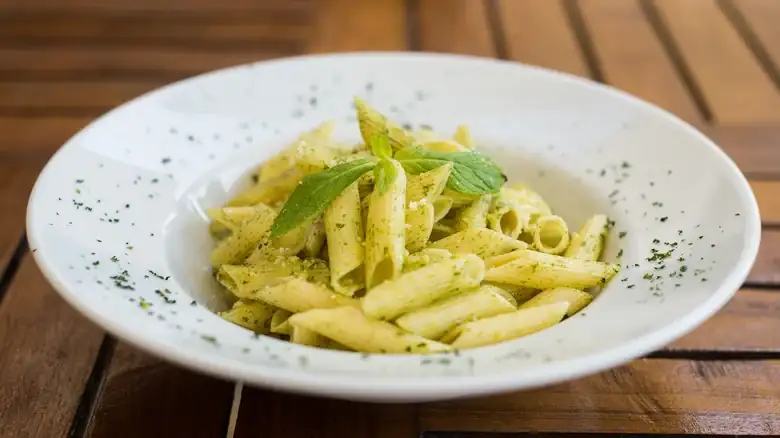
With pasta, the possibilities are endless. You can grind it to make a mint pesto to mix with fusilli or penne, or keep it simple and combine it with butter and Parmesan, which enhances its flavor in a surprisingly complex and refreshing dish.
Mint and basil aren't as different as they seem, because basil, like thyme, Greek oregano, and tarragon, belongs to the mint family. Sweet basil, the kind used in pesto alla Genovese, is even more similar to mint than most of these herbs, with an equally fresh flavor. Mint is, however, slightly less vegetal than basil, making it an ideal partner for more delicate flavors, such as fish. It would be lovely in spaghetti with clams, balancing the fishy flavor and enhancing the sweet notes of the tomato.
A Roman-inspired dish combines mint with artichoke and anchovy. The mint adds earthy, smoky notes, while the anchovy bursts with a salty touch. Simply cut the artichoke into small pieces and cook it with the anchovy, garlic, lemon, and mint before mixing it with bucatini or tonarelli.
To preserve it longer, fresh mint will last up to three weeks in the refrigerator, although it will lose moisture and wilt. Drying it intensifies its flavor, as the saying goes: the less water, the more flavor. The traditional method involves hanging it upside down, away from sunlight, to air dry for a few weeks. If you're impatient, preheat the oven to 49 degrees Celsius (120 degrees Fahrenheit), spread the mint on a baking sheet, and leave it in for 20 minutes, turning off the oven after five minutes. When the leaves begin to curl, they're ready.
When using dried mint, use slightly less than fresh mint, as its flavor is more intense and too much can overpower the rest of the dish. It's best to add it gradually until you achieve the desired flavor.