
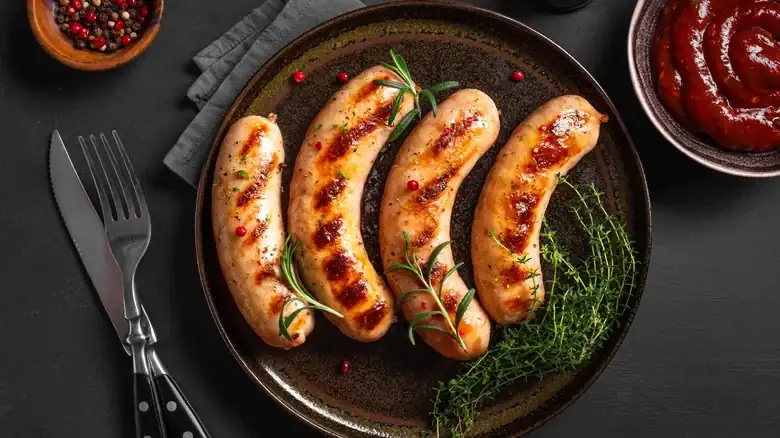
Por qué no conviene pinchar las salchichas antes de cocinarlas
Pinchar las salchichas para evitar que exploten es un error extendido que las deja secas, sin textura ni sabor.
There's a widespread idea about how to cook sausages: poking holes in them before cooking. It's believed this prevents them from exploding in the pan, and some say it also allows the fat to escape during cooking. The origin of this practice is as mysterious as who invented it.
Piercing sausages doesn't prevent them from bursting and, in fact, dries them out. Fat is lost, leaving behind a dry sausage with no texture or flavor. Leaving them whole preserves a juicy interior and a crispy, golden rind.
The pressure that supposedly makes the sausages burst isn't the real cause: it depends primarily on the cooking temperature. Although it's tempting to throw them in a very hot, greased pan, the key is to cook them over low heat.
The perfect sausage is cooked to between 65 and 71 degrees Celsius (150 to 160 degrees Fahrenheit). To achieve this, start in a cold pan and heat gradually with plenty of butter. When they reach between 63 and 66 degrees Celsius (145 to 150 degrees Fahrenheit), remove them from the heat and let the residual heat finish cooking them.
For the most precise method, German tradition offers a guide. From knackwurst to the iconic Berlin currywurst, Germans have turned sausage making into an art. It's best to partially scald them before frying and then finish them in butter. This butter, mixed with the juices released by the sausages, creates an ideal base for serving them with mashed potatoes and onion gravy.