Ziti y penne: en qué se diferencian dos pastas tubulares
Ambas son pastas tubulares huecas que retienen bien la salsa, pero el ziti se usa sobre todo en platos al horno y el penne en recetas con mucha salsa.
Both ziti and penne are hollow, tubular pasta shapes, ideal for thick or creamy sauces. Their central hole holds the sauce and melted cheese, so every bite retains its flavor. Although they are very similar, they are not entirely interchangeable, though one can be substituted for the other in a pinch.
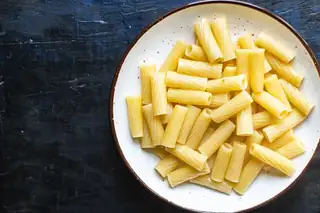
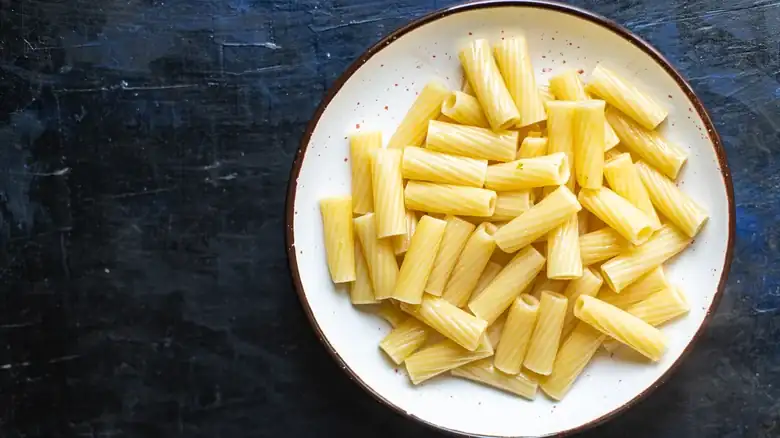
Ziti originates from southern Italy and has a tubular shape with straight ends, thin walls, and a smooth texture. It's typically sold in pieces between 2.5 and 5 cm long, and some imported brands offer it in long, hand-cut tubes. Its thin walls make it soft and creamy when baked, so it's a common choice for baked pasta. It's also used on pizzas because it doesn't harden too much in the oven.
Penne has thick walls, ridged sides, and angled ends. The ridged version is the most popular because it absorbs and retains sauces better. In stores, it's usually found in pieces about 2.5 cm long, slightly smaller than ziti. Because of its thicker walls, it cooks al dente and mixes immediately with the sauce, resulting in a firm, chewy texture.
Although it can be baked if necessary, penne is best used in dishes with lots of sauce, such as penne alla vodka, and in cold pasta salads, because it holds its shape well.







