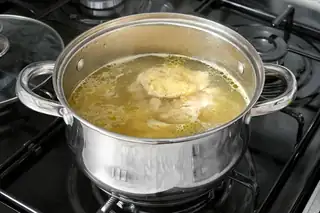
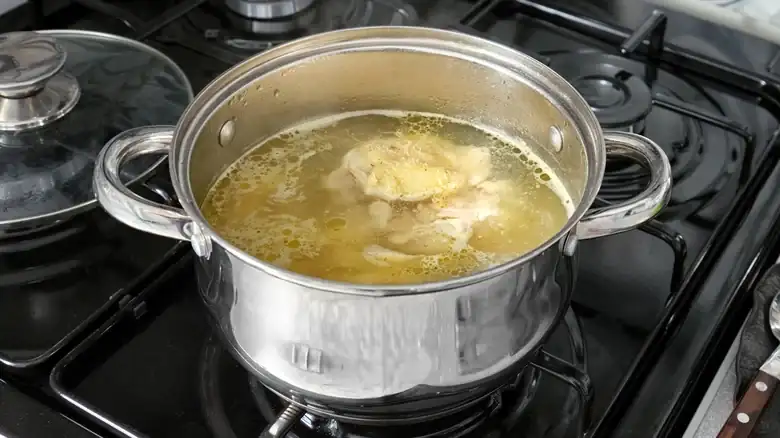
El origen de la espuma blanca que suelta el pollo al hervirlo
Al hervir pollo aparece una espuma blanca poco apetitosa que puede enturbiar los caldos si no se retira a tiempo.
The foam comes from the chicken's proteins, some of which are released during cooking. The culprit is albumin, a water-soluble protein also found in other meats and fish; that's why salmon also releases a white substance when cooked. As the chicken heats up, the muscles contract and release this protein, which coagulates and forms a white foam.
Foaming increases with frozen chicken because ice crystals rupture cells, releasing more water and protein. Therefore, if you want less foam, it's best to use thawed chicken. The more times meat is frozen, the greater the cell damage and the more foam appears when it's boiled.
The foam can be skimmed off with a stainless steel mesh skimmer or a ladle, taking care not to remove too much liquid along with it. This is especially important when preparing stock or soup, as the foam can cling to the fat and pieces of meat, resulting in an undesirable texture and flavor. To minimize foaming, it's best to use fresh chicken and dry it thoroughly before boiling.
If the chicken is going to be used in a salad, it's not necessary to remove the foam, as the meat is removed from the water. Removing it during cooking is also possible if it's unpleasant, and it doesn't affect the quality of the chicken.







