Are 'Vine-Ripened' Tomatoes Better Or Just A Marketing Scheme?
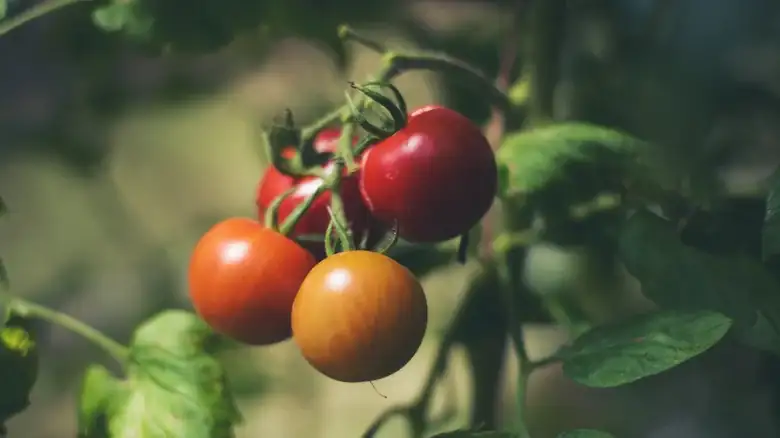
You've likely seen the term "vine-ripened" as a way of describing some tomatoes at the grocery store. Perhaps it conjures up an image of plump red tomatoes on a sun-drenched vine, which will make the best tomato sandwich or taste absolutely delectable in salsa.
“is arguably more of a marketing term than a good description of how such tomatoes are grown. So, what does”
So, what does "vine-ripened" mean? The term can be applied to tomatoes that are picked when they hit the so-called "breaker" stage, which is the point when they're just starting to show signs of ripening from green to red. A tomato at the breaker stage will just start to be tinged with yellow. As long as these tomatoes are kept reasonably warm, they'll ripen over time without the need for additional hormones.
This can be contrasted with the other main method of tomato harvesting for grocery stores: picking firm completely green tomatoes and treating them with a hormone, ethylene. That hormone promotes ripening — tomatoes produce this hormone themselves, but this process uses more ethylene to speed things up. Vine-ripened tomatoes tend to cost more, but it's not just because of the nice-sounding description — because they're riper and untreated, they're more delicate and need to be transported more carefully, which also helps push up the cost.
But picking them early isn't actually bad
Now you know what "vine-ripened" means, you may feel a little cheated if you've ever bought them at the grocery store. Though tomatoes with the "vine-ripened" descriptor do tend to command higher prices, because they need more careful transport, are shipped partially ripe, and aren't treated with hormones, the extra cost isn't completely unjustified. It's also true that tomato vines carry much of that tomatoey smell, which can improve the overall tomato-eating experience. But do they actually taste different from ordinary supermarket tomatoes?
Of course, there's nothing quite like a tomato grown outside and picked fully ripe and fresh from the vine. But when it comes to supermarket tomatoes, the good news is that tomatoes don't need to ripen till they're perfectly red on the vine for them to be tasty. Some studies have shown that tomatoes that are picked at the green before-the-breaker stage taste almost the same as those left on the vine and shipped when they begin to turn color. Tomatoes don't need to be left in the sun to develop flavor — in fact, in particularly hot dry weather, tomatoes can turn out better tasting if they're ripened in a cooler place away from the sun. Plus, once they've hit their full size (even while still firmly green), tomatoes don't really receive any nutrients through the vine so there's no clear benefit to leaving them there.