
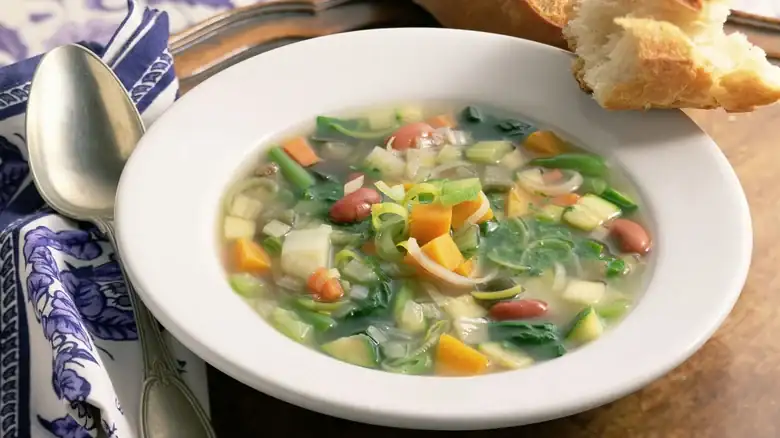
Sautéing the vegetables well before making soup enhances their flavor
When the days get shorter, a pumpkin or bean soup is greatly enhanced if the vegetables are patiently sautéed before adding the broth.
When the days grow shorter and the leaves turn crisp, the soup pot returns to the kitchen. Roasted squash and bean soups are especially tempting at home, because they allow you to add aromatic herbs to the roasted meats and broth.
The most overlooked step is thoroughly sautéing the vegetables. It's slower, and rushing it is one of the most common mistakes when making homemade soup. Sautéing the mirepoix, a classic base of celery, carrot, and onion, along with garlic or mushrooms, caramelizes them and releases more flavor. Boiling them only softens them, leaving barely any trace of flavor.
The difference has a name: the Maillard reaction. It's the chemical reaction that produces the browning and crispy texture of food, the same one that gives flavor to barbecued rib-eye steaks and toasted bread. By sautéing the herbs in a little oil, that crust forms, and the flavor concentrates in the soup. The onions, and even the hot peppers, develop their sugars, soften their natural astringency, and enhance their nuances.
For this technique to work, it's best to choose vegetables that can withstand two cooking cycles without becoming mushy. Mirepoix is a good option because carrots, celery, and onions are firm. Broccoli, cauliflower, or cubes of winter squash, such as butternut or acorn squash, also work. They should be cut into fairly uniform pieces, about the size of a nickel, so they cook evenly.
The pan should be large enough so the vegetables form a single layer, because if they're piled on top of each other they'll steam instead of browning. Just enough oil to cover the bottom is also necessary. This allows the vegetables to adhere to the surface without sticking and forms a golden crust. Once sauteed, they're perfect for adding body to chili, cream of vegetable soup, or chicken stew.