
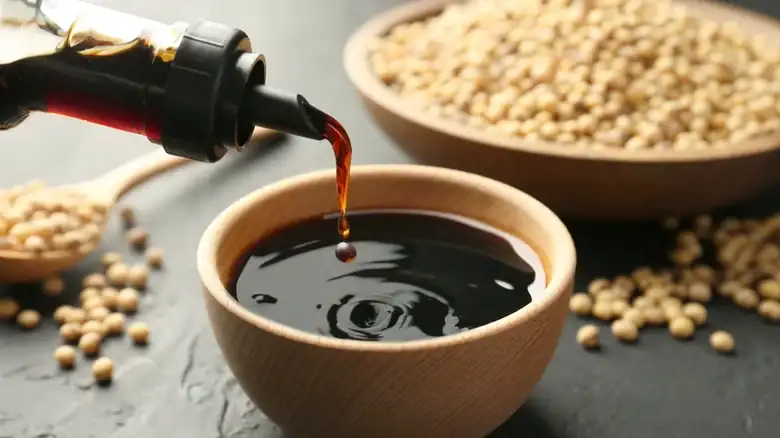
El kecap manis, la salsa de soja indonesia dulce y ahumada que vale la pena conocer
Más allá de la shoyu japonesa, Indonesia ofrece una salsa de soja que combina sabores dulces, salados y ácidos, endulzada con azúcar de palma.
When you think of soy sauce, you probably picture Japanese soy sauce, known as shoyu in Japan and the most common type found in supermarkets. But it's not the only one: there are Chinese varieties and some Korean ones that are quite interesting. And if you're looking for something truly unique, you should look to Indonesia.
It's called kecap manis, although it's sometimes spelled with the Dutch "ketjap manis," a legacy of colonization. Its preparation is similar to that of its Japanese cousin: soybeans fermented in brine with koji mold, a completely safe process. The main difference is the palm sugar, which imparts a caramel and smoky flavor and a syrupy texture. Some recipes include fish sauce or spices such as star anise, galangal (similar to ginger), lemongrass, and kaffir lime leaves, and the exact recipe varies from producer to producer.
Japanese soy sauce maintains a simple formula, with water, salt, soybeans, koji, and sometimes wheat. Kecap manis, on the other hand, is sweet, rich, smoky, and aromatic, with a much more syrupy texture than other versions.
It appears in Indonesian dishes such as nasi goreng, a spicy fried rice with egg; soto ayam, a chicken noodle soup; and the peanut sauce in gado-gado, a salad with many spices, vegetables, and tofu or tempeh. For anyone wanting to cook Indonesian dishes, nasi goreng is certainly a good starting point.
However, its use isn't limited to those dishes. In marinades, it adds a sweet and savory touch, and its sugar helps to brown steaks during cooking. That same sugar makes it ideal for glazing meats and fish, and it also adds umami to stews, sauces, and stir-fries. Its thick consistency and complex flavor also make it a great dipping sauce.
If you can't find kecap manis, you can make a homemade version: gently heat Japanese soy sauce with palm sugar and spices like ginger and star anise until it thickens to a syrupy consistency. Even so, it's worth seeking out the authentic version, with its intense umami flavor.







