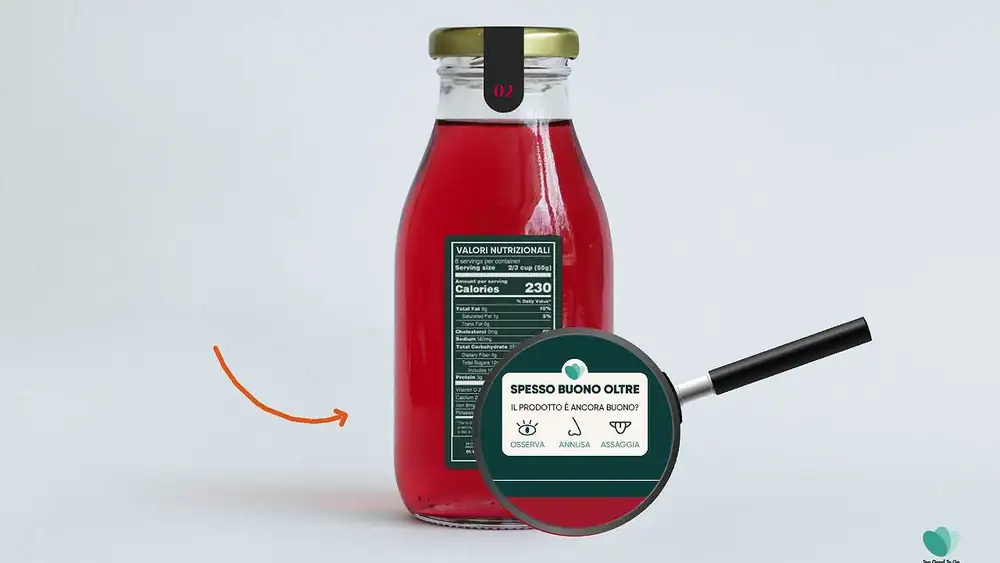
Remember when food never expired? This is the example we should probably follow
There was a time—surely many of you remember—when food didn't expire, but it did. At least, some foods never expired. I mean, there was no need to tell us when they expired, or even tell us when they had gone bad.
In fact, it was partly a matter of avoiding being overly strict and didactic: that is, it's difficult, rationally, to imagine that at one minute past midnight, yogurt that was edible yesterday suddenly ceases to be so just because a label says so. And bottled water, shall we talk about it? But does it really "expire" when a number printed on the plastic says so?
Expiry date and minimum durability date
In fact, at a certain point, about ten years ago, they even tried to explain to us that not everything was as rigid as it seemed after the obligation to put those dates almost everywhere.
The difference—they tried to explain to us, not always successfully—was between "use by" and "best before" dates. In other words, between "use by" and "best before." That adverb, "best before," was used to differentiate those foods that don't become harmful, toxic, or dangerous once past their indicated date, but simply don't guarantee the preservation of their quality.
In short, fresh milk expires, and it's much, much better to avoid eating it if it's gone; pasta expires, but you can still eat it, unless you're expecting the pasta dish of a lifetime.
But the truth is that by now we had all become very used to blindly relying on these dates printed on foods, to checking them obsessively, and to throwing things away without even opening them and smelling them to see if they were still good, like our grandmothers did.
The result of all this, ladies and gentlemen, is not greater food security at all, but one thing and one thing only: an incredible increase in food waste.
The California example
Over the years, many have realized that this issue of expiration dates had gotten out of hand. And many have rushed to remedy the situation, explaining the difference between "use by" and "best before" dates, or reneging on the obligation to indicate expiration dates.
The latest is California, which passed a new food labeling law that goes into effect this week. The problem was that previously, California had as many as fifty different labels, such as "best before" or "best before," which inevitably confused consumers and led to unintentional food waste.
Now producers will be forced to use only two, as we do. So where's the example? It lies in simplification, which perhaps we too should adopt, even eliminating the "preferably" and letting the consumer determine whether a product's quality (and not food safety, mind you!) has remained intact or altered.
The reason and the benefit are easy to explain, and they're the same ones that have fueled the debate in the United States. In the absence of federal regulations establishing what information must be included on labels, expiration stamps have generated confusion among consumers and are responsible for nearly 20% of national food waste, according to the Food and Drug Administration. In California, this translates to approximately 6 million tons of unexpired food being thrown away each year.
And how many times do we throw away a package because it was “preferably” to be eaten before we found it in the pantry?