These Wineries Are Just as Serious About ‘Merroir’ as They Are Terroir
On a cool November evening on Virginia’s Eastern shore in the Chesapeake Bay, a small but bustling crowd gathers around wine and oysters. Tables are topped with plates of the freshly shucked bivalves, and each adult sips a glass of wine.
“There is a unique minerality in the wine that counters the salinity of Chesapeake Bay oysters, while a ripe fruit component matches the sweetness of the oyster,”
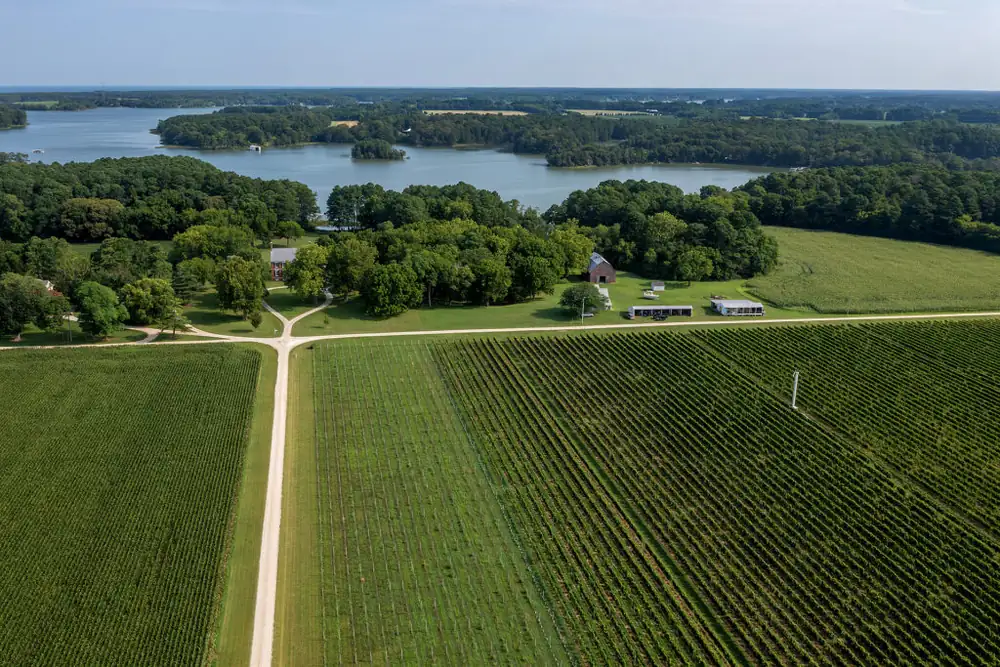
The scene, framed by the Bay glittering in the background and rows of trellised grapevines rustling in the wind, depicts a typical weekend at the Chatham Vineyards tasting room from November to March. The collaborative event, called “Winter Wine and Oyster Weekend,” is the perfect showcase of “merroir.” Coined in the early 2000s, the term “merroir” is the water version of terroir : it refers to when surrounding marine elements impact the flavor profile of marine life.
Just as wine has terroir, oysters have merroir. And in places like the Chesapeake Bay, the largest United States estuary (a mostly encapsulated large body of water in which fresh water meets seawater), winemakers and seafood purveyors are bridging the gap between land and water in pursuit of a common goal: building a more sustainable environment while nurturing the local economy.
What Goes Better Than Wine and Oysters? From a flavor perspective, oysters and wine make natural companions.
Chatham Vineyards, whose vines are just 300 yards away from the oyster beds, has been hosting its wine and oyster pairing events for 17 years. The winery’s steel-fermented, minimal intervention Chardonnay , one of its most successful bottlings, is a stalwart in its consistency of product and ability to pair with Chesapeake Bay oysters.
“There is a unique minerality in the wine that counters the salinity of Chesapeake Bay oysters, while a ripe fruit component matches the sweetness of the oyster,” says John Wehner, Chatham Winery’s owner. About 15 miles north of Chatham Winery lies Laughing King Oyster Company and Vessel Farm Winery .
Owners Thomas and Erin Haney founded the oyster company first and then established the vineyard less than a mile from the oyster beds, with the intent of pairing the wine with the oysters. As Thomas puts it, “the focus is small-batch production with high quality” that offers a full spectrum of the Eastern Shore flavor profiles, like salinity, umami, and minerality.
While over 50 grapes were initially planted in the vineyards, Vermentino is emerging as the highlighted wine for the oyster pairing, which “has been a way to introduce a grape most people are not familiar with,” says Thomas. In places like the Chesapeake Bay, winemakers and seafood purveyors are bridging the gap between land and water in pursuit of a common goal: building a more sustainable environment while nurturing the local economy.
The Dog and Oyster Micro Vineyard , located further north, has hosted wine and seafood events for 15 years. Like Chatham Winery, they offer a Chardonnay that is fermented in stainless steel to preserve the freshness and minerality to pair with the oysters.
Protecting the Bay with Merroir and Terroir
Aquaculture and oyster farms are vital to the Chesapeake Bay estuary. Estuaries are known for their brackish water—the mix of fresh and saltwater—that nurtures the ideal environment for organisms like oysters to grow.
That set of conditions is mutually beneficial: a full-term oyster is capable of cleaning 50 gallons of water a day. The mollusks also lower the carbon footprint by utilizing carbon in the formation of their shells, and they further aid in lowering oxygen depletion by consuming algae, thus minimizing dead zones in the water.
In terms of flavor, bodies of water like the Chesapeake Bay promote the balance of saltiness (from the seawater) and sweetness (from the silt bottom and fresh water) that makes oysters delicious. It is only fitting that a region that is ramping up its wine production fosters a union with a product unique to this environment. While there are some 250 commercial aquaculture enterprises in the Chesapeake Bay, many of the wineries are not part of an established wine trail.
These unique “merroir/terroir” experiences in this region invite and inform a sustainable path forward for both wine and oysters.
- Who: Chesapeake Bay · Chatham Vineyard · Chatham Winery · Virginia’s Eastern