The Perfect Pasta Primavera
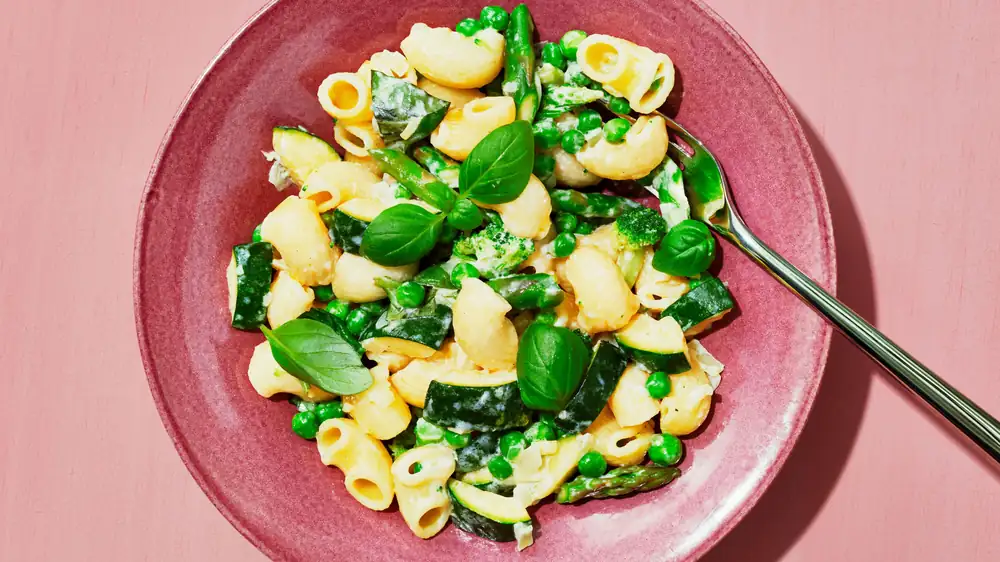
Pasta primavera is all about celebrating spring vegetables: asparagus, peas, zucchini (or whatever seasonal veg you love) folded into a glossy sauce made with cream, Parmesan, butter, and pasta water.
- 12 oz. medium pasta (such as lumache or conchiglie)
- Kosher salt
- ¼ cup extra-virgin olive oil
- 1 white or yellow onion, finely chopped
- 4 garlic cloves, finely chopped
- Freshly ground black pepper
- 1 small zucchini, quartered lengthwise, seeds removed, cut into ½" pieces
- 1 bunch asparagus, woody ends trimmed, thinly sliced
- 1 cup frozen broccoli florets
- 1 cup frozen peas
- ½ cup heavy cream
- 2 oz. Parmesan, finely grated (about 1 cup)
- ¼ cup torn basil leaves, plus more for serving
- 2 Tbsp. fresh lemon juice
- 2 Tbsp. unsalted butter, cut into 1" pieces
- Cook 12 oz. medium pasta (such as lumache or conchiglie) in a large pot of boiling salted water, stirring occasionally, until very al dente, about 2 minutes less than package directions; drain, reserving about 1 cup pasta cooking liquid.
- Meanwhile, heat ¼ cup extra-virgin olive oil in a medium Dutch oven or other heavy pot over medium-low. Add 1 white or yellow onion, finely chopped, 4 garlic cloves, finely chopped, a large pinch of kosher salt, and a large pinch of freshly ground pepper and cook, stirring often, until onion is softened and translucent, 8–10 minutes.
- Add 1 small zucchini, quartered lengthwise, seeds removed, cut into ½" pieces, and cook, stirring often, until zucchini is tender, about 5 minutes. Add 1 bunch asparagus, woody ends trimmed, thinly sliced, 1 cup frozen broccoli florets, 1 cup frozen peas, ½ cup heavy cream, and reserved pasta and ½ cup pasta cooking liquid. Cook, stirring often, until asparagus is tender and cream is clinging to vegetables and pasta, about 5 minutes; remove from heat.
- Add 2 oz. Parmesan, finely grated (about 1 cup), ¼ cup torn basil leaves, 2 Tbsp. fresh lemon juice, and 2 Tbsp. unsalted butter, cut into 1" pieces; stir vigorously, adding splashes of pasta cooking liquid as needed to loosen, until cheese is melted and sauce is smooth and glossy and coats pasta. Divide pasta among bowls and top with more basil.
Inspired by a recipe from Bon Appétit’s May 1979 issue—which readers requested again and again for decades—this updated version feels both classic and fresh. A splash of lemon juice and plenty of basil keep the dish bright and lively, making it the kind of pasta primavera you’ll want to cook, well, again and again, long after spring is done.
What is pasta primavera? Pasta primavera is an Italian-American pasta dish made with spring vegetables such as asparagus, peas, zucchini, and broccoli, tossed with pasta and a light sauce. “Primavera” means “spring” in Italian, a reference to the seasonal vegetables traditionally used in the dish.
Is pasta primavera really Italian? What vegetables go into classic pasta primavera?
There is no single traditional vegetable combination. Cooks might use any mix of spring vegetables, such as asparagus, peas, zucchini, broccoli, mushrooms, bell peppers, carrots, or tomatoes.
Is pasta primavera always creamy? Some versions are made with only olive oil and Parmesan, while others include cream or lots of butter.
This recipe uses a small amount of cream along with Parmesan, butter, and pasta water to create a silky, glossy, well-balanced sauce. Can I make pasta primavera ahead? You can prep the vegetables ahead of time, but cooking the pasta and tossing everything together is best done just before serving for the best flavor and texture.
Recipe information
- Total Time 45 minutes
- Yield 4 servings
Preparation
- Step 1Cook 12 oz. medium pasta (such as lumache or conchiglie) in a large pot of boiling salted water, stirring occasionally, until very al dente, about 2 minutes less than package directions; drain, reserving about 1 cup pasta cooking liquid. Step 2Meanwhile, heat ¼ cup extra-virgin olive oil in a medium Dutch oven or other heavy pot over medium-low. Add 1 white or yellow onion, finely chopped, 4 garlic cloves, finely chopped, a large pinch of kosher salt, and a large pinch of freshly ground pepper and cook, stirring often, until onion is softened and translucent, 8–10 minutes. Step 3Add 1 small zucchini, quartered lengthwise, seeds removed, cut into ½" pieces, and cook, stirring often, until zucchini is tender, about 5 minutes. Add 1 bunch asparagus, woody ends trimmed, thinly sliced, 1 cup frozen broccoli florets, 1 cup frozen peas, ½ cup heavy cream, and reserved pasta and ½ cup pasta cooking liquid. Cook, stirring often, until asparagus is tender and cream is clinging to vegetables and pasta, about 5 minutes; remove from heat. Step 4Add 2 oz. Parmesan, finely grated (about 1 cup), ¼ cup torn basil leaves, 2 Tbsp. fresh lemon juice, and 2 Tbsp. unsalted butter, cut into 1" pieces; stir vigorously, adding splashes of pasta cooking liquid as needed to loosen, until cheese is melted and sauce is smooth and glossy and coats pasta. Divide pasta among bowls and top with more basil.