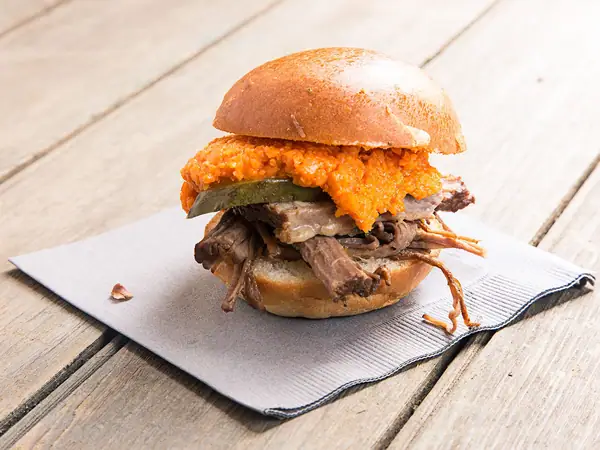
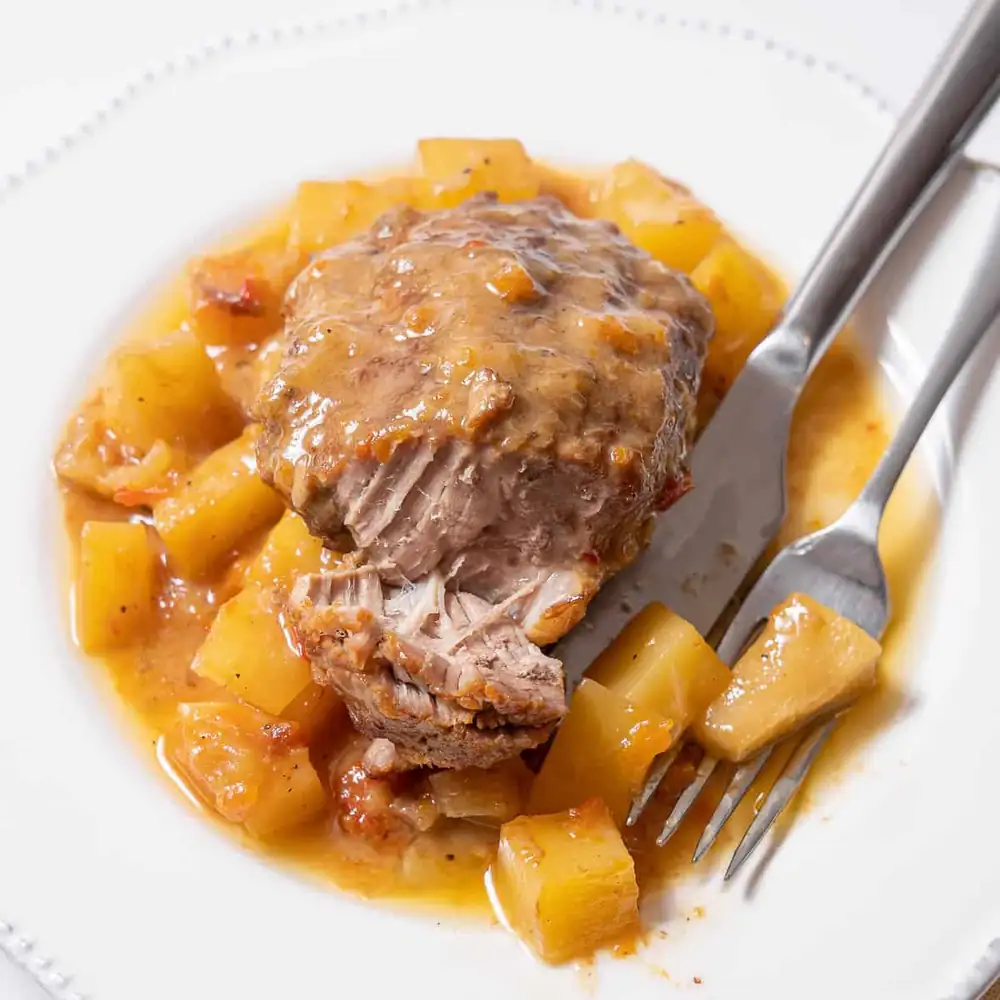
Carrillada de Cerdo (Braised Iberian Pork Cheek)
Carrillada de cerdo (braised pork cheek) is a melt in your mouth, get up and dance, and smack yourself in the head for not having eaten this earlier type of food.
- 2 cloves garlic
- 2 tablespoons honey
- ½ teaspoon thyme
- ½ teaspoon parsley (preferably fresh)
- 1 tablespoon water
- 2 pounds Iberian pork cheeks (about 12)
- 2 tablespoons all-purpose flour
- 1 onion (finely diced)
- 6 shallots (halved)
- 1 green apple (diced)
- 2 carrots (sliced)
- 1 red pepper (diced)
- 2 cups port wine (a very sweet dessert wine)
- 24 fingerling potatoes (peeled and cut in chunks)
- 1 bay leaf
- salt and pepper (to taste)
- ⅓ cup extra virgin olive oil
- 3 cups beef stock
- Smash the garlic in a mortar and pestle, then add in the thyme, honey, parsley and a tablespoon of water, smashing it until you get a nice paste.
- Pat the pork cheeks completely dry with paper towels, then cover the pork cheeks with the paste and season with kosher salt and pepper. Let them marinate for at least an hour before cooking.
- Quickly dredge the pork cheeks in flour, shaking off any excess flour to leave a light coating.
- Heat the olive oil in a heavy pan on a medium high heat. Sear the pork cheeks for about 30 seconds one each of its 3-4 sides until all sides are browned. After each cheek is seared, remove from the pan and reserve.
- Transfer the oil used to sear the meat into a large, heavy pot. Add a little more oil if necessary to completely cover the bottom to a depth of about 0.4 inch or 1 centimeter.
- Sauté the onions, peppers, shallots and carrots for 15 minutes over low heat, or until golden.
- Add the pork cheek, port wine, and bay leaf and simmer over low heat until the liquid is reduced by half, about 15 minutes. Stir occasionally to prevent sticking.
- Add the beef stock to the pot and simmer over a low heat for about 1 1/2 hours, until the carrilladas are completely tender. Twenty minutes before taking it off the heat, add the potatoes and apple to the pot so they can cook through.
- When everything is fork tender, take off the heat and serve. Enjoy hot and fresh!
You won't want to miss recreating this epic Spanish pork dish at home! Craving more Spanish pork recipes? Don't miss these ones for pinchos morunos and chorizo a la sidra.
Introduction
What is carrillada? It is cheek, and can come from meats such as beef (carrillada de ternera), pork (carrillada de cerdo), or lamb (carrillada de cordero).
Despite their differences in taste, all types of carrillada are delicious. The cut of meat is unique because it is quite meaty but surprisingly lean--a rare marvel for many who expect it to be either fatty or tough. It does need to be braised (slow cooked over a low heat) for a few hours, but the end result is a fork-tender piece of meat that is one of the best things I've ever eaten in Spain, and that is saying a lot!
Here is a delicious recipe for pork cheek (carrillada de cerdo) which I've adapted from the excellent Spanish food blog and cookbook author Recetas de Rechupete. If you follow these instructions and make this amazing carrillada, pork cheek will become your new favorite meat... you're welcome!
Ingredients
Excited to try this mouthwatering carrillada de cerdo (pork cheek)?
Here's the key ingredients in this amazing recipe!
- Pork Cheeks: True to its name, this cut of meat is the cheek of the pig. It's a tough cut that needs to be braised (cooked slowly in liquid) for it to become melt-in-your-mouth tender.
- Port Wine: This sweet dessert wine adds a beautifully distinctive flavor to the sauce and is one of the reasons why this recipe is so good!
- Honey: This adds extra sweetness to the sauce and complements the port very well.
See recipe card for full information on ingredients and quantities.
How to Make Carrillada de Cerdo
If you’d like to see the full ingredients and instructions, scroll to the bottom of the post for the printable recipe card.
- Mash the garlic in a mortar and pestle, then add the thyme, honey, parsley, and water and continue mixing to create a paste. (image 1)
- Pat the pork cheeks dry with paper towels and cover them with the paste. Season with salt and pepper and let the meat marinate in the fridge for at least 1 hour before cooking. (image 2)
- Dredge the pork cheeks in flour, shaking off any excess to leave a light coating. (image 3)
- Sear the meat in an oiled skillet over medium-high heat until all sides are browned, about 30 seconds per side. Set aside on a plate. (image 4)
- Sauté the onions, peppers, shallots, and carrots in the reserved oil from the meat until translucent, about 5 minutes. (image 5)
- Add the seared pork cheeks, the port wine, and the bay leaf and simmer until the liquid is reduced by half, about 15 minutes. Stir occasionally to prevent sticking. (image 6)
- Add the beef stock and simmer over low heat until the pork is tender, about 1 ½ hours. Add the potato and apple chunks about 20 minutes before the meat is done and cook until fork tender. (image 7)
- Remove from the heat, serve the carrillada hot, and enjoy! (image 8)
Recipe FAQs
What is carrillada in Spain?
Carrillada is the general Spanish term for the cheek cut of any meat, such as beef, pork, or lamb. This recipe for pork cheek would be called carrillada de cerdo.
What are Iberian pork cheeks? Iberian pork cheeks come from Iberian pigs, which are a domesticated pig that originated in the Iberian Peninsula (the part of land where Spain and Portugal are located). These pigs are fed a diet of acorns, and produce some of the best ham in the world.
Serve
These mouthwatering carrilladas de cerdo make a lovely meal all on their own, but I'd love to serve them with ensalada mixta (Spanish green salad) and a glass of hot wine.
Enjoy a small slice of tarta de Santiago, one of Spain's best known cakes, for dessert, and you'll have an amazing Spanish dinner!
Expert Tips
- Avoid over-dredging the pork with flour; shake off any excess to leave a light coating on the meat.
- Any port will work in this recipe, although there are various varieties of port wine and each will leave you with a slightly different dish.
- Can't find fingerling potatoes? Use 4-5 larger regular potatoes and cut them into smaller, bite-size chunks.
- Depending upon how tough the meat is, you may need to simmer it for longer than 1 ½ hours to get it perfectly tender.