Less is more: Why these chefs are turning to smaller venues - hospitality
Izy.Aki Owner Darren Templeman has worked in restaurants where it was normal to do 200 to 300 covers a night.
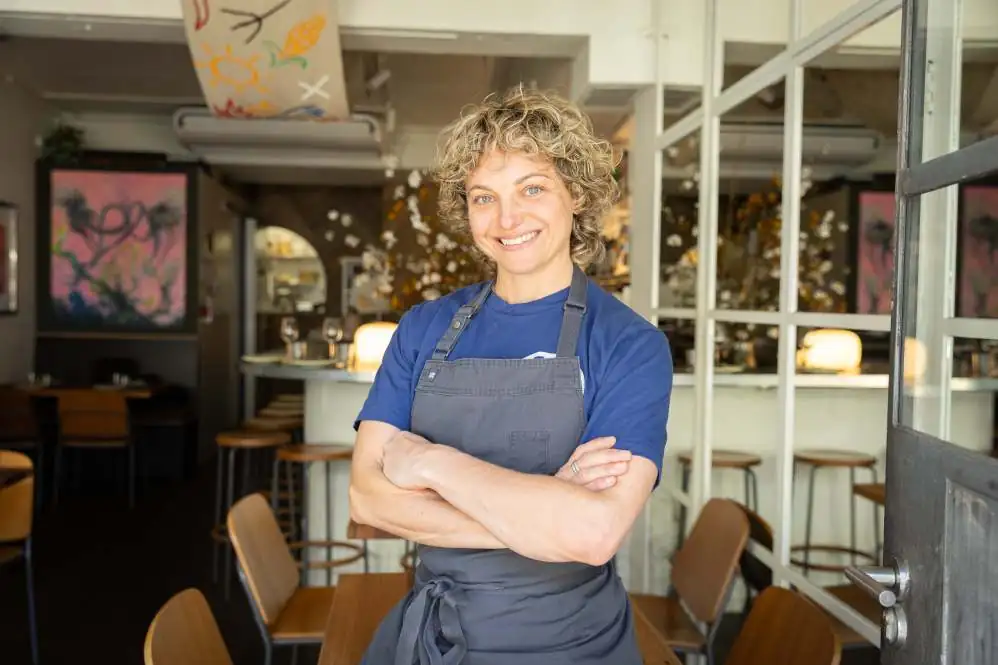
“From an introvert’s point of view, it’s a nightmare. But it’s great to have that challenge as well. There’s nowhere where you can just disappear into the crowd. We’re very much accountable to the customer from the start,”
For a lot of operators, that might sound like an ideal scenario, but Templeman says he found the experience “quite impersonal”. “From the minute you arrive at a venue like that, you’re greeted by one person, you’re sat by somebody else, somebody else takes your order, and somebody else will bring it to you,” says Templeman.
That type of setup is the exact opposite to what you will find at Izy.Aki. Born from a pop-up that first started in The Rocks, Sydney, Izy.Aki is now tucked into its permanent home in the former Saint Peter space on Oxford Street in Paddington, with the omakase experience seating just 20 people. The restaurant, which offers either a six or ten course menu, blends Japanese tradition with Australian produce.
There are just three people in the team, which Templeman says turns the entire experience into something personal. “It’s more like a dinner party.
Rather than a restaurant environment where you just become a number, here you are sat right in front of me, so you have to talk to me no matter what,” says Templeman. From an operational point of view, it means there’s nowhere to hide and the team are incredibly reliant on each other.
“From an introvert’s point of view, it’s a nightmare. But it’s great to have that challenge as well. There’s nowhere where you can just disappear into the crowd.
We’re very much accountable to the customer from the start,” says Templeman. “Staff-wise, if one person disappears you don’t have anyone to back you up. Logistically, that can be very tough, but what far outweighs that is the fact you are a very tight team, you become a family.”
Absolutely nothing is fixed on the menu, but customers will likely find 9+ Australian Wagyu and a selection of fresh seafood. Although Templeman does admit it would be hard to take one of their signature dishes – The Egg – off the menu.
That dish, which includes white onion purée, foie gras, smoked eel, and golden trout roe, is the one that customers tend to ask about the most, he says. “This is one of the first dishes that you get when you arrive, and people go crazy for it.
We see the joy on people’s face when they have The Egg, it’s like a ground hog moment for us, but that dish has to stay.” Lucky for them, The Egg can stay, because they have complete control, says Templeman.
“There’s no CEO, there’s no culinary director telling us what we have to do, what targets we have to meet. The freedom we have for the food, the wines, and the sake is purely down to us and what we like,” he says.
For Templeman, it makes for an absolute dream. “Everyone was saying, are you crazy?
And yes, there are a few people who come to the restaurant who haven’t made a booking and they’ll just walk away because there’s no menu, but that’s fine because that’s not our customer base. But the people who are coming to us are trusting us for what we do, which I think is a good thing.”
“I think small restaurants – be it neighbourhood or be it in the city – are the way to go, because I think people want to have more of a personal experience when they go out, especially now when times are tougher. Everyone that comes through the door is absolute gold and I just smile and open the conversation and off you go. I’ll tell you, it just changes the world.
“When we started Izy.Aki as a pop-up down at The Rocks, we never knew what was going to happen. But the big surprise is that people have embraced it. They’ve embraced the culture of the venue, and that trust is something else.
Even though I’ve been cooking now for about 40 years, since I was 15, this has really blown my mind, and I think it’s something that other chefs should look at as well and just forge their own path.” At Mishy’s in Surry Hills, owner Michelle Powell’s path to owning a small venue was partly born out of burn out, and from asking herself, ‘What’s next?’.
Powell has spent 20 years working in the industry as a chef and also front-of- house, both overseas and in Australia. “My biggest venture was that I was invited to be a part of a bigger restaurant.
I was one of eight owners. It was the real deal; everything was brand new and there were 130 seats in the heart of Potts Point.
I was the head chef, but I resigned from my position there because I was feeling quite burnt out. I took three months off and then the pandemic hit.
For the first time in my life, I felt unemployable as a chef,” she says. Powell began to hustle.
Launching a sauce brand, she quickly learnt that manufacturing condiments and being a restaurant chef were two very different skill sets. So, she approached the bank, and was able to get a “very, very, very” small loan, which led her to find a petite space in Surry Hills that already had a grease trap, which Powell says was one of her necessities.
“Historically it has been a site where nothing has worked. I ended up signing and I built the venue with no business plan, I had no money, and I had no name.
“But what I did want to do was bring back community spirit, especially after the pandemic. So, I literally started on my own. I had one employee, which was me, and I was working it out along the way.”
Powell says she grew obsessed with Facebook Marketplace, which was ideal at the time because lots of restaurants were either closing down or pivoting. Then as she grew, she was able to hire more staff and invest in equipment.
Seating 24, she says Mishy’s is small and personal, with a menu that features small plates such as Sydney rock oysters with finger lime mignonette and zucchini flowers with goat’s curd and honey. Larger plates include dishes such as spinach and ricotta ravioli with warrigal greens and Murray cod with ajo blanco and harissa butter. The small-scale venue is something Powell says she enjoys, because she can chat to customers, find out how they found the venue, and understand what people are enjoying the most.
She also hits up farmers markets herself to try and keep prices lower for the restaurant and her customers. “One of the biggest advantages is that if we do have a quiet night, it’s not burning a hole in my pocket financially.
I think with the bigger restaurants, as soon as you do have a quiet night, it costs you a lot of money to operate and keep the lights on. “I’d rather have customers come twice a week than once a month.
I have some customers who come daily, and I have them on my mind all the time. We are a local business, so I don’t want to make it too pricey that people can’t afford to eat here regularly.
“Everyday life is becoming more and more challenging, and I think being small, we’re able to create that living room experience where people feel like they are walking into someone’s home. That’s something that I really love about having a small venue.”
At Atsu in Carlton, a small venue seating just 32 people was a no brainer for Owner Reki Reinantha. Reinantha was previously head chef at Kisume in Flinders Lane, and also operates Andzero and Sachi in Melbourne.
The chef says it makes sense to start small. “From a business point of view, it’s less risk.
But on the other side, you always want to have a connection with people. When you’re a bigger establishment, it’s always harder to keep track of say, 1000 customers in a week,” he says. “Carlton as a suburb is super close and a lot of people know each other really well. We want to have better connections with our customers, we want to know them by name and what they like to order,” he says.
Being smaller, he says the strategy is to make sure they have the turnover and covers to get as many customers as possible. “But that’s not something that we can control.
So, it’s also a matter of focussing on my staff and the product, because if it’s good, then Melbourne people will come. It’s a matter of how we can make it visible, and for ourselves, we just try to be better and better.
I wouldn’t do it any other way. I’m very happy with the small team, and the small venue.”
Resources
Lorem ipsum dolor sit amet, consectetur adipiscing elit.
Fusce ac ornare lectus. Sed bibendum lobortis...