At Crizia, Buenos Aires Finally Has a Great Restaurant That Looks to the Sea
In the capital of beef, Gabriel Oggero built his reputation on Patagonian oysters and fire. Two decades on, his Palermo dining room is where the city's cooking feels most alive.

Buenos Aires eats meat the way other cities breathe, and for a long time a restaurant that led with fish here was either a curiosity or a mistake. Crizia was neither. Gabriel Oggero opened it in Palermo in 2004 with his partner Geri Gastaldo around an idea that seemed eccentric and has become prophetic: that Argentina has a coastline of thousands of kilometres and almost nobody in its capital was cooking it. The oyster bar came first. The fire came after. Today the two meet in one of the most complete restaurants in South America.
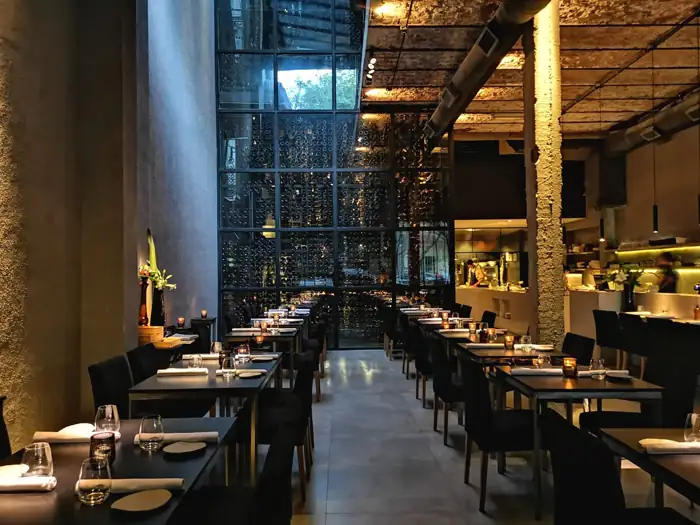
The room, on Fitz Roy in Palermo Hollywood, is handsome and warm, wood and brick and the glow of the grill at the back, and the meal begins where the restaurant began, with oysters from the Patagonian coast. They arrive on ice, cold and briny and faintly sweet, and Oggero serves them with almost nothing: a drop of lemon, a grind of pepper. They taste of the South Atlantic, which is a colder and cleaner taste than the oysters of the northern hemisphere, and they set the tone for everything that follows.
Then the fire. A fish from the artisanal boats that the restaurant works with, on the night I ate a whole sole, is grilled over embers until the skin crackles and the flesh beneath falls into its own pearly flakes, and it is dressed with a butter made from the juice of the restaurant's own garden herbs. It is a dish of almost insolent simplicity, and it works because every element of it is exactly right: the fish caught that morning, the fire tended by a man who has spent twenty years learning what coals can do, the butter green and sharp.
There is a dish of raw fish that arrives before the fire begins its work, and it is worth singling out. The fish, on my night a Patagonian variety I had not tried, was sliced thick, dressed with the juice of a citrus from the north and a few leaves from the garden, and set on a cold plate; the flesh was firm and sweet and faintly nutty, and the acidity was measured to the drop. It was a plate about restraint from a kitchen that is famous for flame, and it made the flame that followed taste more deliberate.

The desserts are better than they need to be. A cream of dulce de leche, because it is Argentina, but lightened and smoked and served with a shard of burnt sugar; a fruit from the garden roasted in the embers until its juices caramelised, with a cold cream of sheep's milk. The wine list finds sweet bottles from the country's high valleys to match, and the sommelier pours them with obvious pleasure.
Vegetables here are not a concession but a conviction. There is a garden, and what comes from it is treated with the same seriousness as the fish. A leek, charred whole until its outer leaves are black and its heart is soft as custard, comes with a sauce of roasted almonds and a little vinegar of the house; a plate of beets, cooked in the ashes, is dressed with a cream of smoked yoghurt. I have eaten a great deal of grilled vegetables in the last decade, most of them tediously. These were not.
And yes, there is beef, because it is Buenos Aires, and it is grilled over the same wood with the same care, a thick cut with a crust like a good loaf and a centre the colour of a rose. But it is not the point, and the restaurant is quietly proud of that. The point is the whole: sea, earth and fire, as the house puts it, in a country that had forgotten two of the three.
Argentina received its first Michelin guide at the end of 2023, and Crizia was among the first restaurants in the country to be given a star. It was overdue. The service is confident and kind, the wine list deep in Argentine bottles beyond Malbec, and the tasting menu is the way to understand the place. You leave with the taste of the sea on your lips, in a city built on the pampa, and it feels like a small revolution.