Red Cabbage Sauerkraut
Enjoy this deliciously crisp, mildly tangy, and eye catching Red Cabbage Sauerkraut as a side dish or an ingredient in your favorite dishes.
- 1½ small red cabbage ((about 3¼ lbs /1.46kg each))
- 1 small Fuji apple ((cored and julienned))
- 1 small onion ((thinly sliced))
- 1½ tbsp pickling & canning salt
- 1 tbsp caraway seeds
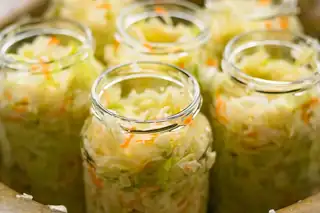
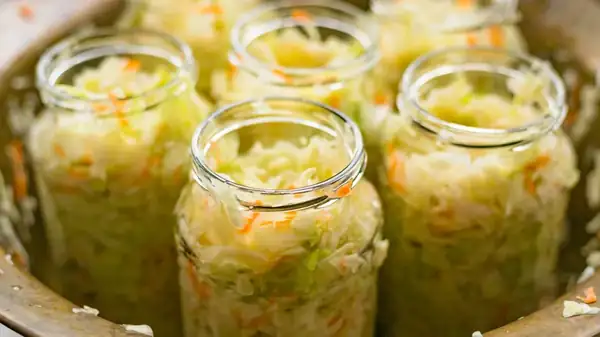
- Wash jars in warm, soapy water. Place the washed jars in a deep pot or canner. Fill the jars up to the top and the canner up to the same level as the jars with water. Cover the canner and bring water to a simmer (with small bubbles).
- Wash metal bands and silicone fermentation lids with warm soapy water. Drop the metal bands (but not the silicone fermentation lids) into the canner together with the jars. When ready to use, take them out from the canner with a pair of tongs. Dry them with a clean towel. If you are using plastic bands, wash them with warm soapy water but do not drop into canner.
- Remove and discard any blemish leaves from the red cabbage. Peel off one whole leaf from each red cabbage, rinse, and cut two circles (the diameter of 1 quart Mason jar) out of reserved cabbage leaves. Set aside.
- Cut cabbage into quarters and then cut off the cores from each cabbage quarter. Rinse and drain cabbage quarters thoroughly.
- Place one wedge of cabbage on your cutting board with cut side down. Slice crosswise as thinly as you can. Transfer sliced cabbage to a large bowl and sprinkle some of the salt over the sliced cabbage. Keep slicing cabbage, adding it to the bowl, and sprinkling salt in layers until all cabbage quarters are sliced.
- Add julienned apple and sliced onion. Sprinkle caraway seeds over the top.
- Toss, squeeze, and massage shredded cabbage well to incorporate julienned apple, sliced onion, salt, and caraway seeds evenly. This will take some work, about 4 to 5 minutes, and you should see some juices/brine being released. Use a wooden tamper/pounder to pound and mix the cabbage for another 4 to 5 minutes until cabbage is wilted and juicy.
- Pack cabbage into prepared jars with a couple of handfuls of cabbage at a time. Use wooden tamper/pounder to pack it down firmly. Continue adding and packing down the cabbage until the jar is filled to just below the shoulder. The brine should rise up to the top. Do not overfill jar.
- Place a cut-out cabbage circle on the surface of shredded cabbage to prevent little bits from floating up. Place a weight on the top to keep the shredded cabbage submerged in the brine.
- Wipe the rim of the jar with a paper towel, place a silicone fermentation lid on the rim, and secure with a Mason jar band. Place jars on a tray just in case the brine overflows the jar. Transfer to a cool, dark place to ferment with preferably an ambient temperature between 60⁰F and 70⁰F / 15⁰C and 21⁰C.
- Fermentation should begin within 2 to 3 days. As it proceeds, you will notice these changes:a. The cabbage swells up so that the brine almost touches the lid.b. Pockets of gas appear in the cabbage.c. The color of the red cabbage changes from purple to magenta-fuchsia.d. Bubbles appear on the surface of the brine.e. A sulfurous aroma emitting from the jar.
- After 5 days, open the jar. If there is any scum at the top of the jar above the cabbage circle, scoop it up and discard. If the fermented cabbage is completely under the brine, it will be good. Remove the weight and cut-out cabbage circle, and have a taste. The cabbage should be a magenta-fuchsia color by now. The salty flavor should have diminished and be replaced with a bright and tangy flavor of the lactic acid.
- I left mine to ferment for 5 days which I felt was just right for the conditions in my house. The cabbage was soft but still crunchy and it has a pleasant bright and tangy flavor, but not too tangy.
- If you are satisfied with the taste of the cabbage, wipe off any scum with a clean towel and reseal the jar with a plastic lid. Store in the refrigerator for 4 to6 months.
Enjoy this deliciously crisp, mildly tangy, and eye catching Red Cabbage Sauerkraut as a side dish or an ingredient in your favorite dishes.
Once you have tried making your own basic green cabbage Sauerkraut, you will naturally want to progress to this Red Cabbage Sauerkraut. The eye catching color itself will make you want to give it a try. There aren’t many recipes using red cabbage and this is the perfect excuse for you to get a whole head or two from the grocery store. .
Red Cabbage
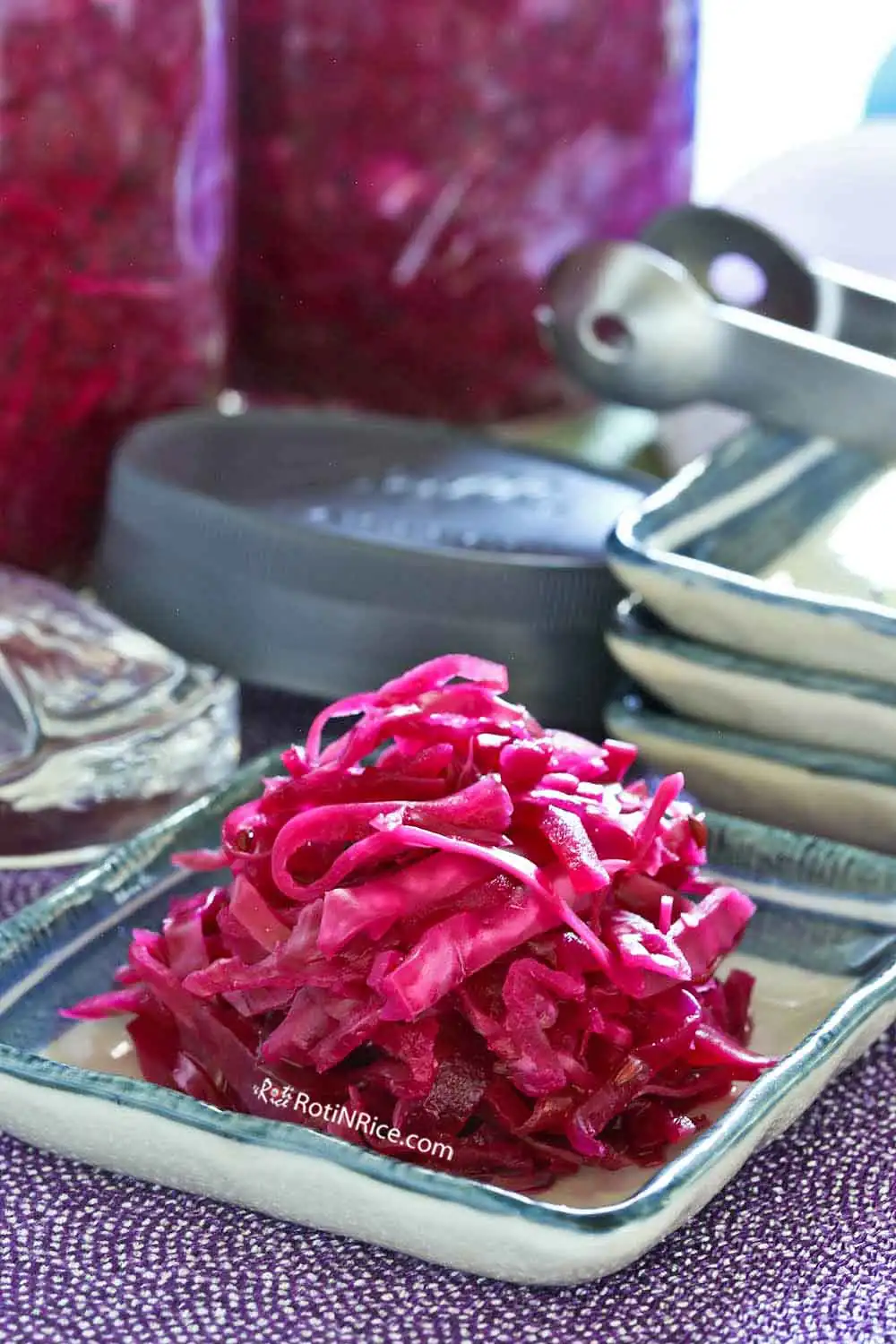
Red cabbage is sturdier and waxier than green cabbage. It is pleasantly sweet and packed with nutrition. The color is actually more purple than red and it is really striking when you cut open the cabbage. The center and thicker part of the leaves are white, contrasting sharply with the outer purplish color. When fermented, the purplish color of the raw cabbage becomes a stunning magenta-fuchsia color.
MY LATEST VIDEOS
The white parts of the cabbage together with the julienned apple and onion will be totally and almost uniformly colored in that magenta-fuchsia color.
Preparing The Red Cabbage
You will need about roughly 1½ small cabbages. Remove the outer blemished leaves. It is easiest to cut the cabbage into quarters. Remove the core, rinse, and drain thoroughly. Then, slice it very thinly crosswise with a sharp knife. You can use a shredder but I prefer using the knife. Transfer the sliced cabbage into a large bowl and sprinkle some salt over it. Keep slicing cabbage, adding it to the bowl, and sprinkling salt in layers until you are out of both.
Adding Apple, Onion, Caraway Seeds and Massaging The Cabbage
Since red cabbage is sturdier and waxier, adding julienned apple and sliced onion will help release the initial brine needed to start fermentation. Sprinkle caraway seeds over the top. Then, squeeze and massage the shredded cabbage, apple, and onion to incorporate the salt and caraway seeds evenly. As you do that, you will see some juices or brine being released. Next, use a wooden tamper or pounder to pound and mix the cabbage until the cabbage is wilted and juicy.
Packing Juicy Red Cabbage Into Jars
When the cabbage is wilted and juicy, pack them into quart Mason jars. Use the wooden tamper or pounder to pack it down firmly. Do not overfill the jars. Place a cut-out cabbage circle on the surface of shredded cabbage to prevent little bits from floating up and a weight on the top to keep the shredded cabbage submerged in the brine.
Silicone Fermentation Lid
If you are serious about fermenting vegetables, it is worth it to get a pack of silicone fermentation lids. Place a silicone fermentation lid on the rim, and secure with a Mason jar band. The silicon fermentation lid keeps the oxygen out but allows the CO₂ (carbon dioxide) to escape. If you do not have these lids, then you will have to burp your ferment to prevent an explosion. You may also have to leave your lids slightly loose to let CO₂ escape, which means keeping a closer eye for oxygen contamination and brine loss.
Place jars on a tray just in case the brine overflows the jar. Transfer to a cool, dark place to ferment.
Fermentation
Fermentation should begin within 2 to 3 days. As it proceeds, you will notice these changes: 1. The cabbage swells up so that the brine almost touches the lid. 2. Pockets of gas appear in the cabbage. 3. The color is starting to change from purple to magenta-fuchsia. 4. Bubbles appear on the surface of the brine. 5. A sulfurous aroma emitting from the jar.
Taste Testing
After 5 days, you should do a taste test. The cabbage should have changed color and have a bright and tangy flavor of the lactic acid. You may see some scum at the top of the jar above the cabbage circle around the weight. If the fermented cabbage is completely under the brine, it will be good. Interestingly, this is the first time I am seeing this scum after making so many jars of fermented vegetables. Carefully scoop off the scum, and lift up the weight and cabbage circle.
Remove some of the fermented cabbage to taste. If it is to your liking, your Red Cabbage Sauerkraut is ready. Look at that gorgeous color! It is all natural and so good for you.
Store in Refrigerator
Wipe off any scum with a clean towel and reseal the jar with a plastic lid. Store in the refrigerator for 4 to 6 months.