Joseba Arguiñano's tip for a green sauce without dark specks
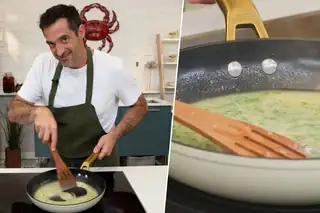
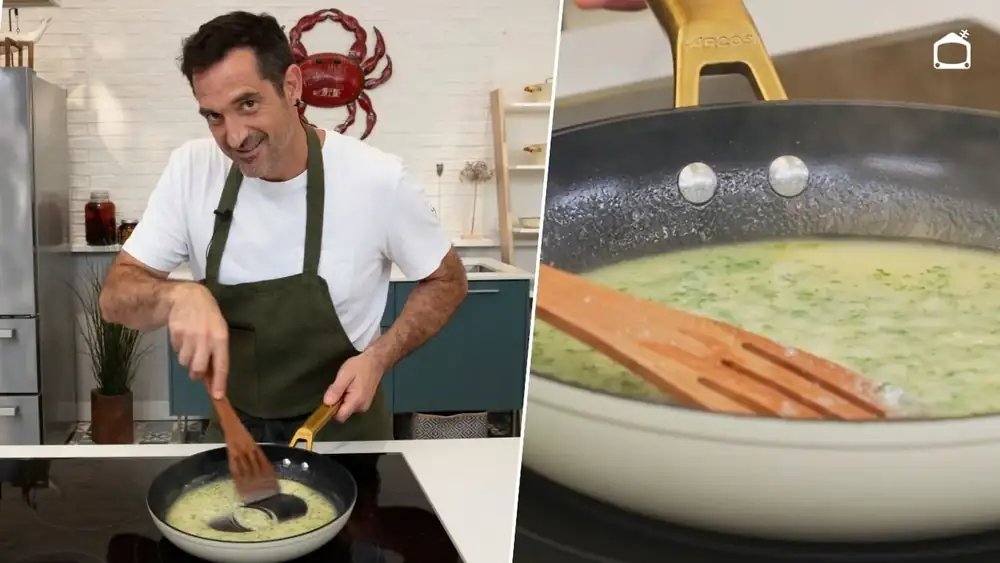
Joseba Arguiñano takes care of two steps, the browning of the garlic and the moment of adding the parsley, to achieve the uniform green color and fine texture of the sauce.
Basque cuisine has made pil-pil, Vizcaína, and salsa verde some of its greatest symbols. Salsa verde may seem like one of the easiest to prepare, but it's also one of the most demanding.
Arguiñano's version includes extra virgin olive oil, garlic, flour, white wine, stock, and fresh parsley. The process begins by gently frying the garlic in the oil over low heat, so that it softens slowly without browning.
“It’s important not to burn the garlic, because that’s where the dark spots come from,” she explains. If the garlic gets too brown, those spots appear later in the sauce, and the result loses its characteristic uniform appearance.
Once the garlic is ready, stir in the flour and cook for two or three minutes before adding the white wine. Then, gradually pour in the stock, stirring until the sauce thickens again. Those few minutes with the flour prevent a raw taste and give it a smoother texture.
The chopped fresh parsley is added at the end, once the sauce has thickened, so that it better retains its color and aroma. That intense green color depends both on the quality of the parsley and on following the previous steps.
With clams or mussels, it's best not to add salt at the beginning, as these shellfish release some of their own salt during cooking. It's better to wait until they open and taste the sauce before adjusting the seasoning.
Green sauce is the base of hake in green sauce with clams, one of the most popular recipes, but it also accompanies cod cheeks, other fish, boiled potatoes, or vegetables. Its mild flavor allows the other ingredients to shine.







