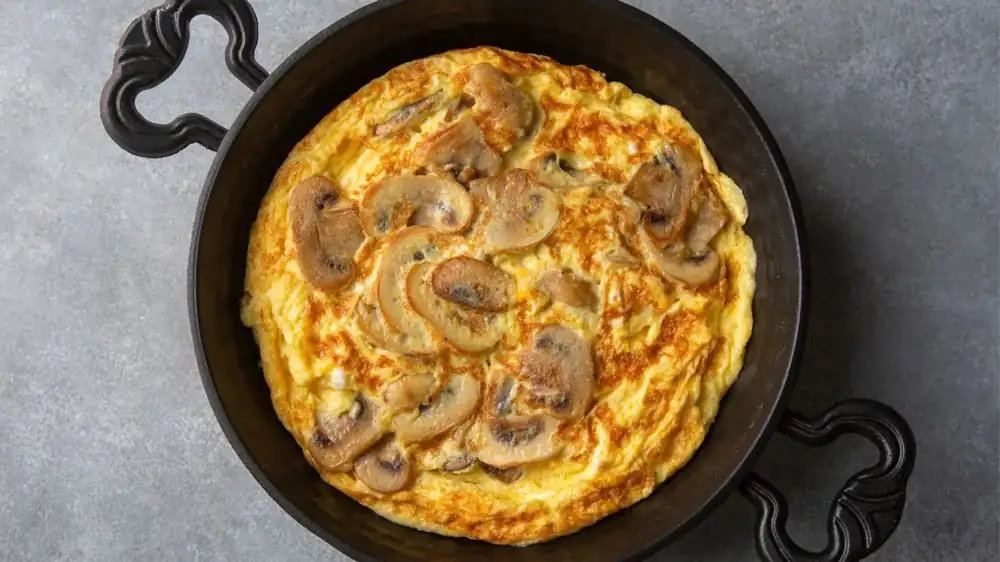
Top French chefs agree: “An omelet tastes better when the mushrooms are cooked separately; it prevents everything from getting soggy.”
A mushroom omelet can quickly lose its creaminess if it's not cooked properly. Between the water released by the filling and the eggs coagulating too quickly, a few minutes are all it takes to ruin everything. However, a simple step can prevent this.
Mushroom omelets are one of those essential recipes when autumn arrives. A few beaten eggs, a handful of mushrooms, and a frying pan should be all you need. Yet, the result can quickly disappoint: overcooked eggs, a watery mixture, and pale mushrooms that have boiled rather than browned.
The problem often arises from when they are added. To achieve a fluffy omelet and a flavorful filling, it's actually better to cook them separately. Mushrooms naturally contain a lot of water.
When raw mushrooms are placed directly into the eggs, this moisture is gradually released by the heat and ends up in the omelet. The mixture can then become watery, while the mushrooms need more time to cook properly.
Eggs, however, don't wait: they coagulate quickly and risk becoming dry before the filling is even ready. That's why pre-cooking makes such a big difference to the result.
The secret to a filling that doesn't make the omelet soggy
The principle is therefore to start by frying the mushrooms alone in a sufficiently hot pan, with a little fat. They first release their water, which must have time to evaporate, before they begin to color.
This step concentrates their flavor and gives them a more pleasant texture. Once cooked, they can be set aside for a few moments while the eggs are being prepared. However, they must still be hot when added to the omelet, as their time in the omelet will be very brief.
The beaten eggs are then poured into a pan heated over medium heat with butter or a little oil. When the edges begin to set, the cooked parts can be gently pushed towards the center so that the still-runny egg spreads over the surface.
There's no need to prolong this step: as soon as the bottom is set and the top is still slightly moist, the pre-cooked mushrooms can be placed on one half. The omelet is then folded over and left on the heat for only a few more seconds.
The residual heat finishes cooking the omelet
This method helps avoid the common mistake of overcooking the omelet while waiting for the mushrooms to develop. An omelet removed at the right time should still have a little moisture on the surface, especially if you like it soft or slightly runny.
It actually continues to cook after being removed from the pan thanks to the residual heat. Conversely, leaving it on the heat until it appears completely dry often results in a firm, rubbery texture. This rule also applies to many fillings.
Peppers, potatoes, bacon, or other ingredients requiring thorough cooking also benefit from being prepared separately before being added to the eggs. Mushrooms are a particularly good example of this method because of the water they release.
Cooking them separately certainly requires an extra step, but a few minutes is enough to obtain a much more balanced omelet: golden mushrooms, eggs that are still tender and, above all, no water at the bottom of the plate.