The pastry for the pastiera always broke, but since my friend from Fuorigrotta helps me, it doesn't anymore: add this and you're all set
For a good pastiera, we need a perfect shortcrust pastry, soft but firm: the real secret is in just one teaspoon.
You don't necessarily have to be Neapolitan to make a perfect pastiera, although it certainly helps because traditions are passed down. However, you must follow all the fundamental steps, and you certainly can't go wrong with the shortcrust pastry, which is the basis of this dessert. The preparation is a little different from the traditional one. It must be softer than the one we use in other recipes, but above all, it must not break when it gathers the filling. So here are a few tips for a crumbly dough that's easy to work with by hand without breaking at the last minute.
To be sure, I asked a friend of mine who lives in Fuorigrotta and has a passion for cakes as well as good food. She revealed a secret I truly didn't know. I tried it this way, and she was absolutely right. The pastry remained nice and firm yet soft, the pastiera baked perfectly, and everyone was satisfied. Since then, I've made it this way every Easter.
Pastiera for a perfect shortcrust pastry, the difference is in the ingredients
For our Easter pastiera, the difference lies in the ingredients. Not the classic 00 flour, but a cake flour. The butter must always be at room temperature, so remember to take it out of the refrigerator at least 20 minutes before starting. And for flavoring, you can use just the zest of a lemon, or even a vial of vanilla extract. The real secret, however, is something else I'd never thought of: half a teaspoon of baking powder, it's the only way to soften the dough without ruining it.
- Ingredients: 380 g of
- 00 flour for cakes
- 170 g of soft butter
- 1 large egg
- 2 medium egg yolks
- 140 g of icing sugar
- 1 grated lemon zest
- 1 pinch of fine salt
Step-by-step preparation of the pastiera base
Cut the soft butter into small pieces, place it in a bowl, and immediately add the powdered sugar and finely grated lemon zest. Mix everything together with an electric mixer on medium speed until frothy. First add the whole egg and continue to mix. Then add one yolk at a time: once the first is fully incorporated, move on to the next. The mixture should be light and fluffy.
At this point, pour in the flour all at once. Set aside 20 grams; this will help us spread it out on the pastry board later. Mix everything together, but this time using a silicone spatula to avoid deflating anything.
Once the dough is nice and firm, we turn it out onto a floured surface and quickly work it with our hands. This must be done quickly, otherwise the heat from our hands will cook the dough. If, however, it's still too soft, add another tablespoon of flour—the same flour used before.
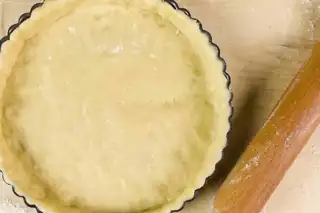
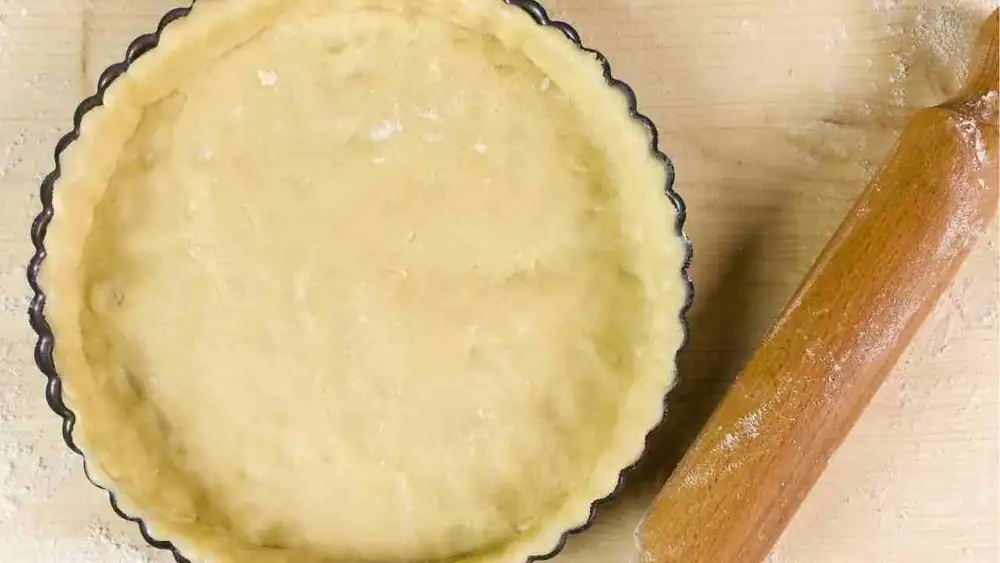
We form the classic ball and wrap it in plastic wrap. As always, we let it rest in the refrigerator for 2 hours. If we're in a hurry, an hour in the freezer will suffice. When we prepare the pastiera, it must still be cold before rolling it out. The perfect shortcrust pastry is ready, now we can think about the filling.