Stuffed Pasta – Step-by-Step Cooking: Revealing All the Culinary Secrets
This article is your guide to the world of perfect stuffed pasta. We'll cover every step of the preparation process, from choosing the right pasta to intricate sauces that will transform an ordinary dinner into a culinary masterpiece.
Why stuffed pasta has won the hearts of foodies
The popularity of this dish lies in its unique balance: a tender dough base that absorbs the flavors of the filling and sauce, and a juicy, rich center. This dish is incredibly versatile. It can be prepared in a classic Italian style with ricotta and spinach, warmed up with ground meat and tomato paste, or even become a vegetarian triumph with mushrooms and vegetables.
The key advantage is the ability to serve in portions and easily adapt to any dietary preferences. Furthermore, the aesthetic aspect plays a significant role: neatly arranged in a dish and covered with sauce, the pasta looks incredibly appetizing.
Choosing the "right" pasta for the filling
Not every pasta shape is suitable for stuffing. For the success of the entire project, it's crucial to choose a pasta with a hollow structure, strong enough to withstand boiling and baking, and large enough to accommodate a generous portion of filling.
The following types are traditionally used:
- Cannelloni: Large hollow tubes ideal for dense meat or cheese fillings.
- Manicotti: Similar to cannelloni, but often ribbed to help the sauce adhere better.
- Conchiglioni: large shells. They're convenient because they're easy to fill with a spoon, especially if the filling isn't too runny.
- Ziti or Penne: These are sometimes used, but they have to be cut or only those with the widest open edges can be used.
Tip: When purchasing pasta, look for pasta labeled "da sugo" (for sauce) or "per forno" (for oven). This type of pasta holds its shape better after cooking.
Classic filling: Meat and Ricotta
The heart of any stuffed dish is its filling. We'll look at two of the most popular, time-tested options.
Recipe 1: Rich Homemade Meat Filling
This filling is similar to a Bolognese base, but with the addition of cheese for tenderness.
Preparation
- In a frying pan with a little olive oil, fry the onion until translucent, then add the garlic for one minute.
- Add the minced meat, break up any lumps and fry until the meat is no longer pink.
- Pour in the tomato paste, add the spices, stir, and simmer for 5 minutes. Remove from heat and let the filling cool slightly.
- Stir the cheese and raw egg into the cooled mince. The egg will prevent the filling from falling apart during baking.
Recipe 2: Delicate Ricotta and Spinach Filling (Vegetarian)
An Italian classic that captivates with its lightness and freshness.
Ingredients
- Ricotta cheese (well squeezed to remove excess moisture): 300 g
- Fresh spinach (or frozen, pre-squeezed): 150 g
- Mozzarella cheese (grated): 50 g
- Parmesan (grated): 30 g
- Nutmeg (ground): a pinch
- Salt and pepper: to taste
Preparation
- If using fresh spinach, blanch it or lightly sauté it until it shrinks, then squeeze out all the excess moisture very well. Chop finely.
- In a deep bowl, combine ricotta, drained spinach, mozzarella, Parmesan, nutmeg, salt and pepper.
- Mix thoroughly until smooth but thick consistency.
Preparing pasta for stuffing
This step requires special attention, as overcooked pasta will fall apart, while undercooked pasta will be tough.
Pre-cooking tips
- Cook your chosen pasta (cannelloni, manicotti, or conchiglioni) for 2-3 minutes less than the package directions. They will finish cooking in the oven, covered in sauce.
- Cooling: Immediately after draining, rinse the pasta with cold water to stop the cooking process. Brush the pasta with a little olive oil to prevent sticking.
- For conchiglioni shells: You don't need to pre-boil them if you're using a very soft filling and a fairly runny sauce, and the baking time is long (more than 30 minutes). However, pre-boiling is essential for cannelloni.
Secrets to the Perfect Baking Sauce
Sauce is the soul of stuffed pasta. It should completely cover the pasta to prevent it from drying out, and it should also infuse the filling with moisture and flavor.
Recipe 3: Classic Tomato Sauce (Sugo alla Pomodoro)
A basic, bright and flavorful sauce.
Ingredients
- Canned tomatoes in their own juice (preferably whole, peeled): 800 g
- Onion (finely chopped): 1 pc.
- Garlic: 3 cloves
- Olive oil: 3 tablespoons
- Fresh basil: a few sprigs
- Salt, sugar (a pinch to balance the acidity)
Preparation
- Heat oil in a saucepan, fry the onion until soft, add the garlic for 30 seconds.
- Add the tomatoes. If using whole tomatoes, mash them with a fork or your hands right in the pan.
- Add salt, sugar, and basil. Simmer over low heat, covered, for 20-30 minutes to allow the flavors to meld.
- If desired, the sauce can be blended to make it smooth.
Recipe 4: Creamy Cheese Sauce (Béchamel with a twist)
Ideal for delicate, cheesy fillings.
Ingredients
- Butter: 50 g
- Wheat flour: 50 g
- Milk (warm): 500 ml
- Parmesan cheese (grated): 50 g
- A pinch of nutmeg, salt, white pepper.
Preparation
- Melt the butter in a saucepan, whisk in the flour and cook, stirring, for 1-2 minutes (this is a roux).
- Gradually pour in the warm milk in a thin stream, whisking continuously to avoid lumps.
- Bring to a boil and simmer until thickened, about 5 minutes.
- Remove from heat and stir in the Parmesan, nutmeg, salt, and pepper. The sauce should be thin enough to cover the pasta.
Step-by-step assembly and baking
Once the fillings and sauces are ready, the most creative and important stage begins – assembling the dish.
Step 1: Preparing the Form
Take a baking dish (ceramic or glass). Be sure to pour 1/3 of the prepared sauce into the bottom of the dish. This will create a cushion that will prevent the bottom of the pasta from burning and provide the necessary moisture.
Step 2: Stuffing
Carefully fill each pasta mold with filling. Use a pastry bag with a cannelloni tip or a spoon for shells. Don't overfill—leave some space for the filling to expand as it heats.
Step 3: Laying
Place the filled pasta tightly but carefully into the sauced dish. They should be close together to prevent them from falling apart, but not piled on top of each other.
Step 4: Adding the sauce
Pour the remaining sauce evenly over the pasta. The sauce should cover the pasta almost completely, especially the protruding ends of the cannelloni, otherwise they will become tough and dry.
Step 5: Cheese crust
Sprinkle the top generously with grated cheeses. A classic is a mixture of mozzarella (for chewiness) and Parmesan (for flavor and crust).
Step 6: Baking
- Preheat oven to 190°C.
- Cover the pan with foil. The foil will trap the steam needed to cook the pasta and prevent the cheese from burning.
- Bake covered with foil for 25-30 minutes.
- Remove the foil and bake for another 10-15 minutes, until the cheese is melted and golden brown.
Professional secrets for flawless results
Even when following a recipe, mistakes can happen. A few tips will help take your dish to the next level.
Secret 1: Managing the Moisture of the Sauce
If you're using a meat filling, it's best to thicken the sauce (for example, use less water or tomato paste), as the meat will release its juices. If the filling is entirely cheese (like ricotta), the sauce should be thinner to ensure it evenly coats the dry pasta.
Secret 2: Pre-sealing the cannelloni
If you're worried about the cannelloni falling apart during cooking, you can skip the boil and fill them immediately, then place them in the pan, generously pouring the sauce over the tomatoes and broth. In this case, increase the baking time to 50-60 minutes and reduce the temperature to 175°C.
Secret 3: Double Cheese Coating
For maximum creaminess and flavor, add a little grated cheese (such as Parmesan or Pecorino) directly to the sauce before pouring, and use the main cheese for the crust on top. This will create a deep cheesy flavor even inside the dish.
Secret 4: Using "Fragrance Oil"
Instead of plain olive oil, you can make a flavored oil. Lightly sauté a few sprigs of rosemary or thyme in olive oil (just until fragrant), cool, and use this oil to grease the pan and sauté the vegetables for the sauce. This will add a subtle herbal flavor to the dish.
Variations of stuffed pasta
The world of pasta allows for limitless experimentation.
Stuffed Shells with Pesto and Chicken
Instead of tomato sauce, use ready-made or homemade pesto sauce mixed with a little cream. Filling: boiled (or baked) chicken fillet, finely chopped, mixed with ricotta and some pesto.
Vegetable version with pumpkin and sage
Perfect for fall. Filling: roasted pumpkin (purée) mixed with fried shallots, Gorgonzola cheese (for a savory twist), and fresh sage leaves. Top with a creamy sauce and bake.
Serving the dish
Stuffed pasta, especially those generously coated with sauce, requires a "rest" after the oven.
Let the dish sit at room temperature for 10-15 minutes after removing it from the oven. This will allow the sauces to thicken slightly and the ground meat to stabilize. This will ensure the portions look neat and won't fall apart on the plate when served.
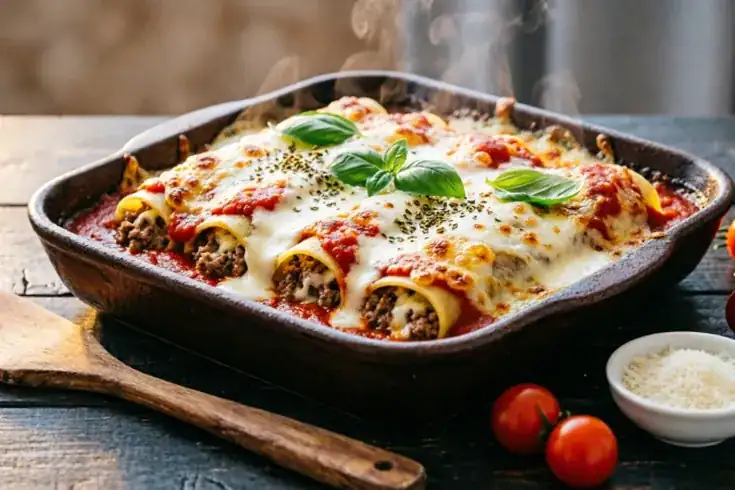
You can garnish with fresh herbs such as basil, parsley, or a thin sprinkling of Parmesan cheese. Traditionally, it's served with a light green salad and a tart dressing to balance the richness of the cheese and sauce.
Stuffed pasta is a dish that rewards creativity and patience. It requires a little preparation, but the results are always worth the effort. Once you master the basic cooking technique, choosing the right sauce, and observing the baking temperature, you can easily create variations on this timeless theme, surprising your loved ones and enjoying the perfectly soft and rich flavor of each sauce-soaked pasta.