Easy to make, incredibly tender: kefir charlotte
Charlotte is undoubtedly one of the pillars of home baking. It's loved for its simplicity, readily available ingredients, and the amazing aroma that fills the kitchen. The classic version is made with milk or eggs, but a real revelation for many is Charlotte made with kefir.
If you're looking for a recipe guaranteed to be fluffy, even if you're a cooking novice, you've come to the right place. We'll delve into the intricacies of preparing this masterpiece, explore the variety of flavors, and share secrets that will turn your charlotte into a masterpiece.
Why a kefir charlotte is a great idea
Kefir in baked goods isn't just a milk substitute. It's an active ingredient that influences the texture and rise of dough by interacting with baking soda.
- First, the acid in kefir reacts with baking soda (or baking powder), releasing carbon dioxide. This gas creates numerous tiny bubbles, which allow the cake to rise evenly and be porous, rather than dense and rubbery.
- Secondly, the fat content of kefir (especially if you use a 2.5% or 3.2% product) gives the dough additional moisture and softness, making its texture more velvety after baking.
- Thirdly, the slight sourness of kefir perfectly highlights the sweetness of the apples and vanilla, making the taste of the finished product deeper and more complex than that of a charlotte made with plain milk.
A classic: A basic recipe for a fluffy kefir charlotte
This recipe is a starting point. It's simple, requires minimal effort, and always produces excellent results.
For the test
- Kefir (any fat content): 250 ml (one glass)
- Chicken eggs: 2 pieces
- A pinch of salt
Preparation
- Preparing the ingredients. The kefir and eggs should be at room temperature. This is critical for the proper reaction with the baking soda and fluffiness. If the kefir is cold, you can warm it slightly in the microwave (not to the point of boiling, just 15-20 seconds).
- Baking soda. Pour kefir into a deep bowl. Add baking soda and a pinch of salt. Stir vigorously with a whisk. The mixture will begin to foam and increase in volume—this indicates the baking soda has reacted. Let it sit for a couple of minutes.
- For the dough base: In another bowl, beat the eggs with the sugar and vanilla sugar until light and fluffy. This will take 3-5 minutes with a mixer. Beating incorporates air into the mixture.
- Mixing. Carefully pour the beaten eggs into the kefir mixture. Stir with a spatula or whisk until smooth. Do not overmix.
- Flour. Sift the flour into the liquid mixture. Sifting aerates the flour, which also promotes fluffiness. Add the flour in parts, gently mixing with a spatula in upward motions, until the mixture reaches the consistency of thick sour cream. Don't overmix! Stop mixing as soon as the flour is incorporated.
- Preparing the apples: Peel and core the apples. You can leave the peel on for added texture. Cut into wedges or medium cubes. If using cinnamon, combine the chopped apples with ground cinnamon in a separate bowl.
- Assembling the pie. Prepare a baking pan (22-24 cm in diameter). Grease the bottom and sides with butter and sprinkle with semolina or flour. Pour half the batter into the pan.
- Layering the filling. Evenly distribute the apples over the first layer of dough. If the apples are very juicy, you can lightly dust them with a teaspoon of flour to prevent them from sinking too far to the bottom.
- Finishing: Pour the remaining batter over the apples. The batter should only partially cover the filling, not completely—that's okay.
- Baking. Preheat oven to 180°C. Bake the pie for 40-50 minutes. Check for doneness with a wooden skewer: it should come out clean from the center.
- Cooling. Let the finished cake cool slightly in the pan (10-15 minutes), then carefully remove it and cool on a wire rack. You can generously dust it with powdered sugar before serving.
Flavor variations: What to add to kefir charlotte
The secret to this pie's popularity lies in its adaptability. The kefir dough serves as the perfect base for a variety of toppings.
1. Charlotte with cottage cheese and kefir
Adding cottage cheese makes the texture of the pie even more moist, creamy and interesting.
Ingredients
- Basic recipe for kefir charlotte
- Cottage cheese (5-9% fat): 150 grams
Preparation
- The cottage cheese must be rubbed through a sieve or thoroughly beaten with a blender until it becomes a smooth paste.
- Add the grated cottage cheese to the kefir mixture after you have dissolved the soda.
- Mix thoroughly, and then add the beaten eggs and flour.
- The dough may become a little thicker - this is acceptable.
- Bake according to the basic recipe.
2. Spicy charlotte with lemon and raisins
The citrus note refreshes the heavy apples, and the raisins add a pleasant sweetness.
Ingredients
- Basic recipe for kefir charlotte
- Raisins (seedless): 80 grams
- Zest of one medium lemon
- Juice of half a lemon (can be replaced with 1 tbsp. lemon juice in the dough if you don’t like the zest)
Preparation
- Pre-soak the raisins in hot water for 10 minutes, then dry.
- At the very beginning, when mixing kefir and soda, add lemon zest.
- When beating eggs, add freshly squeezed lemon juice.
- Mix dried fruits and apples together with cinnamon.
- If the lemon juice is very sour, the dough may rise more slowly because there is too much acid.
- In this case, you can add an additional quarter teaspoon of baking soda, which should be quenched with vinegar or boiling water separately, and added to the mixture last.
3. Chocolate charlotte with kefir
For those who can't imagine dessert without cocoa.
Ingredients
- Basic recipe for kefir charlotte
- Cocoa powder: 3 heaped tablespoons
- Dark chocolate pieces (optional): 50 grams
Preparation
- Sift cocoa together with flour.
- If you are using chocolate, cut it into small cubes and stir it into the dough along with the apples.
- The cocoa dough may be slightly denser and darker.
- Bake for 5-7 minutes longer, as dark dough releases moisture less well.
Secrets to Perfect Texture: Tips from an Experienced Baker
To ensure your kefir charlotte reaches restaurant quality, pay attention to the nuances that are often overlooked in a rush.
The temperature of the ingredients is the key to success
As mentioned, all ingredients except kefir should be at room temperature. Cold eggs don't whip well and don't combine well with the fats, resulting in a less fluffy texture. Warm dough reacts better with the baking soda.
Don't overdo it with flour
The consistency of the sharlotka batter should be very runny, reminiscent of thick but pourable sour cream or pancake batter. If you add too much flour, the pie will be rubbery, heavy, and undercooked inside, remaining moist beneath the beautiful crust. It's better to let the apples sink a little in the batter than to have an overly thick batter.
Proper activation of soda
Kefir is the one that dissolves the baking soda. If you're using baking powder, you can simply mix it with the flour. When using baking soda and kefir, let the mixture sit for 3-5 minutes. You should see active foaming. If there's no reaction, the baking soda may be old and should be replaced. Never add baking soda directly to flour or eggs—it will create an undesirable flavor.
Apples: Selection and Preparation
Choose tart, firm apples. They hold their shape better during baking and don't turn into mush. If the apples are very watery, you can lightly sauté them in a pan with a little sugar for a couple of minutes to evaporate the excess moisture, then let them cool before adding to the batter.
Baking: Patience and Temperature
The main rule is to not open the oven for the first 30 minutes of baking! A sudden drop in temperature will cause the dough to settle and not rise further.
The optimal temperature for a kefir charlotte is 180°C. At a higher temperature, the top of the pie will burn and the center will remain raw. If the top begins to brown too quickly (usually after 35 minutes), you can carefully cover the pan with foil without reducing the temperature.
When form matters
Charlotte cakes turn out beautifully in springform pans and cast iron skillets. However, if you want a perfectly golden crust on the sides, use metal pans with thick bottoms. Silicone pans are easy to remove, but the baked goods often turn out a little less golden.
Lazy Charlotte with Kefir: Minimum Mixing, Maximum Flavor
There's an approach that allows you to create a cake similar to American cupcakes or muffins using the "shake and forget" principle. This method is ideal when every minute counts.
Ingredients
- Kefir: 200 ml
- Egg: 1 pc.
- Sugar: 150 grams
- Flour: 180 grams
- Odorless vegetable oil: 50 ml
- Soda: 0.5 teaspoon
- Apples: 3-4 pcs.
Preparation
- In a deep bowl, combine all liquid ingredients: kefir, egg, and vegetable oil. Whisk gently.
- Add sugar and baking soda. Stir well until the sugar dissolves.
- Add the sifted flour and quickly, using about ten strokes, beat until smooth. With this method, don't over-knead, otherwise the gluten will rise and the cake will be dense.
- Cut the apples into large slices.
- Grease a baking pan. Place half the apples in the bottom and pour the batter over them. Arrange the remaining apples on top of the batter. They will look beautiful on top after baking.
- Bake at 175°C for about 45 minutes. This version is traditionally denser but very moist, with a focus on the apple filling.
How to serve kefir charlotte
Unlike butter sponge cakes, kefir-based charlottes hold their shape perfectly while remaining very tender. This allows for experimentation with presentation.
Option 1: Classic Winter
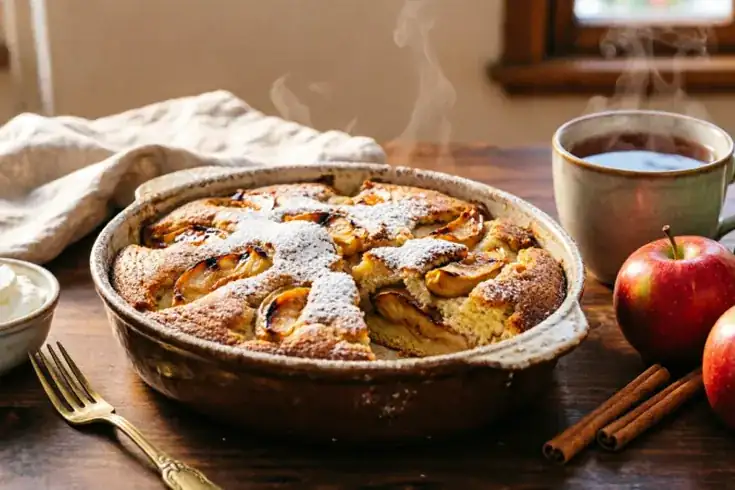
The cooled pie is generously dusted with powdered sugar. Serve with a scoop of vanilla ice cream, which slowly melts on the warm slice of pie, creating a contrasting temperature.
Option 2: Caramel Accent
For a more complex flavor, make a simple caramel sauce with sugar and a little water (or butter). Drizzle it over the hot, freshly baked pie. The kefir dough absorbs the caramel beautifully, making it even more luscious.
Option 3: Berry Mood
In summer, charlotte goes well with fresh berries. Raspberries, strawberries, or currants mixed with a dollop of thick sour cream or crème fraîche make a wonderful addition, balancing out the sweetness.
Solving common problems
Even such a simple recipe can have its challenges. Here's how to avoid them.
Reasons:
- Underbaked: If the center is uncooked, the center of gravity will shift as it cools, causing the pie to sink. Solution: Bake for 5-10 minutes longer.
- Sudden temperature change: You opened the oven during the active rising phase. Solution: Follow the "don't open for the first 30 minutes" rule.
Reasons:
- Too many apples: The apples have released a lot of juice that hasn't had time to be absorbed. Solution: Pre-evaporate excess moisture or use fewer apples.
- Too much flour: The batter was too thick and didn't bake well. Solution: Follow the proportions precisely, aiming for the consistency of thick sour cream, not thick cake batter.
Cause:
- Kefir is too fatty or sour. Solution: If you're using very sour kefir, increase the sugar by 10-20 grams and be sure to dissolve the baking soda separately with a couple drops of vinegar or boiling water, not in the kefir itself. This will soften the overall flavor.
Charlotte cake with kefir is more than just a quick dessert; it's an ode to the comforts of home. Thanks to the unique texture of this fermented milk product, the pie is airy, pleasantly moist, and never boring. Once you master the basic recipe, you can confidently experiment with additions, turning each new pie into a small culinary discovery.