Chicken Soup Seasonings: The Best Spices for Aroma and Flavor
Basic seasoning set for chicken soup
Beginner cooks often make the same mistake: adding several seasonings to a fairly neutral-tasting chicken soup. But the result is usually disappointing: the dish loses its character, turning into a strange bouquet of flavors and aromas.
Professional chefs have a golden rule: soup made with chilled farm or country chicken requires minimal seasoning. Often, it's as simple as salt and freshly ground pepper. Poultry has its own distinct flavor, and too many spices will simply overwhelm it.
If you're using frozen or refrigerated store-bought chicken that's not grain-fed, you can use a basic set of seasonings to enhance the flavor of the soup.
- Onions and carrots. You can wash the onions and add them unpeeled to the pan—the broth will take on a beautiful amber hue. The carrots will add delicate sweet notes.
- Parsley root or a small piece of celery root. These aromatic additions will add deeper and more interesting nuances to the chicken soup's flavor.
- Black peppercorns. These are real black peppercorns, not ground pepper from a packet. They'll add a subtle, spicy flavor to your dish without being too harsh.
- Bay leaf. It's added to chicken soup for a more refined flavor. Just add it sparingly, 10-15 minutes before the end of cooking, and then remove it to avoid a bitter taste.
What seasonings are best?
If you're looking to break away from the classics, add new flavors, refine the nuances of store-bought poultry, or simply experiment, consider other seasoning options. We've categorized them based on the specific purposes of each spice, herb, and condiment.
For a deep aroma
- Allspice. Unlike black pepper, it produces a complex, almost perfume-like bouquet, with hints of clove, cinnamon, and nutmeg. Two or three peppercorns, crushed with the flat side of a knife, are sufficient for a three-liter saucepan.
- Thyme. This herb is the perfect companion for chicken. Thyme has a slightly resinous aroma that transforms an ordinary soup into a dish with a French accent. Use fresh sprigs during simmering or a pinch of dried at the end.
- Fresh garlic. Add it at the very end, literally a minute before turning off the heat, crushing the clove with the flat side of a knife or pressing it through a garlic press directly into the pan. The aroma of this soup will bring the whole family together at the table.
For a bright taste
- Nutmeg. An unobvious but excellent addition to chicken broth. A pinch of freshly grated nutmeg at the end works wonders: it adds a very distinct, piquant flavor to the soup. Just don't overdo it, or the dish will become practically inedible.
- Ginger. A small slice of fresh ginger, thrown into the pot along with the onion, will add a subtle spicy note and a warming character to the broth. It's a nod to Asian culinary traditions without going overboard.
For an appetizing appearance
- Turmeric. Half a teaspoon of this ground spice can give broth a beautiful golden hue. Expensive saffron can be used for the same purpose, but if you have turmeric on hand, there's no point in spending the extra money.
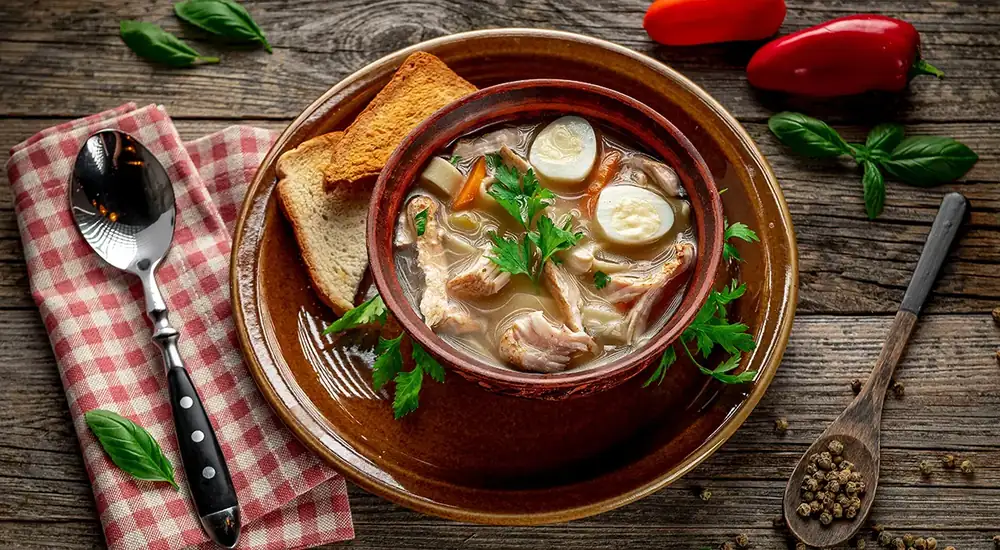
A special mention should be made of herbs that are added to the soup before serving. Parsley, dill, and green onions are ideal. If you prefer a more spicy flavor, you can use cilantro.
What seasonings are not suitable for chicken soup?
In cooking, boldness is often encouraged, but chicken broth is a delicate dish, and aggression is not welcome. Therefore, certain herbs and spices are best avoided.
For example, rosemary is on the blacklist. With its powerful, concentrated pine-camphor aroma, it will steal the show. While rosemary is perfect for roasting chicken, it will mercilessly overpower the bird's delicate flavor when boiled.
Cloves aren't a good choice for chicken soup. Even a single clove will add too much of a sharp flavor to the broth. For the same reason, avoid cumin, coriander, and smoked paprika, which will impart unwanted smoky notes.
Basil isn't suitable for chicken soup. Fresh or dried, it adds a distinctive sweet and spicy flavor to the dish, evoking the flavor of Italian pasta or pizza.
When to add seasonings to chicken soup
The key is timing. At the beginning of cooking, immediately after skimming off the foam, add the basic ingredients: onions, carrots, parsley and celery root, and peppercorns. They need time to infuse their flavors and aromas into the broth.
Halfway through cooking (15-20 minutes before the end), season the soup with allspice, bay leaf, and turmeric. One to two minutes before turning off the heat, add garlic and/or grated (ground) nutmeg. You can also add chopped fresh herbs. After this, be sure to let the soup rest for 10-15 minutes—this will allow the flavor to intensify.
When combining spices, keep the character of the dish in mind. If you want to give your chicken soup a French twist, use celery root, black pepper, and a sprig of thyme. If you prefer an Asian twist, add a slice of ginger, star anise (just one point from the star), and green onions at the end. For a classic homemade soup, just a good grind of black peppercorns and parsley root are sufficient.
Can I add store-bought chicken cubes to chicken soup?
From a haute cuisine perspective, no. The taste of a freeze-dried cube is an illusion created by MSG and excess salt. It completely erases the dish's individuality, rendering the flavor chemical.
What seasonings will make the soup more filling and thick?
Spices with warm, deep flavors, like nutmeg, lightly roasted carrots, a pinch of curry, or turmeric, will help thicken the chicken soup.
Is it possible to save oversalted soup and how to do it?
It's possible to salvage the salt, but don't simply dilute it with water (this will dull the dish's flavor). The best way is to use natural absorbents. Take a raw, peeled potato or a handful of rice wrapped in cheesecloth and place them in boiling broth for 10-15 minutes. They will absorb the excess salt. Another chef's secret is to add a drop of lemon juice or a pinch of sugar to the dish: the acidity and sweetness will delicately balance out a slight oversalt.
Can you add hot peppers to chicken soup?
Hot chili peppers require pinpoint precision. If you're looking for a subtle spiciness and an interesting flavor accent, add a whole chili pepper to the pot 10 minutes before the end of cooking, making sure it's free of cracks and nicks (the main capsaicin heat is found in the seeds and membranes). Remove the chili pepper before serving. If you're aiming for a warming, moderately spicy soup, thinly slice the chili pepper, removing the seeds first, and add it to the stir-fry or directly to the plate before serving.
What's the bottom line?
Chicken soup is all about warmth, comfort, and care. Let the seasoning selection for this dish be not a set of rules, but a small culinary ritual: taste, incorporate, and create your own family dish that your family will ask for again and again.