Dried fruits: types, properties and how to preserve them
Walnuts, almonds, hazelnuts, cashews, and pistachios have distinct nutritional profiles, and storing them in an airtight container helps maintain their freshness.
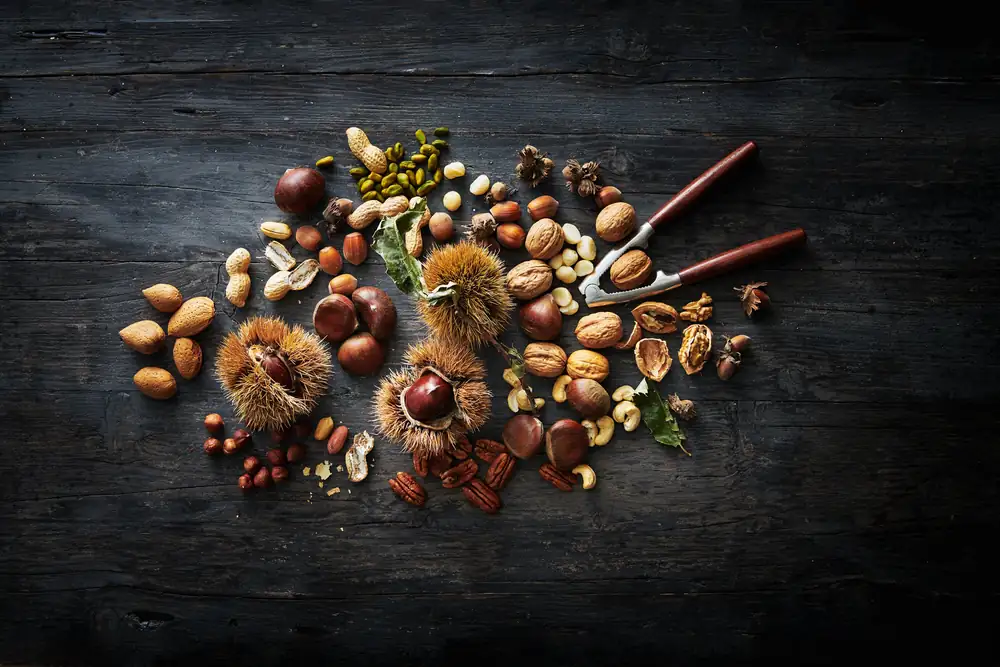
The variety of nuts includes walnuts, almonds, hazelnuts, cashews, macadamia nuts, pecans, pistachios, and many more, each with its own unique properties and nutritional profiles. It's worth noting that the peanut is not a nut, despite its name; it's classified as a legume.
Almonds are rich in vitamin E and healthy fats, and walnuts provide plenty of omega-3 fatty acids. Cashews are a source of copper and magnesium. Therefore, it's ideal to combine several varieties in your diet.
Raw nuts are generally considered healthier because they don't lose nutrients through heat. Roasting them can cause the loss of some heat-sensitive nutrients, although they remain a healthy option if roasted without added salt or oil.
To preserve their freshness and nutrients, it's best to store them in an airtight container in the refrigerator or freezer. The cold slows down the oxidation of fats and prolongs their shelf life, and it's also advisable to protect them from light and moisture.
Nuts and seeds are very similar. Nuts usually have a hard shell, while seeds typically grow inside fruits or capsules. Botanically, nuts are a specific type of seed, but in common usage they are classified separately.
To ensure they are free of contaminants or pesticides, a good option is to buy certified organic nuts. In Switzerland, they are also typically tested for residues before being sold.