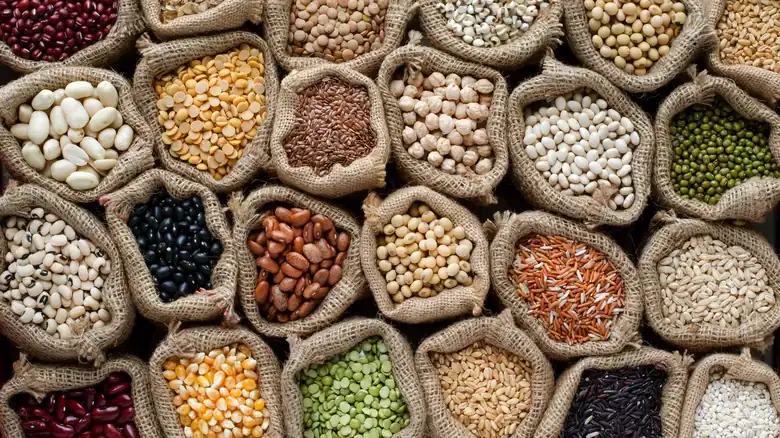
Cooked soybeans have more protein than other common legumes, such as chickpeas.
A cup of cooked soybeans provides about 28.6 grams of protein and 10.3 grams of fiber, compared to 14.5 grams of protein in a cup of chickpeas.
Soybeans are legumes, and as such, their seeds store the nutrients the plant needs to sprout: carbohydrates, oils, and proteins. In soybeans, proteins can represent around 40% of the dry weight of the bean, and it also stores a considerable amount of oil. Other legumes allocate a greater proportion of their reserves to carbohydrates.
Humans have been taking advantage of this resource for thousands of years. Cultivated soybeans, Glycine max, are descended from a wild relative from East Asia, Glycine soja. Domestication transformed them into a larger, easier-to-harvest grain plant, and cuisines around the world have found countless ways to process them.
Soybeans can be prepared in many ways, from edamame, which is harvested young, to dried beans that are soaked and simmered. Their mild, nutty flavor works well in soups, stews, or salads. Ground and soaked in water, they make soy milk; curdled and pressed, they become tofu. Fermentation produces tempeh, miso, and natto, a fermented soybean dish with a unique texture.
Heat also alters nutritional value. Raw soybeans contain trypsin inhibitors, which interfere with protein digestion, and cooking reduces this activity. Tofu retains much of the protein, but its traditional processing removes the okara, the fibrous pulp, so it doesn't provide the more than 10 grams of fiber per cup found in whole cooked soybeans.
Edamame makes a great snack between meals, tofu absorbs sauce well and browns nicely in a hot pan with oil, and tempeh, with its nutty flavor, can achieve a sear that rivals that of a good steak.