How to bake bread at home: three types of dough, from yeast to sourdough
Homemade bread is cheaper than store-bought bread, and its doughs are divided into three types: with yeast, with baking powder, and with sourdough.
The aroma of freshly baked bread makes the effort worthwhile. There are three basic types of dough: leavened breads, such as white bread, rolls, French baguettes, ciabatta, or brioche; quick breads made with baking powder, such as scones or quark rolls; and sourdough breads, such as those made with rye flour.
Leavened bread uses flour, yeast, water, salt, and possibly sugar. Unleavened breads that are not sourdough use baking powder, along with eggs, fat, milk, salt, sugar, and sometimes buttermilk or sour cream. Eggs lighten the dough and give it a nice color, and butter adds flavor, although margarine can be substituted. In general, fat is key to obtaining light and airy breads.
Oil is also useful for unleavened breads, as it makes them moister and firmer, and a few tablespoons of oil make yeast dough, such as pizza dough, more pliable. Salt and sugar are used for seasoning and enhancing flavor. As a general rule, in a sweet bread, add a pinch of salt to the normal amount of sugar, and in a savory bread, add a pinch of sugar to the normal amount of salt. In unleavened breads, the acidity of buttermilk or sour cream releases carbon dioxide into the dough, causing it to rise.
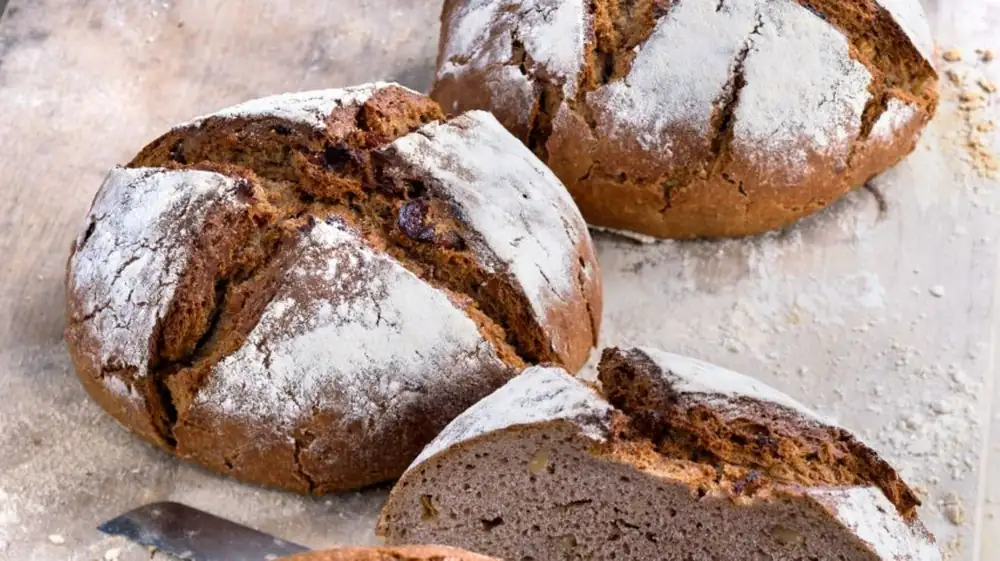
Dense wholemeal doughs, like rye, need strong leavening, for which sourdough starter is ideal. It can be bought ready-made in supermarkets, health food stores, or bakeries, saving time. To make it at home, mix rye flour with very hot water and let it rest in a warm place for one or two days, until it smells acidic. Then feed it twice more with warm water and rye flour, letting it rest for several days each time, until it has a slightly acidic, but not vinegary, smell. Because it's a labor-intensive process, professionals always keep a portion for the next batch, allowing them to skip the first step.
With yeast, first dissolve it in warm water and mix it with the flour to form a dough. Knead it, cover it, and let it rise in a warm place. Then knead it vigorously again to release the fermentation gases, an essential step for the texture. Next, shape it into a loaf or braid and bake it at a constant temperature; otherwise, it won't rise or brown evenly. If you want to turn the bread during baking so it's crispy all over, wait until the dough has fully risen and is starting to brown.
For a crisp crust, you can place a shallow dish of boiling water on the bottom rack of the oven, or sprinkle the bread with water as it begins to brown. Once baked, remove it from the pan and cool it on a wire rack. If it browns too quickly at first, lower the oven temperature and cover it with aluminum foil. For a softer crust, simply cover it with a kitchen towel. Before baking, you can decorate it with rolled oats, sesame seeds, coarse salt, slivered almonds, or poppy seeds, brushing them first with beaten egg so they adhere.
When buying bread, those with a dark brown color often contain malt, the color of which is intended to give baked goods a healthier appearance. If the bread contains leavening agents or premixes, its exact composition is not visible, so it's best if each ingredient is traceable. Bread described as "authentic" or "original" next to a region's name was baked there; if it only says "made in the style of," it could have been baked anywhere.
Bread spoils quickly if not stored properly, especially in humid climates. It's best to store it in a bread box or earthenware pot, emptying the crumb container every few days and cleaning the bread box with vinegar or vinegar essence every one or two weeks. Breads with a high wheat content only keep for a maximum of three days; the more rye they contain, the longer they last, and sourdough breads tend to stay fresh longer. Refrigeration causes bread to go stale quickly, so it's only recommended in very humid climates. To freeze bread, slice it and thaw or toast it as needed.