Roasting whole fish: the reasons behind a method that surpasses others
Fish, rich in high-quality protein and omega-3 (according to Healthline), can be prepared in many ways, but grilling it whole gives the best results.
“Fish bones impart flavor, while the skin keeps the flesh beneath moist as it roasts.”
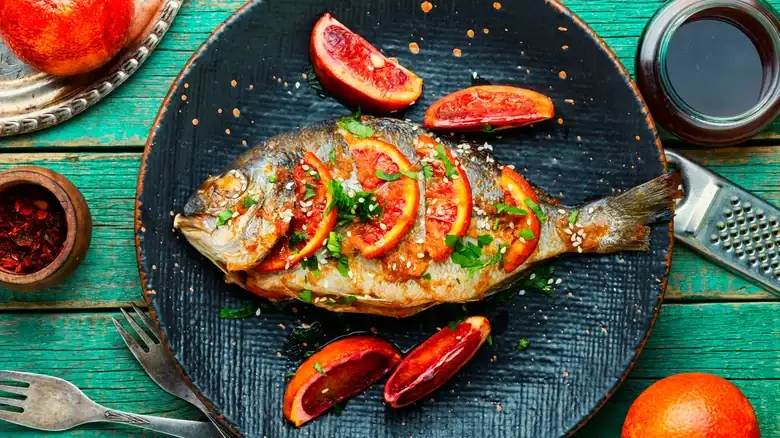
For fish lovers, there's no wrong way to prepare it, as long as it's done right. You might prefer it skin-on and pan-seared for extra crispiness; filleted and slowly baked on parchment paper until it melts in your mouth; or lightly fried and stuffed into a fresh taco. But there's one way that surpasses all others: roasting it whole, skin on, bones, bulging eyes, and all. The appearance might be intimidating, but by holding it by the gills and cooking it to perfection, the result is well worth the effort.
Choosing whole fish means you also get the bones, which add great flavor, just like with other meats. Domenica Marchetti, a recipe creator and food writer, told The Washington Post that when she grilled the whole fish, the flesh turned out sweeter and more flavorful. “It makes sense” she says. “The fish bones add flavor, while the skin keeps the flesh juicy during grilling.” Besides the tenderness that is retained even if it's overcooked, you also get one of the best parts of the fish: the crispy skin, and there's enough for everyone.
Grilling it whole also makes it easier to check its freshness when buying it, guaranteeing quality. When you buy it, it comes already cleaned, without scales or guts, and only needs a little seasoning and a drizzle of olive oil. Whole fish tastes better, requires less preparation, and is a good way to serve fish to a large group.
To choose fresh fish, Martha Stewart recommends looking at the eyes, which should be clear and bulging (not sunken or cloudy); the gills, which should be bright or red (not dull gray or brown); the flesh, which should be firm to the touch; and the smell, which should be clean, without a strong fishy aftertaste. This way, you can choose the freshest fish available, instead of a questionable fillet that was probably previously frozen.
Some fish are ideal for buying and grilling whole. Many white fish, such as sea bass and smelt, cook easily and are delicious. Martha Stewart also recommends red snapper, sea bass, and trout, which are easy to find at the fish counter or in the seafood section of any supermarket.
Before grilling, it's best to dry the fish well and coat it generously with olive oil and seasonings. It's ready when the flesh becomes opaque and flakes easily with a fork, or you can check if it's cooked by piercing it with a toothpick.