The Evolution of Taste in Mira, Review: The Gem (and Courage) of the Outskirts
It's not easy, these days, to find a pizzeria that offers two dinner shifts. The story of those who produce quality and are then rewarded by customers isn't always true; sometimes it's just rhetoric, but other times it works.
It's not easy, these days, to find a pizzeria that offers two dinner shifts. The story of those who produce quality and are then rewarded by customers isn't always true; sometimes it's just rhetoric, but other times it works. There are no other reasons why Evoluzione del gusto, two rather cramped dining rooms on the outskirts of the outskirts (it's located on a small street outside the center of Mira), is so popular. The only reasons I can find are textbook service and a pizza that rivals the best in the province.
Owner Igor Nurra, a pizza chef by trade, followed the path of many pizza makers of his generation: at a certain point, he grew bored with the traditional dough, good but not exceptional, and he began studying. And if you make pizza in Veneto, for better or worse, the first training school is Mulino Quaglia, which, whatever you think of it, has produced the most talented young talents in the industry.
Nurra also turned to Molino Quaglia, but then he added his own, because talent is always that undemocratic and highly effective thing. How would I describe his doughs? There's nothing minimalist about them, but it's all a bit voluptuous and not inclined to the current trend of simplification. This is a pizza chef who isn't content to make pizza with sourdough starter, but uses a mountain of different flours and ingredients: Altamura wheat, stone-baked whole wheat, and beer-based or pumpkin-based dough... At the entrance to the restaurant, there's a large blackboard displaying the various doughs and the days of the week they're made. Unless you're a geek with a great memory, what happens is that you arrive, sit down, and the waitress shows you the two or three doughs available that evening.
For example, we had beer dough, pure Altamura wheat, and stone-baked whole wheat dough available. We opted for the latter two, and while they were excellent, the differences weren't that noticeable. The dough at this pizzeria is that contemporary Northern Italian pizza that in Naples would be called "bready" and in Rome too soft, but which, when well-made, is a delicious balance: soft all the way to the center, yet crunchy when you bite into it, with a pronounced but not irreverent crust. Well-cooked, but never burned.
The service, as we were saying, is consistent: don't expect the hipster guy who arrives with a branded cross-bar and a solid background in fermented beverages (although there are some like that), but everything is a little more down-to-earth, smiling and attentive, and above all, prompt. The waiters are numerous enough to be efficient, and the divisions between the areas are not so clear-cut, which avoids that unpleasant situation where you call a waiter, he finally arrives, and then you hear, "My colleague will be right over." Everyone does everything, everyone is reasonably knowledgeable, and everyone seems happy, and the chemistry is good.
Last but not least, as soon as you sit down at the table, a rustic yet hearty amuse bouche arrives: thin slices of warm bread, with tomato and mozzarella, a kind of bruschetta alla pizzaiola, which is always a pleasure.
The menu
Well, one flaw might be the menu: 7 sides of pizzas stuffed into plastic bins isn't exactly in line with the latest trends, but above all, it's an inconvenient menu: unless you decide to spend half an hour reading all the pizzas, you have to go a bit by gut feeling.
Undoubtedly, the two sections of the menu that most capture the attention are the Slow Food Presidia pizzas and the seasonal selection. The Slow Food Presidia are appreciable, but perhaps a little "dated," so we focus on the seasonal pizzas: a sausage and broccoli rabe and one with Mora Romagnola mortadella, squacquerone cheese, and chopped pistachios. A mortadella pizza that's finally sober and free from the food porn that has made the mortadella and pistachio combination something that must necessarily drip somewhere, with sweaty fat on full display.
As for beers, the selection is decent, but nothing that would make craft beer lovers scream heaven. There are 3 references from Birrificio 32 and 7 from Birrificio della Granda, and then, alas, there are the Forst and the Ichnusa, classified as craft.
Alongside the pizzas, there are four meat options, complete with photos of the finished dish on the menu (sic!), and the other house specialty: hamburgers (without bread) made with various types of meat, with a rice timbale, slices of homemade focaccia, and a mix of vegetable sides, a one-pot meal perfect for a pub or lunch break.
Something more could be done about appetizers so as not to only offer fried foods, or raw ham with burrata, but there's time, and the Evolution of Taste could still be evolving.
The tasting
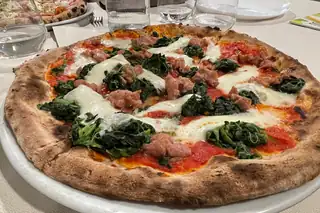
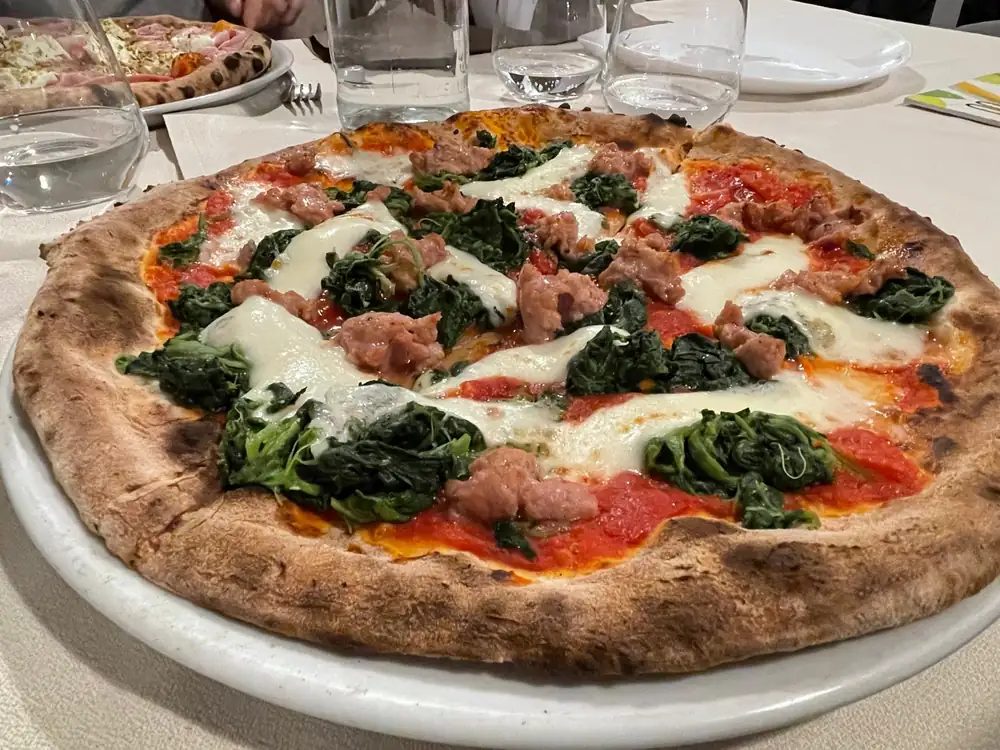
The pizza with broccoli rabe and sausage is tasty. The fresh sausage itself isn't overly flavorful, but the perfectly spicy broccoli rabe counterpoints it perfectly. The only shame is the excessive tomato sauce, spread a bit too generously, which, with its acidic note, somewhat overshadows the delicate flavor of the rest of the dish.
As for the mortadella pizza, the quality of the cured meat is undoubtedly very high, and the chopped pistachios and squacquerone cheese, as simple as we imagined, provide a perfect balance, without overpowering. Between the delicious topping and the crust made with Altamura wheat, crunchy and with a melt-in-the-mouth center, this is one of the best pizzas I've had recently.
Among other things, these pizzas have the advantage of being homogeneous, while sometimes the so-called gourmet pizza resembles, even in taste, a piece of seasoned bread, where the ingredients are disjointed and fall here and there; this, however, is a dish that holds together in every sense.
Finally, we order a dessert to share, priced at a fantastic €5, a paltry price these days for a restaurant dessert. Here, too, the pizzeria's old-school charm shines through, with a pre-printed menu of Bindi-branded desserts, but fortunately, there's also a very respectable menu of homemade desserts. Among them, the cheesecake we order, served in a glass, features a buttery coarse-grain biscuit base, a firm cream, and a topping of real, fresh berries. It makes you want to order another.
Opinion
L'Evoluzione del gusto is a courageous and innovative pizzeria in its own way. It is not trendy, neither for better nor for worse, which can be attributed to its location and its history, but more often than not, this is more of an original and pleasant feature than a flaw.
PRO
- Attentive and friendly service.
- An excellent dough.
AGAINST
- A tiring menu.
- The selection of appetizers and beers was not up to par.