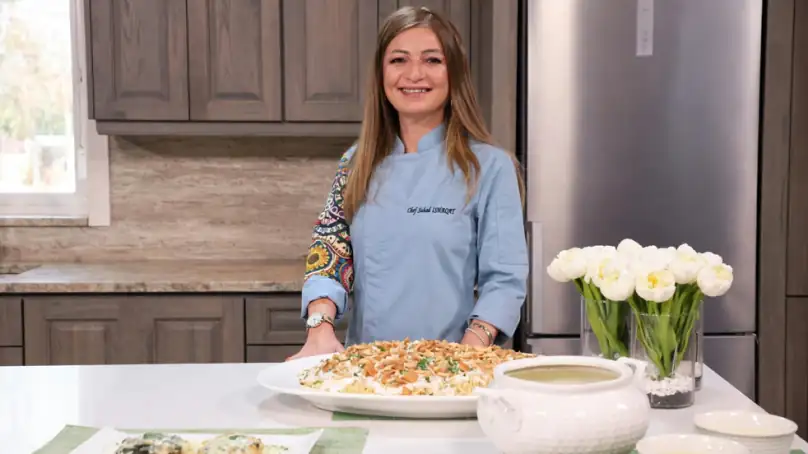
The taste of identity with TV chef Suhad Ishaqat
What makes a dish feel culturally authentic to you, and how do you translate that authenticity onto the plate?
Cultural authenticity is about emotion, not just ingredients. It is the story, the hands that prepared it and the memories it carries. Furthermore, a dish feels authentic when it has soul. Thus, cooking is not simply a job for me; it is passion translated onto the plate. Consequently, I preserve that authenticity by respecting original techniques and flavors. I also use honest local produce and present each dish with care. I want diners to taste the heritage while feeling my passion in every detail.
Can a chef develop a strong culinary identity without being tied to one particular cuisine?
Absolutely, a strong culinary identity is not about one cuisine. Rather, it comes from having a clear philosophy. My identity is built around what I call my Golden Triangle: Passion, Knowledge and Khabza, a Circassian word for experience. Passion represents love, Knowledge represents science and Khabza represents the experience that life gives us. This triangle shapes me as chef Suhad Ishaqat. Like medicine, cooking continues to evolve through new theories and techniques. Therefore, a chef must never stop learning. As a result, I can cook different cuisines while remaining true to myself.
How do you balance your personal expression with diners’ expectations when working with a cuisine that carries strong cultural associations?
I balance both through deep respect. A cuisine with strong cultural roots carries people’s trust, so I must first honor it through knowledge. Therefore, my personal expression comes afterwards, and softly. Moreover, my greatest joy comes from seeing someone enjoy a dish until the very last bite. For me, that last bite truly reflects the chef’s skill. I do not change the soul of a dish. Instead, I add my touch through presentation and warmth. In this way, the guest experiences both familiarity and my personal signature.
Food can evoke memories, connect generations and create a sense of belonging. Which dish or culinary memory has had the strongest influence on your identity as a chef?
My connection between food and passion began in childhood. My food memories are deeply tied to family and the love we shared around the table. For me, family always comes first. I believe a person’s strength comes from their family. Meanwhile, gathering around lunch or dinner meant everything to us. I love being part of that happiness through dishes I prepare with all my heart. My favorite dish is Maqlubet Zahra, or Cauliflower Maqluba. Above all, my love for it is deeply connected to my mother’s warmth and the memories she created for us when we were young.