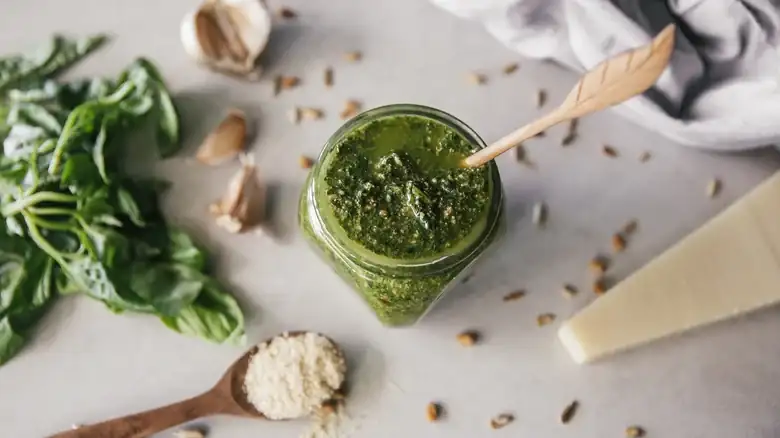
Blanching the basil preserves the bright green color of the pesto, but reduces its flavor.
Blanching the basil before blending preserves the bright green of the pesto, although it does reduce the basil flavor somewhat.
Basil contains enzymes that react with oxygen, which is why its glossy leaves darken upon contact with air. To slow this process, the leaves are blanched: they are immersed for a few seconds in boiling water and then in ice water, which eliminates the enzymes.
The same technique works for other leafy greens, such as spinach, parsley, green beans, or broccoli. Blending soaked leaves would defeat the purpose, so it's best to squeeze them by hand and pat them dry with paper towels. This makes them easier to blend, resulting in a smooth and well-emulsified sauce.
Blanching comes at a price. Christine Gallary of The Kitchn compared blanched basil pesto with one that wasn't blanched and found a clear winner: "The unblanched pesto is so much better." According to her taste test, it had a herbaceous, fresher flavor, and, well, fresh basil.
This trick is useful when pesto is combined with other strong flavors, such as in a savory pasta salad, because the green color remains without altering the overall taste. To preserve it, stored pesto can be covered with a layer of olive oil, and adding lemon juice when mixing the ingredients also helps slow oxidation.