Diferencias en los ingredientes entre el ceviche mexicano y el peruano
Perú y México reclaman el origen del ceviche, pero cada cocina lo construye con ingredientes y marinados muy distintos.
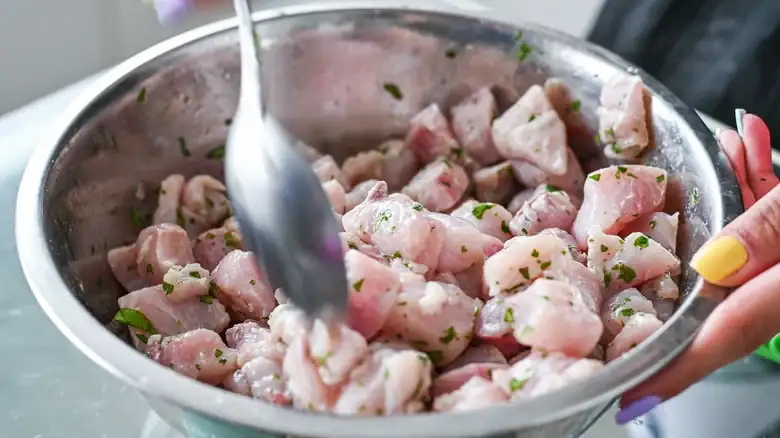
Fresh seafood is an exceptional ingredient, and few dishes showcase it better than ceviche. In its most basic form, the fish or shellfish is chopped and submerged in a citrus sauce. The acid alters the proteins, which firm up and darken, just as with slow cooking. Chillies, fruit juices, herbs, onion, or sweet potato enrich the dish and give it a vibrant texture.
Ceviche is prepared in many ways throughout Latin America, in almost every Pacific country and, occasionally, on the Atlantic coast, from southern Chile to Mexico. Each region adds its own touch with the seafood available and the accompanying flavors. Peru and Mexico are the most renowned cuisines for their ceviche, and their versions differ considerably. The Peruvian version is more minimalist and focuses on the leche de tigre, the aromatic liquid used in the marinade. The Mexican version incorporates more ingredients and offers a more substantial texture.
Mexican ceviche includes a wider range of ingredients. Cucumber, tomato, onion, radish, garlic, avocado, and bell peppers are diced along with the seafood and tossed in an aromatic sauce. This lime-based sauce is complemented with lemon, hot sauce, Worcestershire sauce, and clam juice. It is typically served with cilantro and a side of tortilla chips, as is customary in Mexican cuisine.
Variety is the common thread running through Mexican ceviche, with each region adding its own twist. The most widespread version mixes white fish or shrimp with tomato, cucumber, onion, jalapeño, and lime juice, the kind found in Tijuana, Sonora, and often throughout the rest of the country. In Sinaloa and Colima, cooks grind the fish and serve it with shredded carrot and orange juice; its fine texture is ideal on a tostada. Sinaloa also boasts aguachile, a very spicy version where shrimp is marinated in lime juice and topped with chiltepín or serrano peppers.
In Peru, ceviche is often considered the national dish. There are indications that it originated on the Pacific coast around 3,000 years ago. The ingredients have changed somewhat, such as with the arrival of citrus fruits through the Columbian Exchange, but the recipe retains a similar base. Large chunks of fish are marinated in a simple mixture of lime juice, onion, chili pepper, and salt, to which ginger, cilantro, and sometimes celery are added. It is served with boiled sweet potato and corn on the cob, along with cancha (a popular corn snack) and plantain chips for texture.
It all comes down to the balance of the marinade, and especially the resulting liquid, the leche de tigre (tiger's milk). This aromatic, milky-colored sauce is characteristic of this style, and in restaurants it's even served on its own as a sign of the ceviche's quality. Its flavor depends on the skill of the cook and the intensity of the Peruvian ingredients. The Peruvian style also uses a type of lime with a more potent acidity, which reduces the marinating time and alters the dish's preparation. The country also employs its characteristic ají pepper, which contributes spicy and sweet tropical fruit notes.
With such a vast geographical distance, it's no surprise that the seafood varies as well. Mexican ceviche uses a wider variety of species. Shrimp is a favorite, appearing in both national and regional versions. In Sinaloa, the sierra del Pacífico, a fish in the mackerel family, is a common choice. Mahi-mahi and white-fleshed fish like halibut, tilapia, sea bass, and grouper are also used, and crab, scallops, and even octopus are included.
Peruvian ceviche focuses on the selection of seafood, and most versions use a single protein. Traditional preparations are made with sea bass (not to be confused with Chilean sea bass) or bonito. Today, fresh white fish such as sole, plaice, and grouper are used, and there are freshwater versions, such as those made with trout in the Andes or paiche in the Amazon. Some chefs experiment with Japanese influences, using mackerel, tuna, and salmon, and there are also vegan versions made with mushrooms. In both countries, there are many options, and all versions are worth trying.







