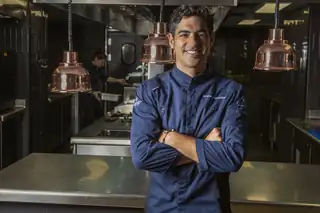
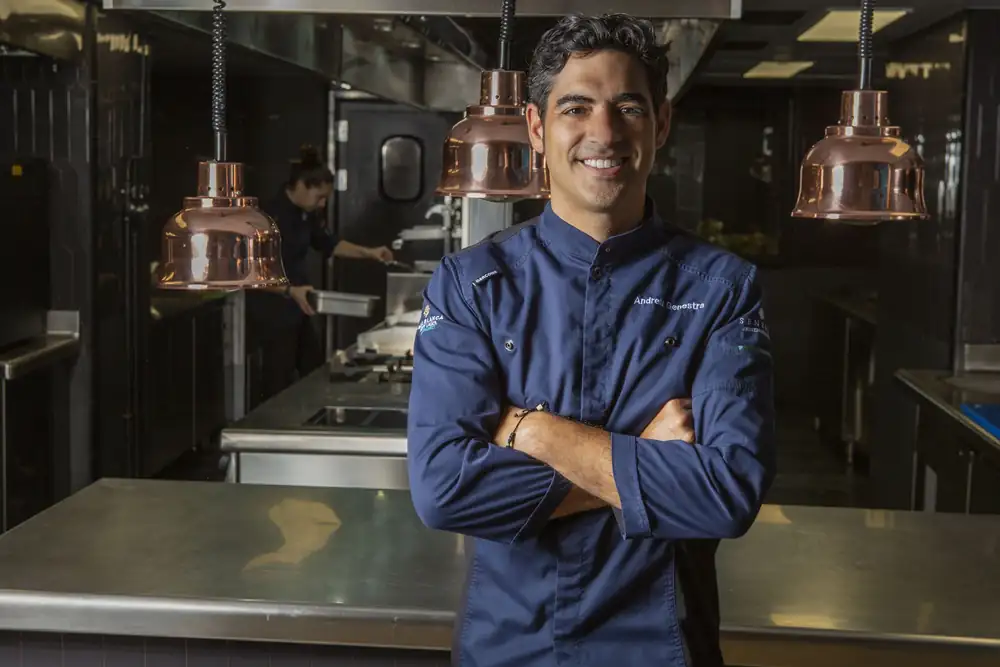
Andreu Genestra, entre la ciudad y el campo
Los últimos dos años han sido de todo menos tranquilos para Andreu Genestra, una de las figuras clave de la hostelería mallorquina en la última década. Trasladó su restaurante homónimo con estrella Michelin de Capdepera a Llucmajor.
The last two years have been anything but quiet for Andreu Genestra, one of the key figures in Mallorcan hospitality over the past decade. In the spring of 2023, he moved his eponymous Michelin-starred restaurant from Capdepera to Llucmajor. And in late autumn of 2024, he did the same with his second establishment, Aromata in Palma, which has not only changed location but also its concept, and whose ambitions have grown exponentially. Let's start with the most recent developments.
Aromata opened in 2014 in a central 17th-century mansion in the island's capital, with the intention of creating a restaurant with a personal touch that would help raise awareness of his northern project among his fellow islanders. The beautiful setting, reasonable prices, and outstanding rice dishes were its calling card.
For a decade, the restaurant steadily established itself in the city, until Genestra concluded that it needed to take things a step further. Thus, he reached an agreement with hotelier Toni Horrach to relocate to the brand-new, and also very centrally located, Hotel Palm Blanc. This year, 2025, the new Aromata faces its first summer season, which will likely be pivotal, with a clear objective on the horizon: to double the Michelin star of its parent restaurant.
Although the Genestra name is obviously the one that spearheads the project, the day-to-day operations are handled by head chef Edgar Rodríguez, formerly of Can Simoneta in Catanyamel. This daily routine unfolds in a lush interior garden and consists of a menu for all tastes based on quality ingredients (available at lunchtime and in the evenings), an executive lunch menu (€38), and three tasting menus (Aromata, €70; Sentis, €85; and Verd, €70) for dinner, which embody the restaurant's ambitions.
Sentits, with its very reasonable price, is the most comprehensive and consists of a respectful overview of the island's larder and traditions with a few modern touches. This is clear from the start: a fun selection of four very Balearic snacks such as potato fritters, profiteroles filled with sausage and cheese, a splendid mini-coca (flatbread) with tomato and sobrasada (a type of cured sausage), and a shot of clarified tomato.
This is followed by a tribute to traditional Mallorcan charcuterie, in collaboration with Xesc Reina and Can Company, which includes some recipes that were thought to be lost but have now been recovered. These include 18-month-aged sobrasada, figatella (a 17th-century product made with liver), nora (meat cooked with dried apricots and dates), varia (a sausage marinated in Mahón cheese), and fuet de porc negre (the least interesting, very dry). To accompany it, an ethereal version of the potato coca typical of Valldemossa, a town in the Chopin region.
The sea, as is obvious on an island, plays a fundamental role in the menu. The unexpected red prawn from Sóller with pickles and citrus fruits raises the eternal dilemma about this crustacean: can it be improved with any preparation other than simply boiling it? Many of us think not.
The squid (grilled and stuffed with tartar) with pistachio, white vermouth, beurre blanc and tempura sea lettuce and the cappelletti stuffed with lobster with sabayon made from its head and saffron are two dishes with nods to travel, to France and Italy, and the kind that are remembered days after visiting a restaurant and encourage you to return.
The Mediterranean journey concludes with an impeccable grilled skate with charcoal-grilled potatoes and a bean vinaigrette with its collagen, which gives way to the meat, consisting of… Yes, you guessed it, Mallorcan black pork, presented in a crisp terrine lightened with corn and apricot and finished with a sweet pig's trotter stew fritter.
For dessert, a play of contrasts with chocolate, coffee cream, dates, and almond ice cream. Beforehand, there is the option, at an additional cost (€18), to sample an interesting selection of Balearic cheeses.
Italian Giorgia Scaramella heads up a service worthy of the Michelin star the restaurant is striving for. She's also a passionate wine enthusiast and curates a wine pairing (€85) that is as unique as it is, dare I say, provocative, featuring island wines, orange wines, and even a rarity like a Priorat wine bottled in a demijohn and served with a pipette. It might not be for everyone, but wine aficionados will find it incredibly rewarding.
Bucolic scenes on a 14th-century estate
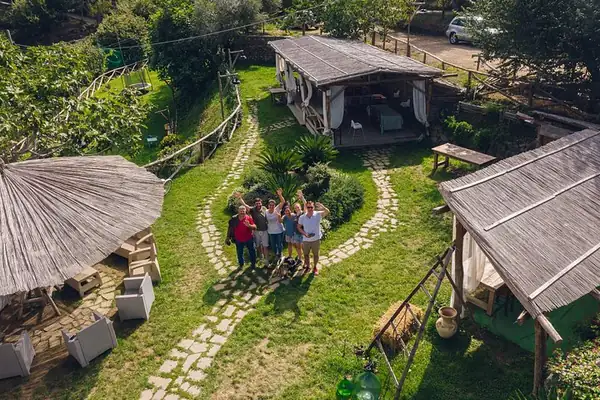
While Aromata offers a fiercely urban experience, Andreu Genestra's restaurant is the complete opposite: pure bucolic charm at the luxurious Zoëtry Hotel, in Sa Torre, Llucmajor, on a 14th-century estate surrounded by gardens, olive groves, mountain views, and an orchard. There, the chef continues, at full speed, along the path he began almost fifteen years ago in Capdepera (in a space that has been transformed into Senzill, a seasonal bistro), with the Mediterranean as the leitmotif of a locally sourced, sustainable cuisine rooted in tradition and technique, a great deal of technique.
Their tasting menu, Mediterranean Extreme (€185), is a perfect showcase of their philosophy and approach to gastronomy, presented through fifteen courses. Without going into too much detail, as surprise is part of the experience, highlights include dishes like the coca with roasted peppers and dried skate, the crispy garden flowers with cheese cream and a sausage that strongly resembles an andouillette, or the delightfully surprising interplay of temperatures and textures in the sweetcorn stuffed with chickpea stew, spiced carob, corn broth, and toasted cabbage.
The surf and turf dishes were superb: emulsified rice with fresh oysters, accompanied by mille-feuille of roast veal and blanched (practically raw) king prawn, partridge rillette, poultry sauce, crispy egg, and its coral. And, as a savory grand finale, a captivating ode to Mallorcan black pig, served in three textures: pork belly stuffed with roast, boneless terrine, and crispy skin.
Every detail is meticulously attended to, from an evocative decor that represents Mallorca through the sea and the rocks to a very special bread service, with six different types (carob, Arabica, seeded, black olive…), passing through a Champions League room and an exceptional wine cellar (including wines from their own vineyards) and the possibility of creating a personalized dinner by choosing two or three dishes (€100/€120) from an ad hoc menu.