Hot pot: a communal meal from China
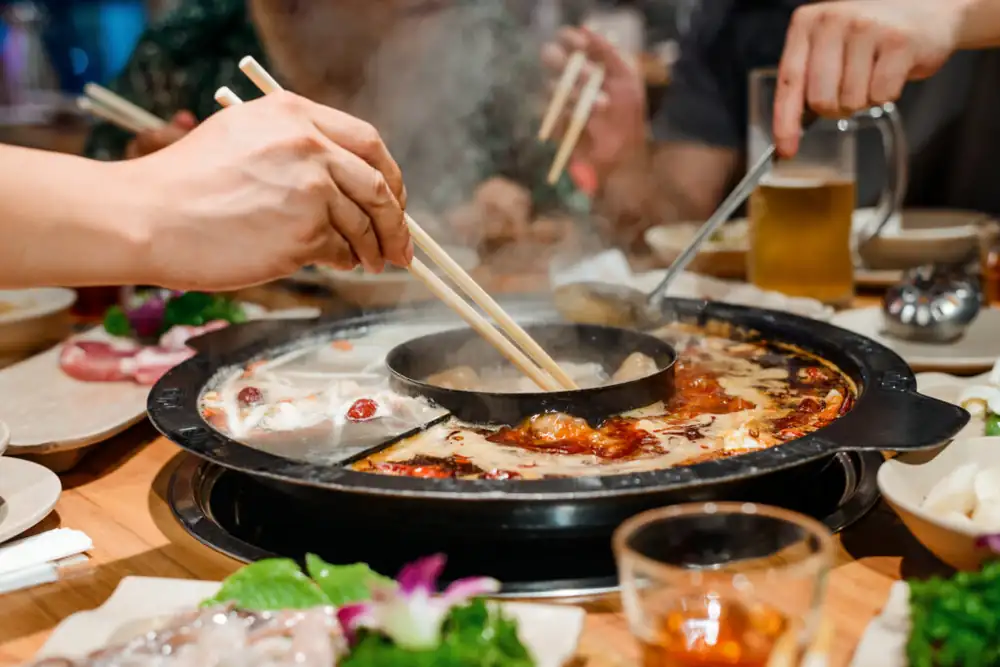
The Hungarian name "hot pot" is aptly translated, as diners seated at the table cook the fresh ingredients themselves in a simmering hot broth.
The Hungarian name "hot pot" is aptly translated, as diners seated at the table cook the fresh ingredients themselves in a simmering hot broth.
The shared experience, which lasts between 2 and 3 hours, and the food based on the "serve yourself" principle not only guarantee good humor and entertainment, but also fully expand the culinary experience to all the senses.
According to tradition, the history of hot pot began over 1,000 years ago, during the Zhou Dynasty in China. Following the customs of the time, each member of the nobility owned a small bronze pot with a hot coal oven. In the Middle Ages, not only the nobility but also the emperors themselves developed a fondness for this dish, and their passion lasted for centuries.
As many landscapes as customs
Freshly fried vegetables or meats in hot water are especially good for the stomach; this may have contributed to the spread of hot pot in East and Southeast Asia. Over time, various versions adapted to local cuisines have become popular in Japan, Korea, Thailand, and Vietnam, among other countries.
In China, due to the size of the country and the climatic diversity, there are numerous widespread subspecies, of which it is worth mentioning the best-known categories:
- Sichuan-style hot pot: The base of Sichuan hot pot is made with chili oil, Sichuan peppercorns, and spices such as bay leaves, cloves, cinnamon, and garlic. Its epicenter is the city of Chongqing, located in the central part of the country, which today, with a population of 30 million, is one of China's largest cities. Among the streets that wind between skyscrapers, there are some where both sides are lined with hot pot restaurants (almost 26,000!), as one of the locals' favorite activities is eating together at gatherings of friends.
In general, Southern-style hot pot is based on the diversity and variety of broths and sauces, since we can create multiple flavors according to taste.
- Northern-style hot pot: One of the most spectacular versions of northern-style hot pot is the Peking hot pot, also known as sudden-boiled lamb. This version dates back to the time of the Mongol conquerors, as the khans enjoyed it during their campaigns. The bottom of the funnel-shaped pot, made of metal or porcelain and placed on the table, contains clear to whitish hot water flavored with onions, ginger, peppers, and shiitake mushrooms. The emphasis is not on the broth, but on the fresh flavor of the meats and vegetables.
What's cooking in the pot? – Hot pot etiquette for beginners and experts
In most hot pot restaurants in Europe, including Hungary, we can enjoy a mixed version, but one that mainly resembles the southern style, which means we have countless ingredients and base broths at our disposal to elevate the dining experience to a new level.
- Broths: You can choose between a spicy Sichuan-style broth or a light, mildly spicy broth to balance the flavors. In most restaurants, the pot can be divided into two or even four equal portions. There are also tomato-flavored and fish-flavored versions if you want to add a special touch to the experience.
- Meats, fish, and seafood: Thinly sliced lamb and beef are the most popular, but those who want to experiment can also add fresh crab, fish, or squid to the broth. This also includes meatballs filled with beef or fish and fish tofu flakes.
- Vegetables: The most popular vegetables are Chinese cabbage, enoki or shiitake mushrooms, sweet potatoes, and corn.
- Other delicacies: You can also cook noodles in the hot pot, such as udon noodles or glass noodles. For those seeking more exotic ingredients, there's beef tongue, duck blood, or even pig brains, to name a few extreme options.
The first and most important step before starting to prepare a meal is to choose one or more bases.
It's worth choosing a milder version, in addition to the very spicy one, so you can relax after a difficult time.
Next, prepare the sauce in which to dip the cooked food. It can be sesame-based or soy-based. In this case, the "choose your favorite" principle also applies, as the chosen base can be complemented with hoisin sauce, oyster sauce, chili oil, sesame seeds, Chinese barbecue sauce, and chives, according to taste.
Choose a variety of ingredients for your stew, including meat, seafood, and vegetables. Be careful not to touch the stew at any point, and use metal spoons and chopsticks to pick up any pieces that are difficult to remove.
Several ingredients can be cooked at the same time in hot broth.
However, keep in mind that the soup itself is not usually eaten during the meal. Also, be sure to let the cooked pieces cool completely after removing them from the soup.
It's practical to ask for an apron at the restaurant to protect your clothes, but if one isn't available, it's best to wear dark clothing, as splashes can easily fall directly on you.
Once you have everything ready, all that's left is to enjoy cooking and eating together, accompanied by pleasant conversation. The explosion of flavors, aromas, and spices offers an unforgettable experience you'll want to repeat again and again.
To experience or relive the experience, it's worth visiting one of the restaurants available in Budapest:
- A Town Hot Pot, 1107 Budapest, Jegenye u. 26/9.
- Restaurant Aranytál, 1089, Budapest, Plaza Orczy 4a/2.