Katsu in Budapest: a passing trend or a new favorite?
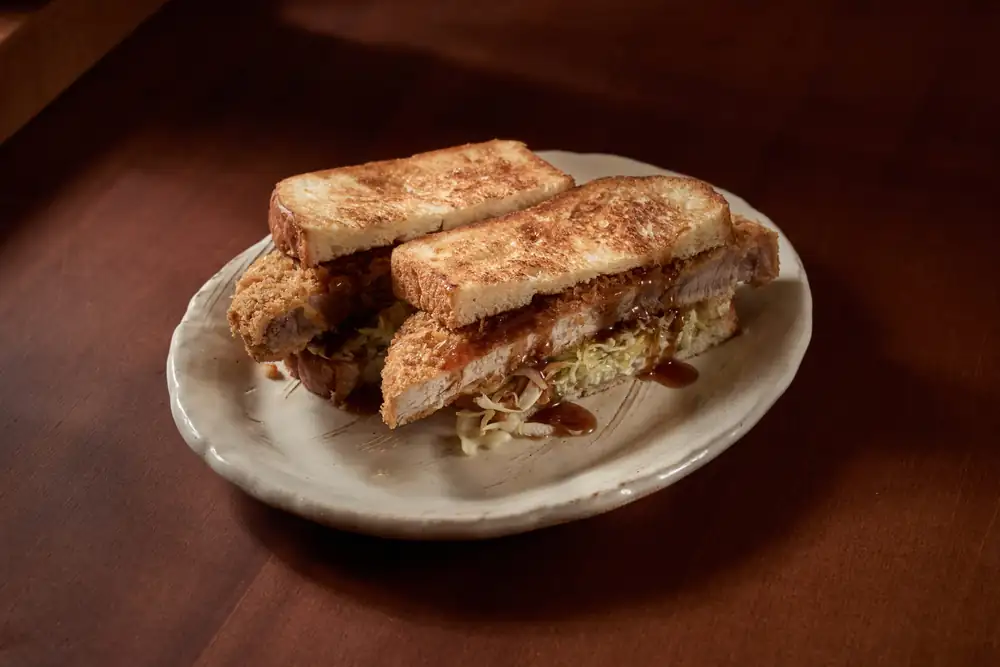
If Hungarian cuisine has an iconic comfort food, it is undoubtedly fried meat. In Japan, katsu plays a similar role: pork or chicken meat rolled in panko crumbs and fried until crispy, which can be used to make sandwiches (katsu sando), rice dishes (katsudon) or as a standalone dish.
However, Budapest restaurants are far from unanimous in their opinion as to whether it is truly a new gastronomic trend. “We have been selling it for a long time, but we don’t see that people are specifically looking for it or know what it is. It is more like a seasonal offer in other places. I don’t feel that much hype,” says Lu Boen, owner of 101 NEO. Wang Song Tao, co-owner of Kakurega, sees it differently. “I think it is an emerging trend. It fits the European palate: soft bread, crispy meat, easy to eat, grab and go category.”
Luu Trong Vinh, co-owner of ZEN Eatery, says the truth may lie somewhere in between. “It’s been around for a while. It’s just that now everyone sees it on TikTok and social media. It wasn’t as well-known back then.”
However, he says the popularity has a downside. "A lot of people make panko-crumbed fried meat and call it katsu to fit in with the trend. A lot of people force Asian fusion onto their own concept, and it's not always honest."
Came from the West, became a classic in Japan
The history of katsu itself demonstrates how naturally Japanese cuisine can adapt foreign influences to its own image. Although many people now think of it as a traditional Japanese dish, it originally evolved from a Western breaded cutlet of meat.
“The cutlet came to Japan in the 19th century, and after World War II, the yōshoku culture began under American influence. That's when Western dishes like curry, omelettes, and fried meat became popular,” says Lu Boen.
Everyday Japanese life also played an important role in the birth of katsu sando.
“The bento culture and train travel shaped it into this. It became a food that was easy to put in a box, take with you, and eat on the go.” Perhaps that’s why it still works so well today. “Comfort food. It’s full of meat, easy to eat, and doesn’t require a long restaurant experience.”
Good katsu isn't about the breading
Although it may seem like a simple dish from the outside, the three restaurants agree that it’s all in the details. 101 NEO makes the classic tonkatsu sando: pork, coleslaw and homemade katsu sauce are placed on top of their own baked shokupan. “Hungarian toast just doesn’t go with it. Shokupan is thicker, softer, airier, slightly sweet. It’s at least as important a part of the sandwich as the meat itself,” says Lu Boen. They don’t buy the sauce ready-made either. “It’s a little different everywhere. Ours is a Worcestershire-based, thick, sweet, barbecue-style brown sauce.”
Kakurega takes a completely different approach. “I think the main difference is the quality of the meat,” says Wang Song Tao. Their tonkatsu is made with Mangalica pork loin, their chicken version uses free-range chicken thighs, and they coat it with Japanese panko crumbs, and their coleslaw is seasoned with yuzu. “The yuzu really cuts through the fat in the fried meat, making it really balanced.”
They are also constantly working on the buttery buns that go with the sandwiches. “We are constantly perfecting them. The experience is just as important as the filling itself.”
ZEN Eatery does not make sando, but its own katsudon, where the technological details are given at least as much emphasis as the ingredients. “We first rest the pork chop in a salt-sugar marinade, then dry it uncovered in the refrigerator. This keeps it juicy even after frying,” says Pisti Szelei, the chef of ZEN Eatery. The rice is served with rice vinegar made according to a proprietary recipe, the dish is topped with a tornado omelette, and the sauce is a long-cooked, soy-based jus that includes chicken stock, yuzu, dried bonito, seaweed, caramel, and spices.
What does authenticity mean today?
When it comes to katsu, the question inevitably arises: what makes a dish that is a Japanese reinterpretation of a Western recipe authentic? According to Lu Boen, there is no simple answer. “Authenticity to me doesn’t mean whether it is prepared exactly the same. It’s more about whether the person cooking it understands the food and prepares it with love and respect.”
They come to a similar conclusion at ZEN Eatery, but from a different perspective. “We’re a fusion restaurant, so it’s okay if not everything is authentic. It’s more important to make our own version of everything,” says Pisti Szelei.
What comes after katsu?
Opinions are once again divided on what the next big Asian gastronomic trend will be.
At 101 NEO, they predict a bigger future for Japanese pastries, souffle pancakes and yakitori, while the guys at ZEN Eatery expect Korean cuisine to continue to grow. “Korean cuisine will be the next big wave. Just like Chinese restaurants opened one after another in the past, now more and more Korean places are appearing,” confirms Luu Trong Vinh.
There is no clear answer to whether katsu has truly conquered Budapest. What is certain is that more and more chefs are seeing it as a fantasy, and more and more guests are encountering it. Perhaps it is not about to take over the throne of Hungarian fried meat, but rather it shows that a completely new experience can be built from a familiar basic idea.