Una mirada retrospectiva a los 50 años de gastronomía en Royal China
Si hay algo en lo que Royal China destaca, es en escuchar los deseos del cliente. Un restaurante no se mantiene, y mucho menos conserva su reputación de servir la mejor comida china de Dallas, durante 50 años sin dominar el arte de dar a sus clientes lo que quieren, y también sin predecir qué tendencias llegarán desde el otro lado del Pacífico y triunfarán en Estados Unidos.
If there’s one thing Royal China is good at, it’s listening to what the customer wants. A restaurant doesn’t stay around, let alone maintain its reputation for serving the best Chinese food in Dallas, for 50 years without mastering the art of giving its customers what they want, and also predicting what trends will come across the Pacific and be a hit in America.
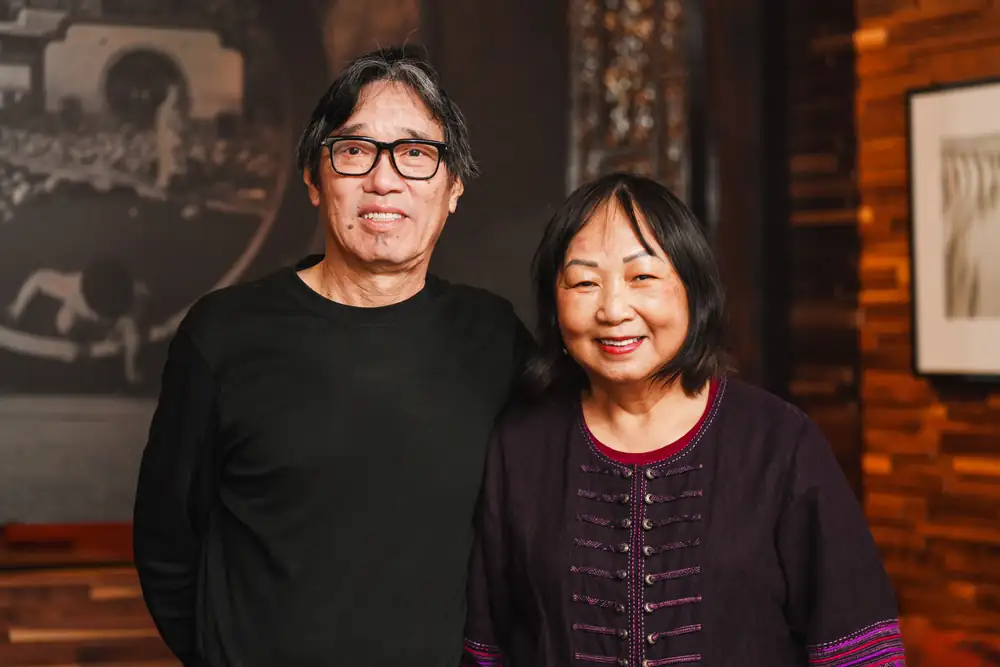
April Kao, who runs Royal China with her husband George, has managed the menu for several years and told us some secrets to keeping it fresh and staying traditional. It all starts, she says, with egg foo young. “[George] says don’t mention egg foo young” she laughs, knowing it’s a best-selling item. “It’s tedious to make. We took it off the menu for a few years but put it back because older clients who remembered it demanded it.”
Kao also mentions dry stirred beef, one of its most famous dishes and has been on the menu since Royal China opened. “The original chef that came with [George’s father and its founder Buck Kao] put it on the menu.” Kao describes the making of the dish, a crispy beef fried in corn starch and stir-fried with a sweet, tangy sauce to coat. The name, she says, comes from the method. And the reason it’s so beloved in Dallas, Koa guesses, is because “Americans really like sweet, lots of sweet, and spicy.”
She likens the recipe to General Tso’s chicken, and in the first few years, Kao remembers dry stirred beef being among the restaurant’s most popular dishes. “I had to fry a lot of dried stirred beef, so I remember that and sweet and sour pork [being popular] back then.”
Royal China added a dumpling bar in 2008, and in the years since Kao has seen an explosion of interest in dumplings in Dallas. “Being out there, making it in front of the customers draws attention to make people ask, ‘What’s that?’ And they will order and try it, even if they’ve never had it.” Before that, the restaurant had dumplings but “nothing special” according to Kao.
Kao recommends ordering jian bing, a new addition to the menu. She describes it as a giant crepe made from a mix of mung bean and soybean flours with hoisin sauce brushed in, then topped with green onion, cilantro, and crispy noodles. “That’s a street food that started in Beijing and Tianjin, but now it’s all over the place. It’s starting to get popular in the States” Kao says.
There’s a balance between authentic Chinese cuisine and Americanized food for Kao, and she strives to reach. “I try to add, slowly, more and more authentic food [to the menu]” she says and recalls a recent trip to Taiwan where a friend took her to a Michelin-starred restaurant. “He ordered something similar to the dung-po pork [belly] that we have, except it’s in a big piece. He thought it was so good, and I said, ‘Well, it’s good.’ I didn’t say, ‘But ours is better,’” she recalls with a big laugh.